Religious site
Dohány Street Synagogue
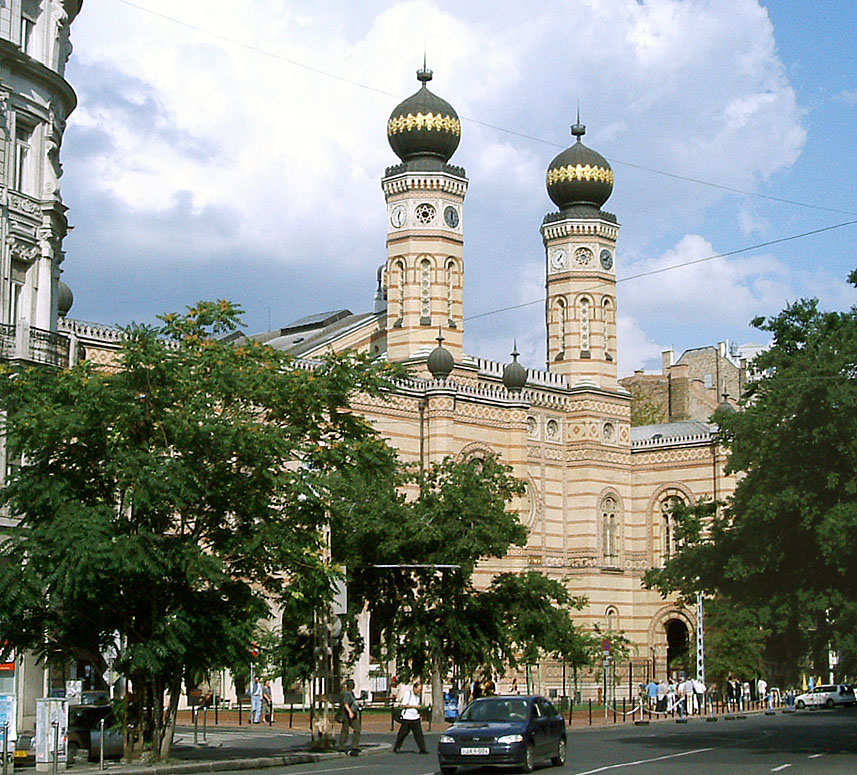 The original uploader was OsvátA at Hungarian Wikipedia. · Wikimedia Commons · CC BY-SA 3.0
多哈尼街犹太会堂是欧洲最大的犹太会堂,也是布达佩斯重要的犹太文化遗产地。建筑采用摩尔复兴风格,内部装饰有华丽的拱门、巨大的穹顶和一台宏伟的管风琴。建筑群包括匈牙利犹太博物馆和庭院中的大屠杀纪念馆,后者以引人注目的生命之树雕塑为标志。游客可以通过展览和会堂肃穆的氛围深入了解犹太历史和大屠杀的悲剧。
不容错过
- 欣赏摩尔复兴风格的建筑和会堂宏伟的内部
- 参观匈牙利犹太博物馆,了解文物和历史展览
- 在大屠杀纪念馆的生命之树雕塑前沉思
门票与旅行团
游览Dohány Street Synagogue的方式
您可以自行参观Dohány Street Synagogue。导游值得请,以了解容易错过的历史细节;跟团游还可与附近景点组合。
 最省钱方式Walking Tour Budapest incl. the Shoes on the Danube Bank4.9★ · 393位旅客约2小时免费取消起价$3 每人查看日期 →
 最多预订Budapest Danube Cruise and Dinner Options, Live Music and Dance4.7★ · 7,542位旅客约2小时免费取消起价$57 每人查看日期 →
 私享灵活Budapest Jewish Heritage: Synagogues, Shoes, Secrets4.8★ · 59位旅客约3小时免费取消起价$52 每人查看日期 →
Getting there
行前须知
- The synagogue stands on Dohány Street in Budapest's Jewish quarter, within the central UNESCO World Heritage area.
- The complex includes a courtyard cemetery created during the 1944–1945 ghetto.
- A pipe organ is an unusual feature for a synagogue.
历史一瞥
Built between 1854 and 1859 by the Jewish community of Pest, the synagogue was designed by Viennese architect Ludwig Förster in Moorish Revival and Romantic Historicist styles, with decoration based on Islamic models from North Africa and medieval Spain. It was consecrated on 6 September 1859. During World War II, it was used as a base for German Radio and a stable for animals, suffering severe damage from air raids. Restoration began in 1991 and was completed in 1998.
常见问题
Why is there a cemetery next to the synagogue?
It is not customary to have a cemetery next to a synagogue, but this one was created out of necessity during the winter of 1944–1945 when over 2,000 people who died in the ghetto were buried in the courtyard.
What is the significance of the weeping willow memorial?
The memorial, called the Holocaust Tree of Life, is a weeping willow sculpture by Imre Varga with leaves bearing the names and tattoo numbers of victims, located in the Raoul Wallenberg Holocaust Memorial Park.
Can visitors see the original keys of the synagogue?
Yes, the keys and a silver trowel used to place the keystone in the Torah ark are kept at the adjacent Jewish Museum.
Who designed the synagogue and what style is it?
Viennese architect Ludwig Förster designed it in Moorish Revival and Romantic Historicist styles, with influences from Islamic architecture in North Africa and medieval Spain.
Budapest的更多景点