Religious site
Dohány Street Synagogue
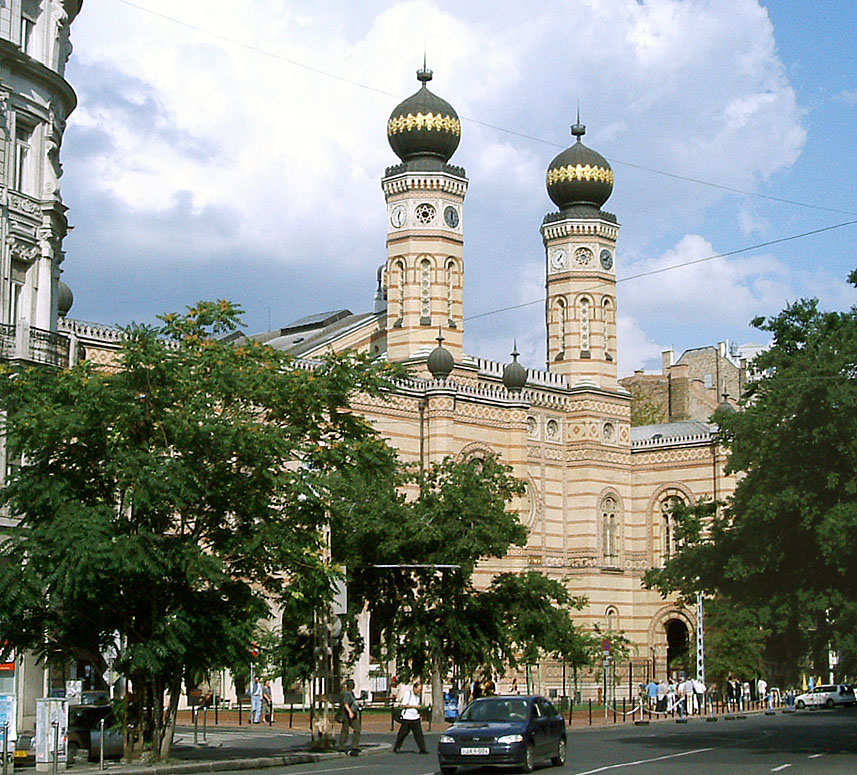 The original uploader was OsvátA at Hungarian Wikipedia. · Wikimedia Commons · CC BY-SA 3.0
일부 예약 링크는 제휴 링크입니다. 이 링크를 통해 예약하시면 추가 비용 없이 저희가 소액의 수수료를 받을 수 있습니다. 이는 저희가 추천하는 장소에 절대 영향을 주지 않습니다.
도하니 거리 시나고그는 유럽에서 가장 큰 시나고그이자 부다페스트의 주요 유대인 유산 명소입니다. 무어 부흥 양식으로 지어진 내부는 화려한 아치, 큰 돔, 그리고 웅장한 오르간이 특징입니다. 단지에는 헝가리 유대인 박물관과 안뜰의 홀로코스트 기념관이 있으며, 눈에 띄는 생명의 나무 조각상이 있습니다. 방문객들은 전시와 엄숙한 분위기를 통해 유대인 역사와 홀로코스트의 비극에 대한 통찰을 얻을 수 있습니다.
놓치지 마세요
- 무어 부흥 양식의 건축과 시나고그의 웅장한 내부 감상
- 헝가리 유대인 박물관 방문하여 유물과 역사 전시 관람
- 생명의 나무 조각상이 있는 홀로코스트 기념관에서 묵상
티켓 & 투어
Dohány Street Synagogue 즐기는 방법
Dohány Street Synagogue은 혼자서도 방문할 수 있어요. 가이드는 놓치기 쉬운 역사와 세부 정보를 알려주고, 투어는 주변 명소와 함께 둘러보기에 좋아요.
 최저가 입장Walking Tour Budapest incl. the Shoes on the Danube Bank4.9★ · 여행자 393명~2시간무료 취소부터$3 1인당날짜 확인 →
 가장 많이 예약됨Budapest Danube Cruise and Dinner Options, Live Music and Dance4.7★ · 여행자 7,542명~2시간무료 취소부터$57 1인당날짜 확인 →
 프라이빗 & 자유Budapest Jewish Heritage: Synagogues, Shoes, Secrets4.8★ · 여행자 59명~3시간무료 취소부터$52 1인당날짜 확인 →
Getting there
방문 전 알아두기
- The synagogue stands on Dohány Street in Budapest's Jewish quarter, within the central UNESCO World Heritage area.
- The complex includes a courtyard cemetery created during the 1944–1945 ghetto.
- A pipe organ is an unusual feature for a synagogue.
역사 이야기
Built between 1854 and 1859 by the Jewish community of Pest, the synagogue was designed by Viennese architect Ludwig Förster in Moorish Revival and Romantic Historicist styles, with decoration based on Islamic models from North Africa and medieval Spain. It was consecrated on 6 September 1859. During World War II, it was used as a base for German Radio and a stable for animals, suffering severe damage from air raids. Restoration began in 1991 and was completed in 1998.
자주 묻는 질문
Why is there a cemetery next to the synagogue?
It is not customary to have a cemetery next to a synagogue, but this one was created out of necessity during the winter of 1944–1945 when over 2,000 people who died in the ghetto were buried in the courtyard.
What is the significance of the weeping willow memorial?
The memorial, called the Holocaust Tree of Life, is a weeping willow sculpture by Imre Varga with leaves bearing the names and tattoo numbers of victims, located in the Raoul Wallenberg Holocaust Memorial Park.
Can visitors see the original keys of the synagogue?
Yes, the keys and a silver trowel used to place the keystone in the Torah ark are kept at the adjacent Jewish Museum.
Who designed the synagogue and what style is it?
Viennese architect Ludwig Förster designed it in Moorish Revival and Romantic Historicist styles, with influences from Islamic architecture in North Africa and medieval Spain.
Budapest의 다른 명소