Religious site
Dohány Street Synagogue
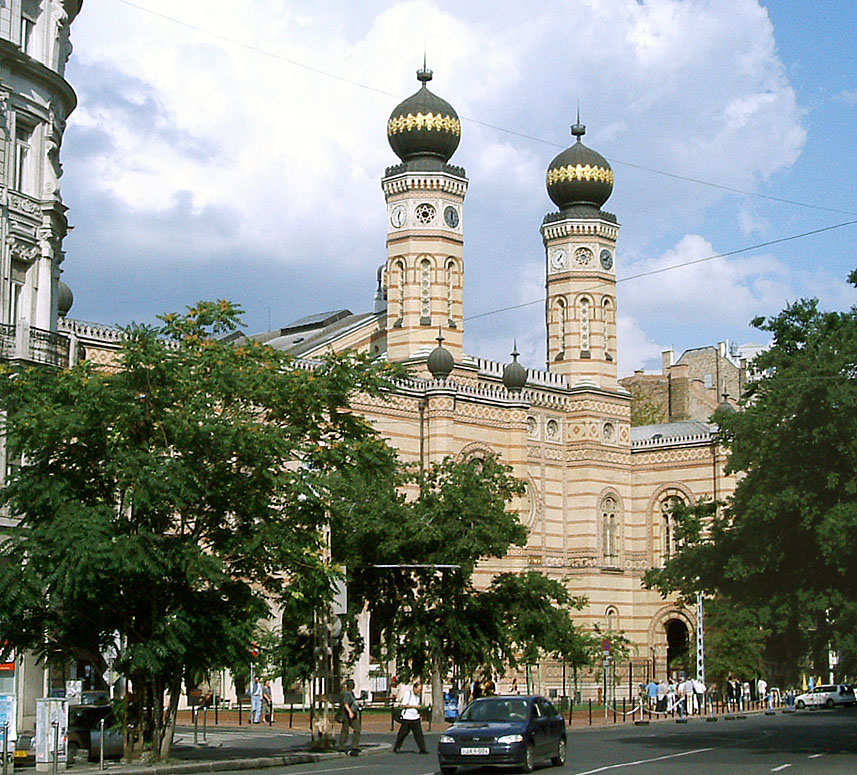 The original uploader was OsvátA at Hungarian Wikipedia. · Wikimedia Commons · CC BY-SA 3.0
Alguns links de reserva são links de afiliados. Se você reservar por eles, podemos ganhar uma pequena comissão sem custo extra para você. Nunca deixamos que isso influencie os lugares que recomendamos.
A Sinagoga da Rua Dohány é a maior sinagoga da Europa e um importante local do patrimônio judaico em Budapeste. Construída em estilo neomourisco, seu interior apresenta arcos ornamentados, uma grande cúpula e um órgão imponente. O complexo inclui o Museu Judaico Húngaro e o Memorial do Holocausto no pátio, marcado pela marcante escultura Árvore da Vida. Os visitantes obtêm uma visão da história judaica e da tragédia do Holocausto através das exposições e da atmosfera solene da sinagoga.
Não perca
- Admire a arquitetura neomourisca e o interior grandioso da sinagoga
- Visite o Museu Judaico Húngaro para artefatos e exposições históricas
- Reflita no Memorial do Holocausto com a escultura Árvore da Vida
Ingressos e passeios
Formas de visitar Dohány Street Synagogue
Você pode visitar Dohány Street Synagogue por conta própria. Um guia vale a pena pela história e detalhes que passam despercebidos, e um tour pode combiná-lo com atrações próximas.
 Mais baratoWalking Tour Budapest incl. the Shoes on the Danube Bank4.9★ · 393 viajantes~2 horasCancelamento grátisA partir de$3 por pessoaVer datas →
 Mais reservadoBudapest Danube Cruise and Dinner Options, Live Music and Dance4.7★ · 7.542 viajantes~2 horasCancelamento grátisA partir de$57 por pessoaVer datas →
 Privado e flexívelBudapest Jewish Heritage: Synagogues, Shoes, Secrets4.8★ · 59 viajantes~3 horasCancelamento grátisA partir de$52 por pessoaVer datas →
Getting there
Saiba antes de ir
- The synagogue stands on Dohány Street in Budapest's Jewish quarter, within the central UNESCO World Heritage area.
- The complex includes a courtyard cemetery created during the 1944–1945 ghetto.
- A pipe organ is an unusual feature for a synagogue.
Um pouco de história
Built between 1854 and 1859 by the Jewish community of Pest, the synagogue was designed by Viennese architect Ludwig Förster in Moorish Revival and Romantic Historicist styles, with decoration based on Islamic models from North Africa and medieval Spain. It was consecrated on 6 September 1859. During World War II, it was used as a base for German Radio and a stable for animals, suffering severe damage from air raids. Restoration began in 1991 and was completed in 1998.
Perguntas frequentes
Why is there a cemetery next to the synagogue?
It is not customary to have a cemetery next to a synagogue, but this one was created out of necessity during the winter of 1944–1945 when over 2,000 people who died in the ghetto were buried in the courtyard.
What is the significance of the weeping willow memorial?
The memorial, called the Holocaust Tree of Life, is a weeping willow sculpture by Imre Varga with leaves bearing the names and tattoo numbers of victims, located in the Raoul Wallenberg Holocaust Memorial Park.
Can visitors see the original keys of the synagogue?
Yes, the keys and a silver trowel used to place the keystone in the Torah ark are kept at the adjacent Jewish Museum.
Who designed the synagogue and what style is it?
Viennese architect Ludwig Förster designed it in Moorish Revival and Romantic Historicist styles, with influences from Islamic architecture in North Africa and medieval Spain.
Mais atrações em Budapest