Religious site
Dohány Street Synagogue
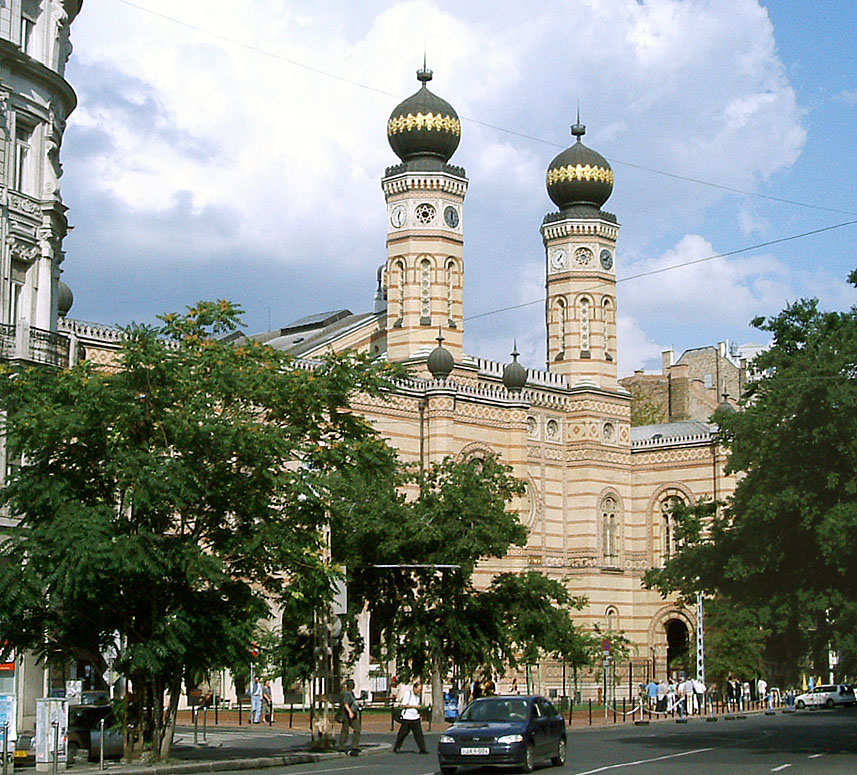 The original uploader was OsvátA at Hungarian Wikipedia. · Wikimedia Commons · CC BY-SA 3.0
Einige Buchungslinks sind Affiliate-Links. Wenn du darüber buchst, erhalten wir eventuell eine kleine Provision ohne Mehrkosten für dich. Das beeinflusst niemals, welche Orte wir empfehlen.
Die Dohány-Straßen-Synagoge ist die größte Synagoge Europas und eine bedeutende jüdische Gedenkstätte in Budapest. Erbaut im maurischen Revival-Stil, besticht ihr Inneres durch kunstvolle Bögen, eine große Kuppel und eine prächtige Orgel. Zum Komplex gehören das Ungarische Jüdische Museum und das Holocaust-Mahnmal im Hof, das von der eindrucksvollen Skulptur „Baum des Lebens“ geprägt wird. Besucher erhalten durch Ausstellungen und die feierliche Atmosphäre der Synagoge Einblicke in die jüdische Geschichte und die Tragödie des Holocaust.
Nicht verpassen
- Bewundern Sie die maurische Revival-Architektur und das prächtige Innere der Synagoge
- Besuchen Sie das Ungarische Jüdische Museum mit Artefakten und historischen Ausstellungen
- Innehalten am Holocaust-Mahnmal mit der Skulptur „Baum des Lebens“
Tickets & Touren
Möglichkeiten, Dohány Street Synagogue zu besuchen
Dohány Street Synagogue kannst du auf eigene Faust besuchen. Ein Guide lohnt sich für die Geschichte und Details, die man leicht übersieht. Eine Tour kann den Besuch mit nahegelegenen Sehenswürdigkeiten kombinieren.
 Günstigster EintrittWalking Tour Budapest incl. the Shoes on the Danube Bank4.9★ · 393 Reisende~2 StundenKostenlose StornierungAb$3 pro PersonTermine ansehen →
 Am meisten gebuchtBudapest Danube Cruise and Dinner Options, Live Music and Dance4.7★ · 7.542 Reisende~2 StundenKostenlose StornierungAb$57 pro PersonTermine ansehen →
 Privat & flexibelBudapest Jewish Heritage: Synagogues, Shoes, Secrets4.8★ · 59 Reisende~3 StundenKostenlose StornierungAb$52 pro PersonTermine ansehen →
Getting there
Vor dem Besuch
- The synagogue stands on Dohány Street in Budapest's Jewish quarter, within the central UNESCO World Heritage area.
- The complex includes a courtyard cemetery created during the 1944–1945 ghetto.
- A pipe organ is an unusual feature for a synagogue.
Ein bisschen Geschichte
Built between 1854 and 1859 by the Jewish community of Pest, the synagogue was designed by Viennese architect Ludwig Förster in Moorish Revival and Romantic Historicist styles, with decoration based on Islamic models from North Africa and medieval Spain. It was consecrated on 6 September 1859. During World War II, it was used as a base for German Radio and a stable for animals, suffering severe damage from air raids. Restoration began in 1991 and was completed in 1998.
Häufige Fragen
Why is there a cemetery next to the synagogue?
It is not customary to have a cemetery next to a synagogue, but this one was created out of necessity during the winter of 1944–1945 when over 2,000 people who died in the ghetto were buried in the courtyard.
What is the significance of the weeping willow memorial?
The memorial, called the Holocaust Tree of Life, is a weeping willow sculpture by Imre Varga with leaves bearing the names and tattoo numbers of victims, located in the Raoul Wallenberg Holocaust Memorial Park.
Can visitors see the original keys of the synagogue?
Yes, the keys and a silver trowel used to place the keystone in the Torah ark are kept at the adjacent Jewish Museum.
Who designed the synagogue and what style is it?
Viennese architect Ludwig Förster designed it in Moorish Revival and Romantic Historicist styles, with influences from Islamic architecture in North Africa and medieval Spain.
Weitere Sehenswürdigkeiten in Budapest