Religious site
Dohány Street Synagogue
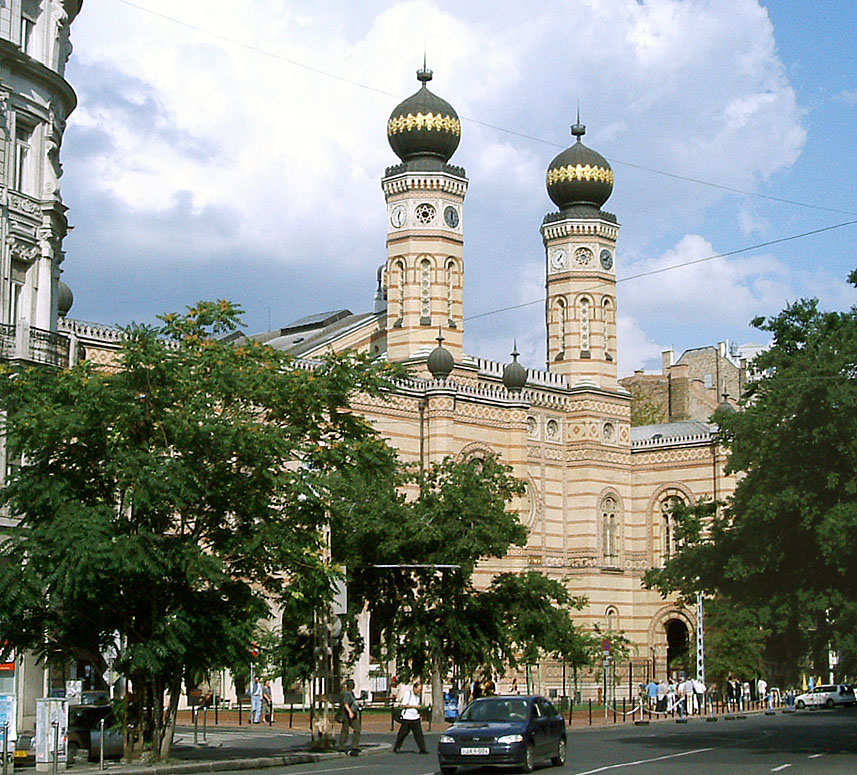 The original uploader was OsvátA at Hungarian Wikipedia. · Wikimedia Commons · CC BY-SA 3.0
Một số liên kết đặt chỗ là liên kết tiếp thị liên kết. Nếu bạn đặt qua đó, chúng tôi có thể nhận một khoản hoa hồng nhỏ mà bạn không phải trả thêm chi phí. Điều này không bao giờ ảnh hưởng đến những địa điểm chúng tôi giới thiệu.
Giáo đường Do Thái Dohány Street là giáo đường lớn nhất châu Âu và một di sản Do Thái quan trọng tại Budapest. Được xây dựng theo phong cách Moorish Revival, nội thất bên trong có các mái vòm trang trí công phu, một mái vòm lớn và một cây đàn organ hoành tráng. Khu phức hợp bao gồm Bảo tàng Do Thái Hungary và Đài tưởng niệm Holocaust trong sân, nổi bật với tác phẩm điêu khắc Cây Sự sống. Du khách sẽ hiểu thêm về lịch sử Do Thái và thảm kịch Holocaust qua các triển lãm và bầu không khí trang nghiêm của giáo đường.
Đừng bỏ lỡ
- Chiêm ngưỡng kiến trúc Moorish Revival và nội thất tráng lệ của giáo đường
- Tham quan Bảo tàng Do Thái Hungary với các hiện vật và triển lãm lịch sử
- Suy ngẫm tại Đài tưởng niệm Holocaust với tác phẩm điêu khắc Cây Sự sống
Vé & tour
Cách tham quan Dohány Street Synagogue
Bạn có thể tự tham quan Dohány Street Synagogue. Hướng dẫn viên đáng giá nhờ những câu chuyện lịch sử và chi tiết dễ bỏ qua, và tour có thể kết hợp với các điểm tham quan lân cận.
 Rẻ nhất trongWalking Tour Budapest incl. the Shoes on the Danube Bank4.9★ · 393 khách~2 giờHủy miễn phíTừ$3 mỗi ngườiXem ngày →
 Được đặt nhiều nhấtBudapest Danube Cruise and Dinner Options, Live Music and Dance4.7★ · 7.542 khách~2 giờHủy miễn phíTừ$57 mỗi ngườiXem ngày →
 Riêng tư & linh hoạtBudapest Jewish Heritage: Synagogues, Shoes, Secrets4.8★ · 59 khách~3 giờHủy miễn phíTừ$52 mỗi ngườiXem ngày →
Getting there
Cần biết trước khi đi
- The synagogue stands on Dohány Street in Budapest's Jewish quarter, within the central UNESCO World Heritage area.
- The complex includes a courtyard cemetery created during the 1944–1945 ghetto.
- A pipe organ is an unusual feature for a synagogue.
Một chút lịch sử
Built between 1854 and 1859 by the Jewish community of Pest, the synagogue was designed by Viennese architect Ludwig Förster in Moorish Revival and Romantic Historicist styles, with decoration based on Islamic models from North Africa and medieval Spain. It was consecrated on 6 September 1859. During World War II, it was used as a base for German Radio and a stable for animals, suffering severe damage from air raids. Restoration began in 1991 and was completed in 1998.
Câu hỏi thường gặp
Why is there a cemetery next to the synagogue?
It is not customary to have a cemetery next to a synagogue, but this one was created out of necessity during the winter of 1944–1945 when over 2,000 people who died in the ghetto were buried in the courtyard.
What is the significance of the weeping willow memorial?
The memorial, called the Holocaust Tree of Life, is a weeping willow sculpture by Imre Varga with leaves bearing the names and tattoo numbers of victims, located in the Raoul Wallenberg Holocaust Memorial Park.
Can visitors see the original keys of the synagogue?
Yes, the keys and a silver trowel used to place the keystone in the Torah ark are kept at the adjacent Jewish Museum.
Who designed the synagogue and what style is it?
Viennese architect Ludwig Förster designed it in Moorish Revival and Romantic Historicist styles, with influences from Islamic architecture in North Africa and medieval Spain.
Thêm điểm tham quan ở Budapest