Religious site
Dohány Street Synagogue
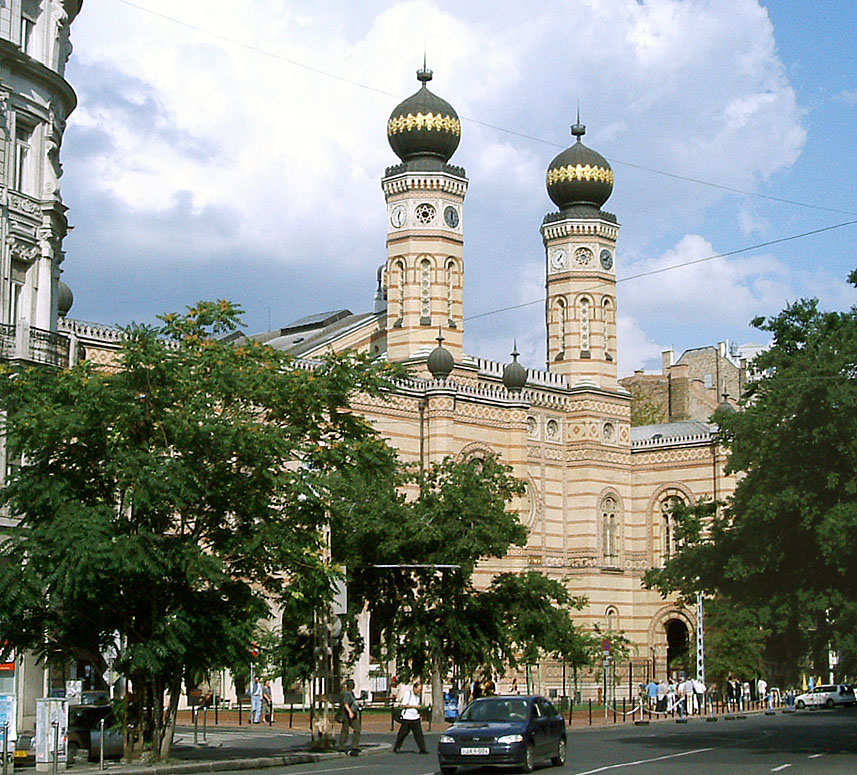 The original uploader was OsvátA at Hungarian Wikipedia. · Wikimedia Commons · CC BY-SA 3.0
Некоторые ссылки для бронирования являются партнёрскими. Если вы бронируете по ним, мы можем получить небольшую комиссию без дополнительных затрат для вас. Это никогда не влияет на то, какие места мы рекомендуем.
Синагога на улице Дохань, крупнейшая синагога Европы и важный объект еврейского наследия в Будапеште. Построенная в неомавританском стиле, внутри она украшена изысканными арками, большим куполом и величественным органом. В комплекс входят Венгерский еврейский музей и Мемориал Холокоста во дворе, где установлено впечатляющее скульптурное «Древо жизни». Посетители знакомятся с еврейской историей и трагедией Холокоста через экспонаты и торжественную атмосферу синагоги.
Не пропустите
- Полюбуйтесь неомавританской архитектурой и роскошным интерьером синагоги
- Посетите Венгерский еврейский музей с артефактами и историческими экспозициями
- Почтите память у Мемориала Холокоста со скульптурой «Древо жизни»
Билеты и экскурсии
Как посетить Dohány Street Synagogue
Вы можете посетить Dohány Street Synagogue самостоятельно. Гид стоит того ради истории и деталей, которые легко пропустить, а экскурсия может объединить его с соседними достопримечательностями.
 Самый дешёвый входWalking Tour Budapest incl. the Shoes on the Danube Bank4.9★ · 393 путешественников~2 чБесплатная отменаОт$3 за человекаПосмотреть даты →
 Чаще всего бронируютBudapest Danube Cruise and Dinner Options, Live Music and Dance4.7★ · 7 542 путешественников~2 чБесплатная отменаОт$57 за человекаПосмотреть даты →
 Индивидуально и гибкоBudapest Jewish Heritage: Synagogues, Shoes, Secrets4.8★ · 59 путешественников~3 чБесплатная отменаОт$52 за человекаПосмотреть даты →
Getting there
Полезно знать заранее
- The synagogue stands on Dohány Street in Budapest's Jewish quarter, within the central UNESCO World Heritage area.
- The complex includes a courtyard cemetery created during the 1944–1945 ghetto.
- A pipe organ is an unusual feature for a synagogue.
Немного истории
Built between 1854 and 1859 by the Jewish community of Pest, the synagogue was designed by Viennese architect Ludwig Förster in Moorish Revival and Romantic Historicist styles, with decoration based on Islamic models from North Africa and medieval Spain. It was consecrated on 6 September 1859. During World War II, it was used as a base for German Radio and a stable for animals, suffering severe damage from air raids. Restoration began in 1991 and was completed in 1998.
Частые вопросы
Why is there a cemetery next to the synagogue?
It is not customary to have a cemetery next to a synagogue, but this one was created out of necessity during the winter of 1944–1945 when over 2,000 people who died in the ghetto were buried in the courtyard.
What is the significance of the weeping willow memorial?
The memorial, called the Holocaust Tree of Life, is a weeping willow sculpture by Imre Varga with leaves bearing the names and tattoo numbers of victims, located in the Raoul Wallenberg Holocaust Memorial Park.
Can visitors see the original keys of the synagogue?
Yes, the keys and a silver trowel used to place the keystone in the Torah ark are kept at the adjacent Jewish Museum.
Who designed the synagogue and what style is it?
Viennese architect Ludwig Förster designed it in Moorish Revival and Romantic Historicist styles, with influences from Islamic architecture in North Africa and medieval Spain.
Ещё достопримечательности в Budapest