Museum
Anne Frank House
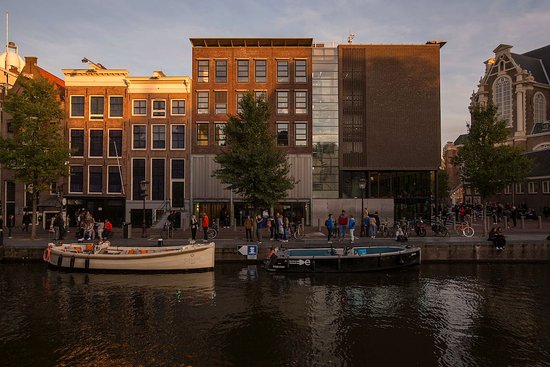 Photo via TripAdvisor (Management)
Alguns links de reserva são links de afiliados. Se você reservar por eles, podemos ganhar uma pequena comissão sem custo extra para você. Nunca deixamos que isso influencie os lugares que recomendamos.
A Casa de Anne Frank é um museu comovente localizado na Prinsengracht 263, o prédio onde Anne Frank, sua família e outras quatro pessoas se esconderam da perseguição nazista durante a Segunda Guerra Mundial. O esconderijo, conhecido como Anexo Secreto, é preservado em seu estado original, com cômodos vazios que evocam a atmosfera de confinamento. Os visitantes passam pela estante de livros que ocultava a entrada e veem o diário original de Anne e outros objetos pessoais. O museu também conta com exposições sobre discriminação, perseguição e o Holocausto, além de temas contemporâneos como direitos humanos. A experiência é emocionante e educativa, oferecendo uma conexão profunda com a história de Anne. A extensão moderna do museu fornece contexto e um espaço para reflexão. É um dos locais mais visitados de Amsterdã, por isso é essencial reservar com antecedência.
Não perca
- O Anexo Secreto com seus cômodos preservados e móveis originais
- O diário original de Anne Frank e outros escritos em exibição
- A estante de livros que ocultava a entrada do esconderijo
- Exposições sobre o Holocausto e questões contemporâneas de direitos humanos
- Os depoimentos em vídeo de Otto Frank e outros ajudantes
Ingressos e passeios
Formas de visitar Anne Frank House
Você pode visitar Anne Frank House por conta própria. Um guia agrega principalmente contexto, explicando o que você está vendo e por que é importante, e um tour pode incluir transporte ou combinar atrações próximas em um dia.
 Mais baratoThe Anne Frank Tour (Jewish Neighborhood & Amsterdam during WWII)4.5★ · 70 viajantes~2 horasCancelamento grátisA partir de$3 por pessoaVer datas →
 Mais reservadoAmsterdam Classic Saloon Boat Cruise with Drinks and Cheese4.8★ · 33.195 viajantes~1 horaCancelamento grátisA partir de$19 por pessoaVer datas →
 Privado e flexívelAnne Frank's Amsterdam Jewish History WWII Exclusive Guided Tour5★ · 28 viajantes~3 horasCancelamento grátisA partir de$61 por pessoaVer datas →
Saiba antes de ir
- The Secret Annex is the preserved hiding place at the rear of Prinsengracht 263; its contents were removed after the arrests.
- The museum spans three adjacent street-front buildings, with the hiding place at the rear of number 263.
- The visit links the rooms to Anne's papers, rescued after the arrests and published in Dutch in 1947.
- The museum developed virtual tours partly because the historic annex creates capacity and accessibility limitations.
Um pouco de história
The canal house at Prinsengracht 263 was built in 1635 by Dirk van Delft, and its canal façade dates from a 1740 renovation. It later served as a warehouse and various commercial premises. Otto Frank moved the offices of Opekta and Pectacon there in December 1940. The front building contained storage, spice mills, and offices used by employees including Miep Gies, Bep Voskuijl, Johannes Kleiman, and Victor Kugler. The rear annex became the hiding place in 1942. After the raid, officers ordered its contents removed. Gies and Voskuijl recovered Anne's writings, and Otto received them after returning to Amsterdam in June 1945. He combined versions of the diary into the Dutch book Het Achterhuis, published in 1947. Public interest brought early visitors to the rooms, but a clothing company bought the block in 1955 with plans for demolition. A newspaper campaign and public protest helped save number 263. The Anne Frank Foundation was established under Otto Frank's leadership on 3 May 1957 to purchase and restore the property. The owner donated the house, the foundation acquired number 265, and the restored museum opened on 3 May 1960. Later work preserved the annex and the front of number 263, provided educational and functional space at number 265, and added a corner structure for the entrance and visitor facilities.
Perguntas frequentes
Who hid in the Secret Annex?
Anne Frank hid there with Otto, Edith, and Margot Frank and four other Jewish people seeking refuge from Nazi persecution.
How long did the group remain hidden?
They lived in the annex for two years and one month before the hiding place was raided and they were arrested.
Is the museum the actual hiding place?
Yes. The Secret Annex survives at the rear of Prinsengracht 263, within a larger museum complex using the neighboring buildings.
How were Anne's papers saved?
Miep Gies and Bep Voskuijl returned after the arrests and rescued books and papers before officers had the rooms cleared.
Why was the house nearly demolished?
A clothing manufacturer bought the block in 1955 for redevelopment. A public campaign and the Anne Frank Foundation secured and restored the building.
When did the Anne Frank House open?
The restored building opened as a museum on 3 May 1960, three years after the foundation was created.
Mais atrações em Amsterdã