Museum
Anne Frank House
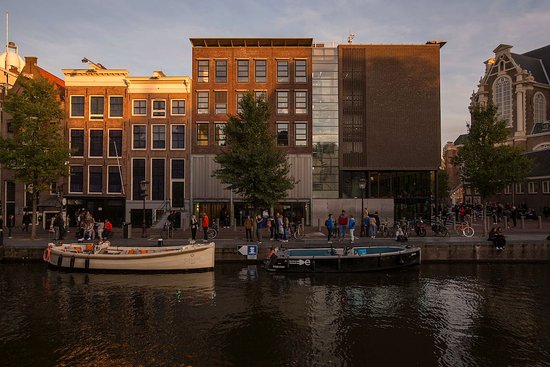 Photo via TripAdvisor (Management)
Sommige boekingslinks zijn affiliate-links. Als je via deze links boekt, kunnen wij een kleine commissie verdienen zonder extra kosten voor jou. We laten dit nooit bepalen welke plekken we aanbevelen.
Het Anne Frank Huis is een indrukwekkend museum aan de Prinsengracht 263, het pand waar Anne Frank, haar familie en vier anderen zich tijdens de Tweede Wereldoorlog verborgen hielden voor de nazi's. Het Achterhuis is in originele staat bewaard gebleven, met lege kamers die de sfeer van opsluiting oproepen. Bezoekers lopen door de boekenkast die de ingang verborg en zien Annes originele dagboek en andere persoonlijke bezittingen. Het museum heeft ook tentoonstellingen over discriminatie, vervolging en de Holocaust, evenals hedendaagse thema's zoals mensenrechten. De ervaring is emotioneel en leerzaam en biedt een diepe verbinding met Annes verhaal. De moderne uitbreiding van het museum biedt context en een plek voor bezinning. Het is een van de meest bezochte plekken in Amsterdam, dus vooraf reserveren is essentieel.
Niet te missen
- Het Achterhuis met de bewaarde kamers en originele inrichting
- Annes originele dagboek en andere geschriften die worden tentoongesteld
- De boekenkast die de ingang naar de schuilplaats verborg
- Tentoonstellingen over de Holocaust en hedendaagse mensenrechtenkwesties
- De videogetuigenissen van Otto Frank en andere helpers
Tickets & rondleidingen
Manieren om Anne Frank House te bezoeken
Je kunt Anne Frank House op eigen gelegenheid bezoeken. Een gids voegt vooral context toe: wat je ziet en waarom het belangrijk is. Een tour kan vervoer regelen of nabijgelegen bezienswaardigheden combineren in één dag.
 Goedkoopste optieThe Anne Frank Tour (Jewish Neighborhood & Amsterdam during WWII)4.5★ · 70 reizigers~2 uurGratis annulerenVanaf$3 per persoonData bekijken →
 Meest geboektAmsterdam Classic Saloon Boat Cruise with Drinks and Cheese4.8★ · 33.195 reizigers~1 uurGratis annulerenVanaf$19 per persoonData bekijken →
 Privé & flexibelAnne Frank's Amsterdam Jewish History WWII Exclusive Guided Tour5★ · 28 reizigers~3 uurGratis annulerenVanaf$61 per persoonData bekijken →
Goed om te weten
- The Secret Annex is the preserved hiding place at the rear of Prinsengracht 263; its contents were removed after the arrests.
- The museum spans three adjacent street-front buildings, with the hiding place at the rear of number 263.
- The visit links the rooms to Anne's papers, rescued after the arrests and published in Dutch in 1947.
- The museum developed virtual tours partly because the historic annex creates capacity and accessibility limitations.
Een stukje geschiedenis
The canal house at Prinsengracht 263 was built in 1635 by Dirk van Delft, and its canal façade dates from a 1740 renovation. It later served as a warehouse and various commercial premises. Otto Frank moved the offices of Opekta and Pectacon there in December 1940. The front building contained storage, spice mills, and offices used by employees including Miep Gies, Bep Voskuijl, Johannes Kleiman, and Victor Kugler. The rear annex became the hiding place in 1942. After the raid, officers ordered its contents removed. Gies and Voskuijl recovered Anne's writings, and Otto received them after returning to Amsterdam in June 1945. He combined versions of the diary into the Dutch book Het Achterhuis, published in 1947. Public interest brought early visitors to the rooms, but a clothing company bought the block in 1955 with plans for demolition. A newspaper campaign and public protest helped save number 263. The Anne Frank Foundation was established under Otto Frank's leadership on 3 May 1957 to purchase and restore the property. The owner donated the house, the foundation acquired number 265, and the restored museum opened on 3 May 1960. Later work preserved the annex and the front of number 263, provided educational and functional space at number 265, and added a corner structure for the entrance and visitor facilities.
Veelgestelde vragen
Who hid in the Secret Annex?
Anne Frank hid there with Otto, Edith, and Margot Frank and four other Jewish people seeking refuge from Nazi persecution.
How long did the group remain hidden?
They lived in the annex for two years and one month before the hiding place was raided and they were arrested.
Is the museum the actual hiding place?
Yes. The Secret Annex survives at the rear of Prinsengracht 263, within a larger museum complex using the neighboring buildings.
How were Anne's papers saved?
Miep Gies and Bep Voskuijl returned after the arrests and rescued books and papers before officers had the rooms cleared.
Why was the house nearly demolished?
A clothing manufacturer bought the block in 1955 for redevelopment. A public campaign and the Anne Frank Foundation secured and restored the building.
When did the Anne Frank House open?
The restored building opened as a museum on 3 May 1960, three years after the foundation was created.
Meer bezienswaardigheden in Amsterdam