Museum
Anne Frank House
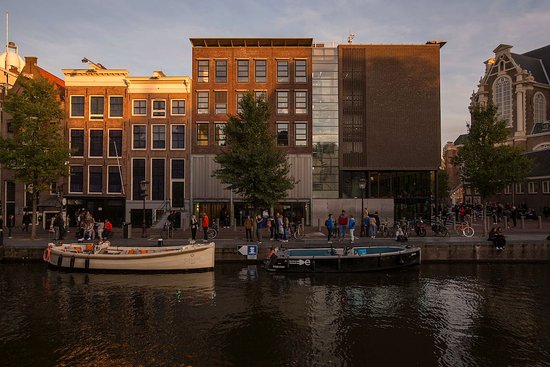 Photo via TripAdvisor (Management)
Algunos enlaces de reserva son enlaces de afiliados. Si reservas a través de ellos, podríamos ganar una pequeña comisión sin coste adicional para ti. Nunca dejamos que esto influya en los lugares que recomendamos.
La Casa de Ana Frank es un museo conmovedor ubicado en Prinsengracht 263, el edificio real donde Ana Frank, su familia y otras cuatro personas se escondieron de la persecución nazi durante la Segunda Guerra Mundial. El escondite, conocido como el Anexo Secreto, se conserva en su estado original, con habitaciones vacías que evocan la atmósfera de confinamiento. Los visitantes atraviesan la biblioteca que ocultaba la entrada y ven el diario original de Ana y otros objetos personales. El museo también presenta exposiciones sobre discriminación, persecución y el Holocausto, así como temas contemporáneos como los derechos humanos. La experiencia es emotiva y educativa, ofreciendo una conexión profunda con la historia de Ana. La extensión moderna del museo proporciona contexto y un espacio para la reflexión. Es uno de los sitios más visitados de Ámsterdam, por lo que es esencial reservar con anticipación.
No te lo pierdas
- El Anexo Secreto con sus habitaciones preservadas y mobiliario original
- El diario original de Ana Frank y otros escritos en exhibición
- La biblioteca que ocultaba la entrada al escondite
- Exposiciones sobre el Holocausto y temas contemporáneos de derechos humanos
- Los testimonios en video de Otto Frank y otros ayudantes
Entradas y visitas guiadas
Formas de visitar Anne Frank House
Puedes visitar Anne Frank House por tu cuenta. Una guía aporta contexto sobre lo que ves y por qué es relevante; un tour puede incluir transporte o combinar lugares cercanos en un solo día.
 Más baratoThe Anne Frank Tour (Jewish Neighborhood & Amsterdam during WWII)4.5★ · 70 viajeros~2 horasCancelación gratuitaDesde$3 por personaVer fechas →
 Más reservadoAmsterdam Classic Saloon Boat Cruise with Drinks and Cheese4.8★ · 33.195 viajeros~1 horaCancelación gratuitaDesde$19 por personaVer fechas →
 Privado y flexibleAnne Frank's Amsterdam Jewish History WWII Exclusive Guided Tour5★ · 28 viajeros~3 horasCancelación gratuitaDesde$61 por personaVer fechas →
Antes de ir
- The Secret Annex is the preserved hiding place at the rear of Prinsengracht 263; its contents were removed after the arrests.
- The museum spans three adjacent street-front buildings, with the hiding place at the rear of number 263.
- The visit links the rooms to Anne's papers, rescued after the arrests and published in Dutch in 1947.
- The museum developed virtual tours partly because the historic annex creates capacity and accessibility limitations.
Un poco de historia
The canal house at Prinsengracht 263 was built in 1635 by Dirk van Delft, and its canal façade dates from a 1740 renovation. It later served as a warehouse and various commercial premises. Otto Frank moved the offices of Opekta and Pectacon there in December 1940. The front building contained storage, spice mills, and offices used by employees including Miep Gies, Bep Voskuijl, Johannes Kleiman, and Victor Kugler. The rear annex became the hiding place in 1942. After the raid, officers ordered its contents removed. Gies and Voskuijl recovered Anne's writings, and Otto received them after returning to Amsterdam in June 1945. He combined versions of the diary into the Dutch book Het Achterhuis, published in 1947. Public interest brought early visitors to the rooms, but a clothing company bought the block in 1955 with plans for demolition. A newspaper campaign and public protest helped save number 263. The Anne Frank Foundation was established under Otto Frank's leadership on 3 May 1957 to purchase and restore the property. The owner donated the house, the foundation acquired number 265, and the restored museum opened on 3 May 1960. Later work preserved the annex and the front of number 263, provided educational and functional space at number 265, and added a corner structure for the entrance and visitor facilities.
Preguntas frecuentes
Who hid in the Secret Annex?
Anne Frank hid there with Otto, Edith, and Margot Frank and four other Jewish people seeking refuge from Nazi persecution.
How long did the group remain hidden?
They lived in the annex for two years and one month before the hiding place was raided and they were arrested.
Is the museum the actual hiding place?
Yes. The Secret Annex survives at the rear of Prinsengracht 263, within a larger museum complex using the neighboring buildings.
How were Anne's papers saved?
Miep Gies and Bep Voskuijl returned after the arrests and rescued books and papers before officers had the rooms cleared.
Why was the house nearly demolished?
A clothing manufacturer bought the block in 1955 for redevelopment. A public campaign and the Anne Frank Foundation secured and restored the building.
When did the Anne Frank House open?
The restored building opened as a museum on 3 May 1960, three years after the foundation was created.
Más atracciones en Ámsterdam