Museum
Anne Frank House
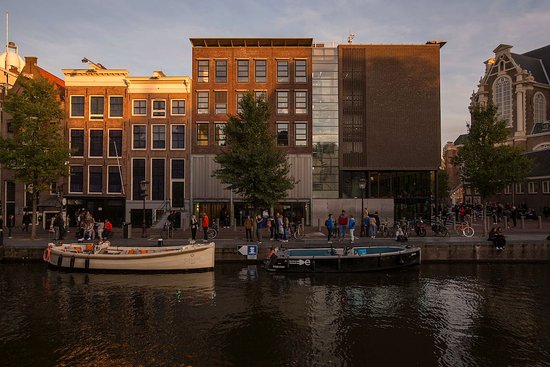 Photo via TripAdvisor (Management)
Certains liens de réservation sont des liens affiliés. Si vous réservez via ces liens, nous pouvons percevoir une petite commission sans coût supplémentaire pour vous. Cela n'influence jamais les lieux que nous recommandons.
La Maison d'Anne Frank est un musée émouvant situé au Prinsengracht 263, le bâtiment même où Anne Frank, sa famille et quatre autres personnes se sont cachés des persécutions nazies pendant la Seconde Guerre mondiale. La cachette, connue sous le nom d'Annexe secrète, est préservée dans son état d'origine, avec des pièces vides qui évoquent l'atmosphère de confinement. Les visiteurs traversent la bibliothèque qui dissimulait l'entrée et voient le journal original d'Anne ainsi que d'autres objets personnels. Le musée propose également des expositions sur la discrimination, la persécution et l'Holocauste, ainsi que sur des questions contemporaines comme les droits de l'homme. L'expérience est émotionnelle et éducative, offrant un lien profond avec l'histoire d'Anne. L'extension moderne du musée fournit un contexte et un espace de réflexion. C'est l'un des sites les plus visités d'Amsterdam, donc une réservation à l'avance est indispensable.
À ne pas manquer
- L'Annexe secrète avec ses pièces préservées et son mobilier d'origine
- Le journal original d'Anne Frank et d'autres écrits exposés
- La bibliothèque qui dissimulait l'entrée de la cachette
- Les expositions sur l'Holocauste et les droits de l'homme contemporains
- Les témoignages vidéo d'Otto Frank et d'autres aides
Billets & visites
Façons de visiter Anne Frank House
Vous pouvez visiter Anne Frank House par vous-même. Un guide apporte surtout du contexte, vous explique ce que vous regardez et pourquoi c'est important, et une visite peut inclure le transport ou combiner des sites proches en une journée.
 Le moins cherThe Anne Frank Tour (Jewish Neighborhood & Amsterdam during WWII)4.5★ · 70 voyageurs~2 heuresAnnulation gratuiteÀ partir de$3 par personneVoir les dates →
 Le plus réservéAmsterdam Classic Saloon Boat Cruise with Drinks and Cheese4.8★ · 33 195 voyageurs~1 heureAnnulation gratuiteÀ partir de$19 par personneVoir les dates →
 Privé & flexibleAnne Frank's Amsterdam Jewish History WWII Exclusive Guided Tour5★ · 28 voyageurs~3 heuresAnnulation gratuiteÀ partir de$61 par personneVoir les dates →
Bon à savoir
- The Secret Annex is the preserved hiding place at the rear of Prinsengracht 263; its contents were removed after the arrests.
- The museum spans three adjacent street-front buildings, with the hiding place at the rear of number 263.
- The visit links the rooms to Anne's papers, rescued after the arrests and published in Dutch in 1947.
- The museum developed virtual tours partly because the historic annex creates capacity and accessibility limitations.
Un peu d'histoire
The canal house at Prinsengracht 263 was built in 1635 by Dirk van Delft, and its canal façade dates from a 1740 renovation. It later served as a warehouse and various commercial premises. Otto Frank moved the offices of Opekta and Pectacon there in December 1940. The front building contained storage, spice mills, and offices used by employees including Miep Gies, Bep Voskuijl, Johannes Kleiman, and Victor Kugler. The rear annex became the hiding place in 1942. After the raid, officers ordered its contents removed. Gies and Voskuijl recovered Anne's writings, and Otto received them after returning to Amsterdam in June 1945. He combined versions of the diary into the Dutch book Het Achterhuis, published in 1947. Public interest brought early visitors to the rooms, but a clothing company bought the block in 1955 with plans for demolition. A newspaper campaign and public protest helped save number 263. The Anne Frank Foundation was established under Otto Frank's leadership on 3 May 1957 to purchase and restore the property. The owner donated the house, the foundation acquired number 265, and the restored museum opened on 3 May 1960. Later work preserved the annex and the front of number 263, provided educational and functional space at number 265, and added a corner structure for the entrance and visitor facilities.
Questions fréquentes
Who hid in the Secret Annex?
Anne Frank hid there with Otto, Edith, and Margot Frank and four other Jewish people seeking refuge from Nazi persecution.
How long did the group remain hidden?
They lived in the annex for two years and one month before the hiding place was raided and they were arrested.
Is the museum the actual hiding place?
Yes. The Secret Annex survives at the rear of Prinsengracht 263, within a larger museum complex using the neighboring buildings.
How were Anne's papers saved?
Miep Gies and Bep Voskuijl returned after the arrests and rescued books and papers before officers had the rooms cleared.
Why was the house nearly demolished?
A clothing manufacturer bought the block in 1955 for redevelopment. A public campaign and the Anne Frank Foundation secured and restored the building.
When did the Anne Frank House open?
The restored building opened as a museum on 3 May 1960, three years after the foundation was created.
Plus d'attractions à Amsterdam