Museum
Anne Frank House
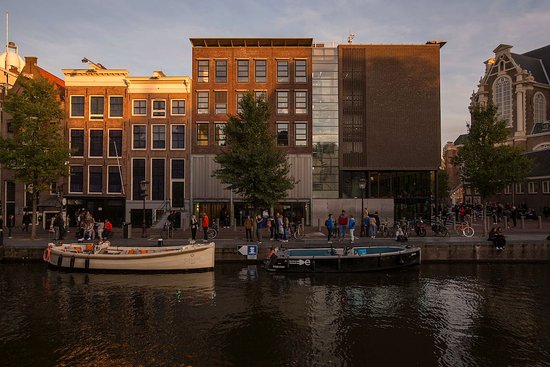 Photo via TripAdvisor (Management)
Alcuni link di prenotazione sono link di affiliazione. Se prenoti tramite essi, potremmo guadagnare una piccola commissione senza costi aggiuntivi per te. Non lasciamo mai che questo influenzi i luoghi che consigliamo.
La Casa di Anna Frank è un museo toccante situato al Prinsengracht 263, l'edificio stesso dove Anna Frank, la sua famiglia e altre quattro persone si nascosero dalle persecuzioni naziste durante la Seconda Guerra Mondiale. Il nascondiglio, noto come l'Alloggio Segreto, è conservato nello stato originale, con stanze vuote che evocano l'atmosfera di reclusione. I visitatori attraversano la libreria che nascondeva l'ingresso e vedono il diario originale di Anna e altri oggetti personali. Il museo ospita anche mostre su discriminazione, persecuzione e Olocausto, oltre a temi contemporanei come i diritti umani. L'esperienza è emozionante e educativa, offrendo un legame profondo con la storia di Anna. L'ampliamento moderno del museo fornisce contesto e uno spazio per la riflessione. È uno dei siti più visitati di Amsterdam, quindi la prenotazione anticipata è essenziale.
Da non perdere
- L'Alloggio Segreto con le sue stanze conservate e gli arredi originali
- Il diario originale di Anna Frank e altri scritti in mostra
- La libreria che nascondeva l'ingresso al nascondiglio
- Mostre sull'Olocausto e sui diritti umani contemporanei
- Le testimonianze video di Otto Frank e degli altri aiutanti
Biglietti e tour
Come visitare Anne Frank House
Puoi visitare Anne Frank House da solo. Una guida serve soprattutto per aggiungere contesto, spiegare cosa stai guardando e perché è importante; un tour può includere il trasporto o abbinare più attrazioni vicine in un giorno.
 Il più economicoThe Anne Frank Tour (Jewish Neighborhood & Amsterdam during WWII)4.5★ · 70 viaggiatori~2 oreCancellazione gratuitaDa$3 a personaVedi date →
 Più prenotatoAmsterdam Classic Saloon Boat Cruise with Drinks and Cheese4.8★ · 33.195 viaggiatori~1 oraCancellazione gratuitaDa$19 a personaVedi date →
 Privato e flessibileAnne Frank's Amsterdam Jewish History WWII Exclusive Guided Tour5★ · 28 viaggiatori~3 oreCancellazione gratuitaDa$61 a personaVedi date →
Da sapere prima di andare
- The Secret Annex is the preserved hiding place at the rear of Prinsengracht 263; its contents were removed after the arrests.
- The museum spans three adjacent street-front buildings, with the hiding place at the rear of number 263.
- The visit links the rooms to Anne's papers, rescued after the arrests and published in Dutch in 1947.
- The museum developed virtual tours partly because the historic annex creates capacity and accessibility limitations.
Un po' di storia
The canal house at Prinsengracht 263 was built in 1635 by Dirk van Delft, and its canal façade dates from a 1740 renovation. It later served as a warehouse and various commercial premises. Otto Frank moved the offices of Opekta and Pectacon there in December 1940. The front building contained storage, spice mills, and offices used by employees including Miep Gies, Bep Voskuijl, Johannes Kleiman, and Victor Kugler. The rear annex became the hiding place in 1942. After the raid, officers ordered its contents removed. Gies and Voskuijl recovered Anne's writings, and Otto received them after returning to Amsterdam in June 1945. He combined versions of the diary into the Dutch book Het Achterhuis, published in 1947. Public interest brought early visitors to the rooms, but a clothing company bought the block in 1955 with plans for demolition. A newspaper campaign and public protest helped save number 263. The Anne Frank Foundation was established under Otto Frank's leadership on 3 May 1957 to purchase and restore the property. The owner donated the house, the foundation acquired number 265, and the restored museum opened on 3 May 1960. Later work preserved the annex and the front of number 263, provided educational and functional space at number 265, and added a corner structure for the entrance and visitor facilities.
Domande frequenti
Who hid in the Secret Annex?
Anne Frank hid there with Otto, Edith, and Margot Frank and four other Jewish people seeking refuge from Nazi persecution.
How long did the group remain hidden?
They lived in the annex for two years and one month before the hiding place was raided and they were arrested.
Is the museum the actual hiding place?
Yes. The Secret Annex survives at the rear of Prinsengracht 263, within a larger museum complex using the neighboring buildings.
How were Anne's papers saved?
Miep Gies and Bep Voskuijl returned after the arrests and rescued books and papers before officers had the rooms cleared.
Why was the house nearly demolished?
A clothing manufacturer bought the block in 1955 for redevelopment. A public campaign and the Anne Frank Foundation secured and restored the building.
When did the Anne Frank House open?
The restored building opened as a museum on 3 May 1960, three years after the foundation was created.
Altre attrazioni a Amsterdam