Landmark
Gandhi Ashram
 Chauhan Rakesh
Certains liens de réservation sont des liens affiliés. Si vous réservez via ces liens, nous pouvons percevoir une petite commission sans frais supplémentaires pour vous. Cela n'influence jamais nos recommandations.
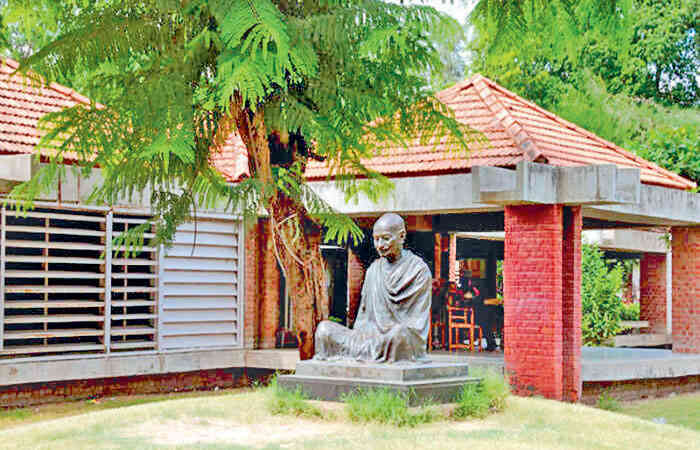
The Sabarmati Ashram in Ahmedabad was Mahatma Gandhi's home and headquarters for some of the most pivotal years of India's independence struggle (1917–1930), and it remains a deeply moving place of pilgrimage. Set peacefully on the bank of the Sabarmati River, the simple, whitewashed ashram preserves Gandhi's spartan living quarters (Hriday Kunj) exactly as he left them, his spinning wheel, writing desk, and few possessions, alongside an excellent museum of photographs, letters, and documents tracing his life and philosophy of non-violence.
It was from here that Gandhi set out on the famous 1930 Salt March. The atmosphere is serene and reflective, and entry is free. It's an essential stop for understanding Gandhi and modern India, and a calming counterpoint to Ahmedabad's bustle.
À ne pas manquer
- Gandhi's preserved living quarters (Hriday Kunj)
- The museum of photographs, letters, and documents
- The peaceful Sabarmati riverside setting
- The starting point of the 1930 Salt March
- A reflective insight into Gandhi's philosophy
Billets et visites
Différentes façons de visiter Gandhi Ashram
Pas besoin de visite guidée, l'entrée est gratuite. Une visite vaut le coup si vous voulez un transport, un guide, ou combiner Gandhi Ashram avec d'autres sites en une journée. C'est ce qu'elles font bien.
 Le moins cherAhmedabad Heritage Trail: A Journey Through Time4.4★ · 10 voyageurs6-9 heuresAnnulation gratuiteDès$58 par personneVoir les dates →
 Idéal pour une journéeWorld heritage Ahmedabad city tour in private car with guide and lunch5★ · 44 voyageurs~8 heuresAnnulation gratuiteDès$135 par personneVoir les dates →
Idéal pour
Comment les voyageurs le notent
Comment s'y rendre
Bon à savoir avant de partir
- Entry is free, it's a place of reflection, so visit unhurried and respectfully.
- Don't miss Hriday Kunj, Gandhi's preserved simple quarters.
- A major precinct redevelopment has been underway, check what's open.
- It's serene and riverside, a calm break from the city.
Un peu d'histoire
Gandhi established the Sabarmati Ashram in 1917 as a base for his movement and experiments in communal living, self-reliance, and non-violent resistance. He lived here until 1930, when he left on the Salt March, vowing not to return until India was independent. It's now a national monument and museum.
Questions fréquentes
Why is the Sabarmati Ashram significant?
It was Gandhi's home and the headquarters of his independence movement from 1917 to 1930, and the starting point of the famous 1930 Salt March.
Is it free?
Yes, entry is free. Note that a major redevelopment of the wider precinct has been underway, so check current access.
What will I see?
Gandhi's preserved spartan living quarters, his few possessions and spinning wheel, and a museum of photographs, letters, and documents on his life and philosophy.
How long should I spend?
About an hour, unhurried, to absorb the quarters, museum, and the peaceful riverside setting.
Plus d'attractions à Ahmedabad