Landmark
Gandhi Ashram
 Chauhan Rakesh
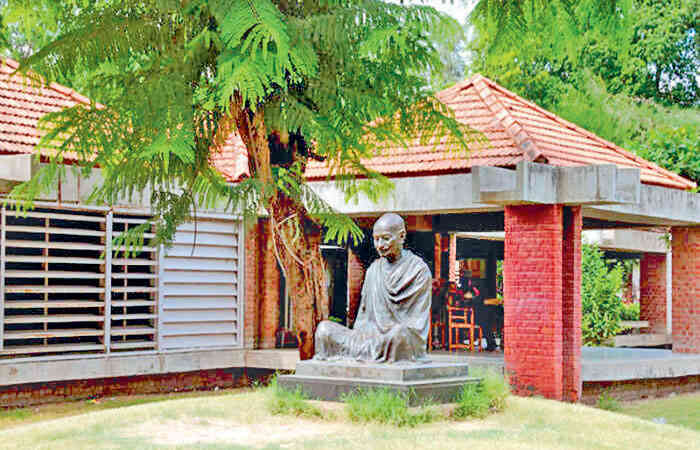
The Sabarmati Ashram in Ahmedabad was Mahatma Gandhi's home and headquarters for some of the most pivotal years of India's independence struggle (1917–1930), and it remains a deeply moving place of pilgrimage. Set peacefully on the bank of the Sabarmati River, the simple, whitewashed ashram preserves Gandhi's spartan living quarters (Hriday Kunj) exactly as he left them, his spinning wheel, writing desk, and few possessions, alongside an excellent museum of photographs, letters, and documents tracing his life and philosophy of non-violence.
It was from here that Gandhi set out on the famous 1930 Salt March. The atmosphere is serene and reflective, and entry is free. It's an essential stop for understanding Gandhi and modern India, and a calming counterpoint to Ahmedabad's bustle.
不容错过
- Gandhi's preserved living quarters (Hriday Kunj)
- The museum of photographs, letters, and documents
- The peaceful Sabarmati riverside setting
- The starting point of the 1930 Salt March
- A reflective insight into Gandhi's philosophy
门票与行程
游览Gandhi Ashram的方式
游览此景点无需门票,免费进入。如果你需要交通、导游,或想一天内结合Gandhi Ashram和附近景点,参加行程是值得的。
 最省钱Ahmedabad Heritage Trail: A Journey Through Time4.4★ · 10位游客6-9小时免费取消起价$58 每人查看日期 →
 最佳一日游World heritage Ahmedabad city tour in private car with guide and lunch5★ · 44位游客约8小时免费取消起价$135 每人查看日期 →
适合
旅行者评分
如何到达
行前须知
- Entry is free, it's a place of reflection, so visit unhurried and respectfully.
- Don't miss Hriday Kunj, Gandhi's preserved simple quarters.
- A major precinct redevelopment has been underway, check what's open.
- It's serene and riverside, a calm break from the city.
历史背景
Gandhi established the Sabarmati Ashram in 1917 as a base for his movement and experiments in communal living, self-reliance, and non-violent resistance. He lived here until 1930, when he left on the Salt March, vowing not to return until India was independent. It's now a national monument and museum.
常见问题
Why is the Sabarmati Ashram significant?
It was Gandhi's home and the headquarters of his independence movement from 1917 to 1930, and the starting point of the famous 1930 Salt March.
Is it free?
Yes, entry is free. Note that a major redevelopment of the wider precinct has been underway, so check current access.
What will I see?
Gandhi's preserved spartan living quarters, his few possessions and spinning wheel, and a museum of photographs, letters, and documents on his life and philosophy.
How long should I spend?
About an hour, unhurried, to absorb the quarters, museum, and the peaceful riverside setting.
Ahmedabad更多景点