Neighborhood
Historic Center of Salvador
 Paul R. Burley · Wikimedia Commons · CC BY-SA 4.0
Certains liens de réservation sont des liens affiliés. Si vous réservez via ces liens, nous pouvons percevoir une petite commission sans frais supplémentaires pour vous. Cela n'influence jamais nos recommandations.
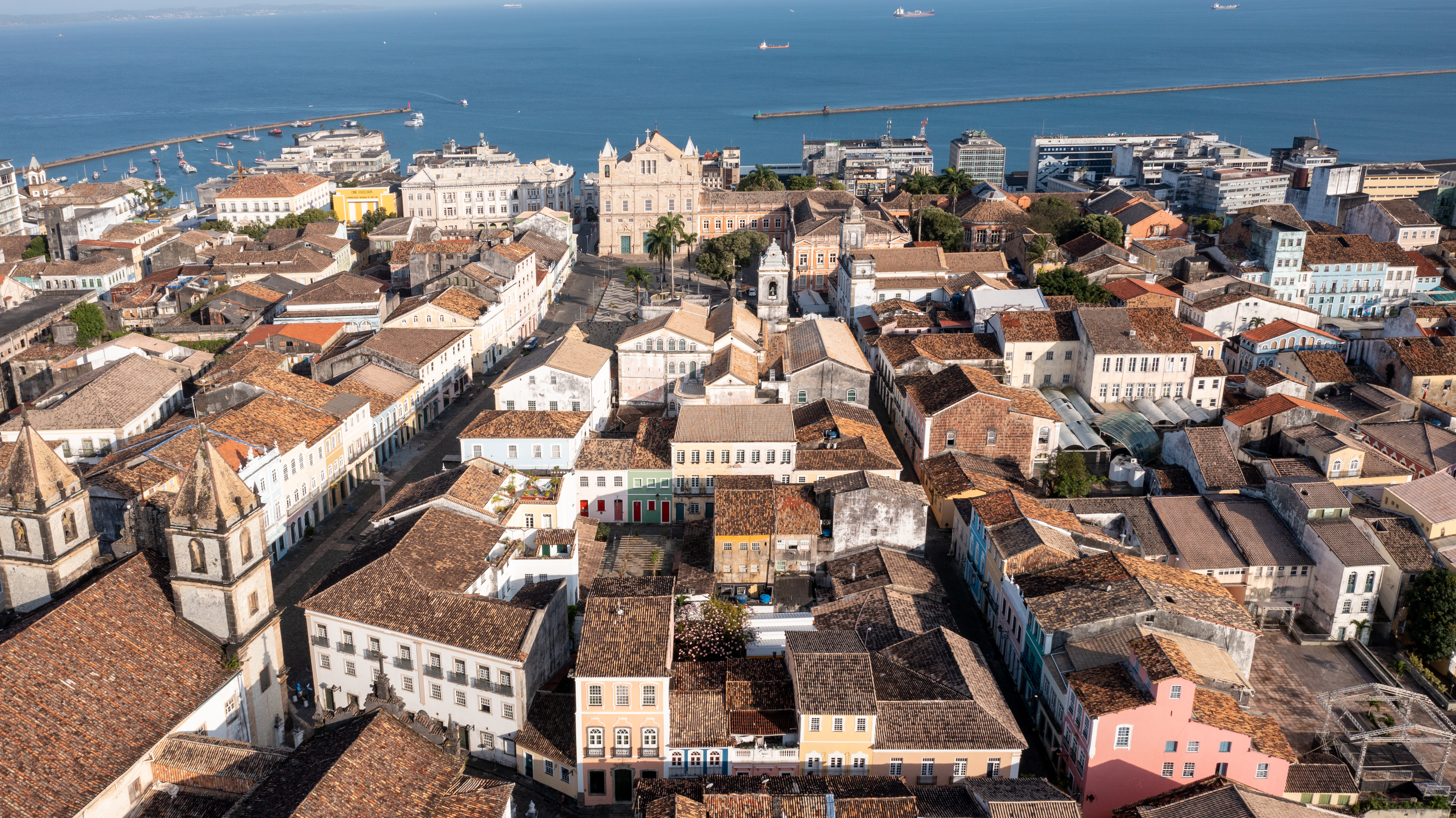
The Historic Center of Salvador, also called Pelourinho, is a neighborhood in western Salvador, Bahia. It was the city's center during the Portuguese colonial period and is named for the whipping post in its central plaza where enslaved Africans were publicly punished. The area is rich in historical monuments from the 17th through 19th centuries and is a UNESCO World Heritage Site. It remains a cultural hub for the Afro-Brazilian community, with cuisine, architecture, religion, and music reflecting Afro influences.
À ne pas manquer
- Cathedral of Salvador with Mannerist decoration
- Church and Convent of São Francisco with Baroque intricacy
- Church of the Third Order of Our Lady of the Rosary of the Black People
- Terreiro de Jesus plaza with a central water fountain and 17th- to 19th-century structures
- House of the Seven Lamps museum
- Palace of Saldanha and House of the Seven Deaths
Billets et visites
Différentes façons de visiter Historic Center of Salvador
Vous pouvez généralement visiter par vous-même. Une visite vaut le coup pour le transport, un guide, ou pour combiner les sites voisins en une journée.
 Le moins cherHistoric City Tour - Half Day in Salvador4.8★ · 239 voyageurs4-5 heuresAnnulation gratuiteDès$20 par personneVoir les dates →
 Le plus réservéCity Tour Salvador Historica4.8★ · 133 voyageurs~3 heuresAnnulation gratuiteDès$20 par personneVoir les dates →
 Privé et flexibleHistorical African oriented City Tour4.9★ · 55 voyageurs5-6 heuresAnnulation gratuiteDès$190 par personneVoir les dates →
Comment s'y rendre
Bon à savoir avant de partir
- The Historic Center was listed as a national heritage site in 1984 and a UNESCO World Heritage Site in 1985.
- The neighborhood is a cultural hub for the Afro-Brazilian community, with cuisine, architecture, religion, and music.
- More than 800 buildings have restored façades and interiors; many function as small museums and cultural centers.
Un peu d'histoire
The Church of the Holy See was demolished in 1933 along with four other blocks of colonial and imperial buildings. The Archbishop's Palace remains. Debates over the destruction led to federal-level protection of historic assets and eventually to the National Institute of Historic and Artistic Heritage. Many buildings have been renovated since the 1930s, with revitalization of whole blocks from the 1990s. More than 800 buildings have restored façades and interiors, many adapted as small museums and cultural centers.
Questions fréquentes
Why is the area called Pelourinho?
Pelourinho means 'pillory' in Portuguese, named for the whipping post in the central plaza where enslaved Africans were publicly punished.
What architectural styles can I see?
You'll see colonial Portuguese architecture, including Mannerist decoration at the Cathedral of Salvador and Baroque intricacy at the Church and Convent of São Francisco.
Are there museums in the Historic Center?
Yes, the former Medical School Building houses the Medicine Memorial, Archeology and Ethnology, and Afro-Brazilian museums. The House of the Seven Lamps is also a museum.
Plus d'attractions à Salvador