Landmark
Waibaidu Bridge
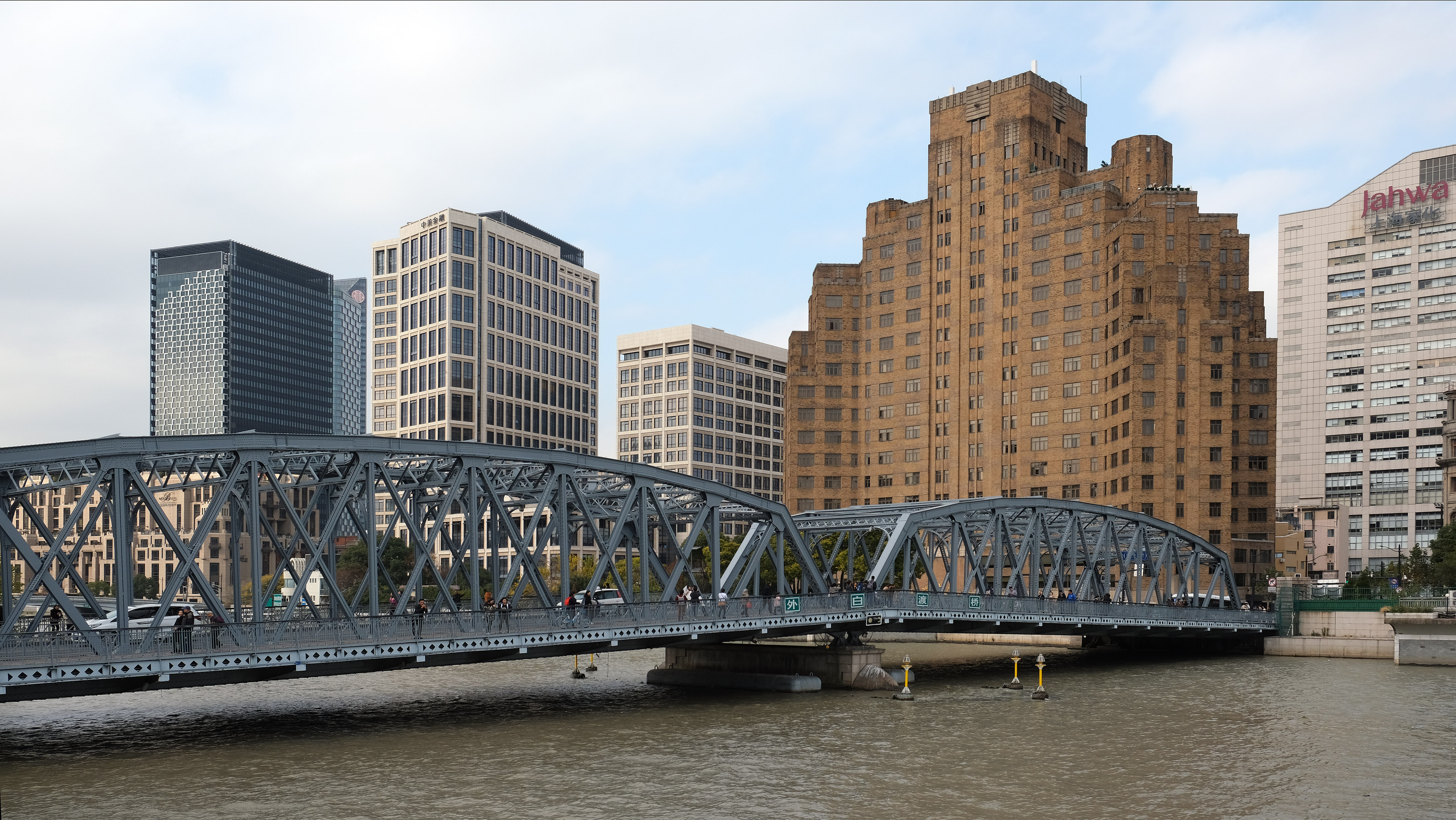 kallerna · Wikimedia Commons · CC BY-SA 4.0
部分预订链接为联盟链接。通过它们预订,我们可能获得小额佣金,但不会增加你的费用。我们绝不会因此影响推荐。
Waibaidu Bridge, also known as the Garden Bridge, is the first all-steel bridge in China and the only surviving camelback truss bridge in the country. It spans the Suzhou Creek near its confluence with the Huangpu River, adjacent to the Bund in central Shanghai, connecting the Huangpu and Hongkou districts. Opened on 20 January 1908, it is a landmark symbol of Shanghai and a popular attraction.
不容错过
- First all-steel bridge in China and the only surviving camelback truss bridge in the country
- Opened on 20 January 1908, it was the largest steel bridge in Shanghai at the time
- Connects the Huangpu and Hongkou districts, adjacent to the Bund
- Declared Heritage Architecture by the Shanghai Municipal Government in 1994
- Site of the 1915 assassination of Governor Zheng Ru Cheng
门票与行程
游览Waibaidu Bridge的方式
你可以自行参观Waibaidu Bridge。参加行程适合了解背后的故事、需要交通,或想一天内结合附近景点的情况。
 最省钱Shanghai Tower/ Top of Shanghai Ticket Booking4.3★ · 68位游客1-3小时免费取消起价$39 每人查看日期 →
 最佳一日游Zhujiajiao Water Town and Shanghai City Private Day Tour5★ · 1,092位游客约8小时免费取消起价$246 每人查看日期 →
 私享灵活Private Round Trip Transfer to Zhujiajiao Water Town from Shanghai5★ · 22位游客免费取消起价$68 每人查看日期 →
如何到达
行前须知
- The bridge is a popular attraction and one of the few constants in Shanghai's changing skyline.
- Pedestrian walkways are 2.9 metres wide on each side.
历史背景
Before bridges were built over Suzhou Creek, citizens used ferry crossings. The first Western-designed bridge at this location was Wills' Bridge, a wooden toll bridge built in 1856 by a British businessman and an American. After public protests over tolls, the Shanghai Municipal Council built a free wooden floating bridge in 1873, known as the Soochow Creek Bridge or Garden Bridge. The current steel bridge replaced it in 1906–1908, designed by a British firm and built by the Cleveland Bridge & Engineering Company. In 1915, the governor of Shanghai was assassinated on the bridge. During the 1932 Shanghai Incident, over 600,000 Chinese refugees crossed it to reach the International Settlement.
常见问题
Why is it called Waibaidu Bridge?
The name likely means 'outer free crossing bridge' in Shanghainese, as no toll was collected to cross it. It may also refer to its location at the mouth of Suzhou Creek, with 'wai' meaning outer.
What is the bridge made of?
It is an all-steel bridge, with steel imported from England.
Is the bridge still in use?
Yes, it remains a functioning bridge and a popular attraction.
Shanghai更多景点