Landmark
Waibaidu Bridge
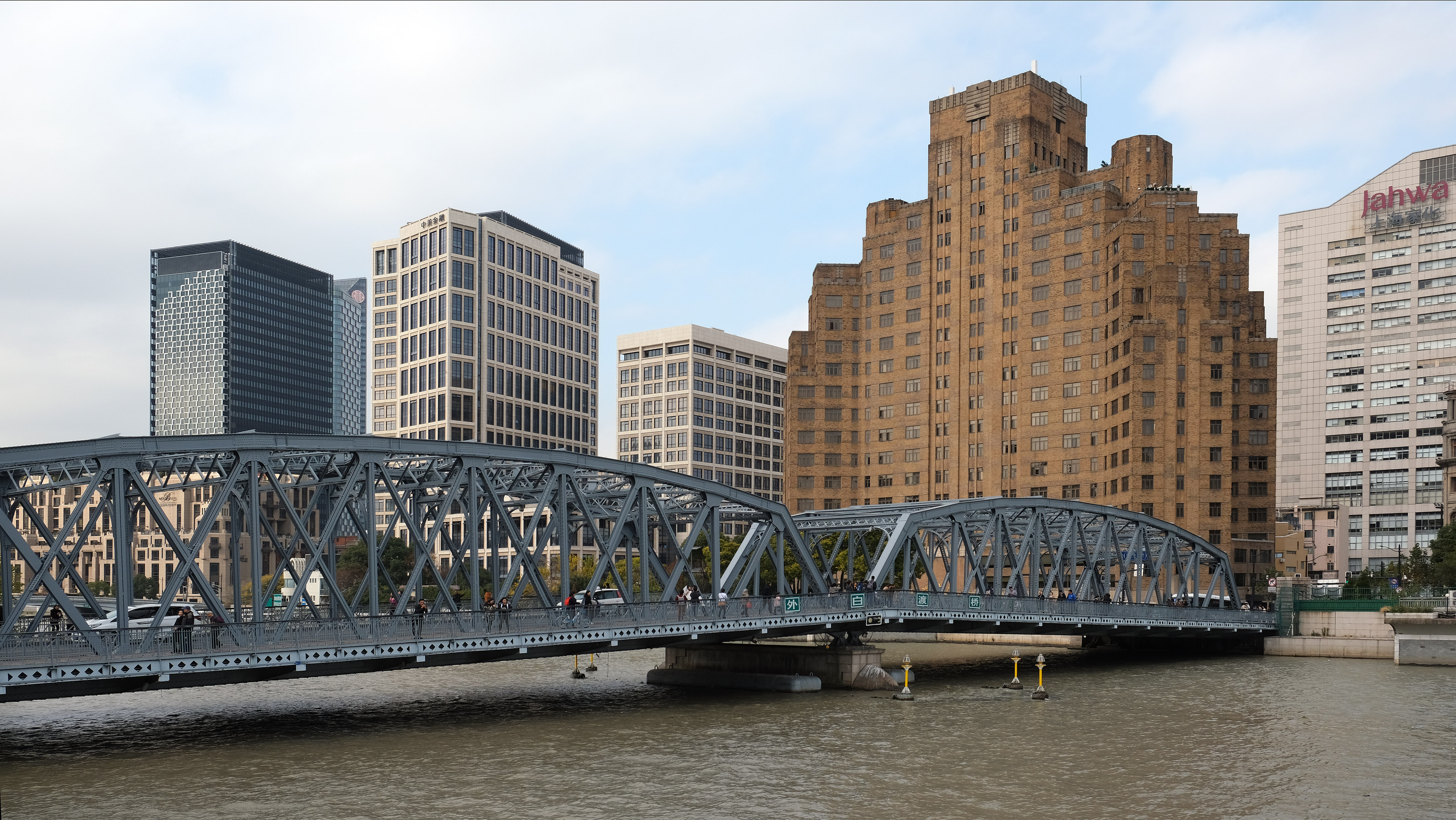 kallerna · Wikimedia Commons · CC BY-SA 4.0
Certains liens de réservation sont des liens affiliés. Si vous réservez via ces liens, nous pouvons percevoir une petite commission sans frais supplémentaires pour vous. Cela n'influence jamais nos recommandations.
Waibaidu Bridge, also known as the Garden Bridge, is the first all-steel bridge in China and the only surviving camelback truss bridge in the country. It spans the Suzhou Creek near its confluence with the Huangpu River, adjacent to the Bund in central Shanghai, connecting the Huangpu and Hongkou districts. Opened on 20 January 1908, it is a landmark symbol of Shanghai and a popular attraction.
À ne pas manquer
- First all-steel bridge in China and the only surviving camelback truss bridge in the country
- Opened on 20 January 1908, it was the largest steel bridge in Shanghai at the time
- Connects the Huangpu and Hongkou districts, adjacent to the Bund
- Declared Heritage Architecture by the Shanghai Municipal Government in 1994
- Site of the 1915 assassination of Governor Zheng Ru Cheng
Billets et visites
Différentes façons de visiter Waibaidu Bridge
Vous pouvez voir Waibaidu Bridge par vous-même. Une visite vaut le coup pour l'histoire derrière le site, pour le transport, ou pour combiner les sites voisins en une journée.
 Le moins cherShanghai Tower/ Top of Shanghai Ticket Booking4.3★ · 68 voyageurs1-3 heuresAnnulation gratuiteDès$39 par personneVoir les dates →
 Idéal pour une journéeZhujiajiao Water Town and Shanghai City Private Day Tour5★ · 1 092 voyageurs~8 heuresAnnulation gratuiteDès$246 par personneVoir les dates →
 Privé et flexiblePrivate Round Trip Transfer to Zhujiajiao Water Town from Shanghai5★ · 22 voyageursAnnulation gratuiteDès$68 par personneVoir les dates →
Comment s'y rendre
Bon à savoir avant de partir
- The bridge is a popular attraction and one of the few constants in Shanghai's changing skyline.
- Pedestrian walkways are 2.9 metres wide on each side.
Un peu d'histoire
Before bridges were built over Suzhou Creek, citizens used ferry crossings. The first Western-designed bridge at this location was Wills' Bridge, a wooden toll bridge built in 1856 by a British businessman and an American. After public protests over tolls, the Shanghai Municipal Council built a free wooden floating bridge in 1873, known as the Soochow Creek Bridge or Garden Bridge. The current steel bridge replaced it in 1906–1908, designed by a British firm and built by the Cleveland Bridge & Engineering Company. In 1915, the governor of Shanghai was assassinated on the bridge. During the 1932 Shanghai Incident, over 600,000 Chinese refugees crossed it to reach the International Settlement.
Questions fréquentes
Why is it called Waibaidu Bridge?
The name likely means 'outer free crossing bridge' in Shanghainese, as no toll was collected to cross it. It may also refer to its location at the mouth of Suzhou Creek, with 'wai' meaning outer.
What is the bridge made of?
It is an all-steel bridge, with steel imported from England.
Is the bridge still in use?
Yes, it remains a functioning bridge and a popular attraction.
Plus d'attractions à Shanghai