Religious site
Al-Kazimiyya Mosque
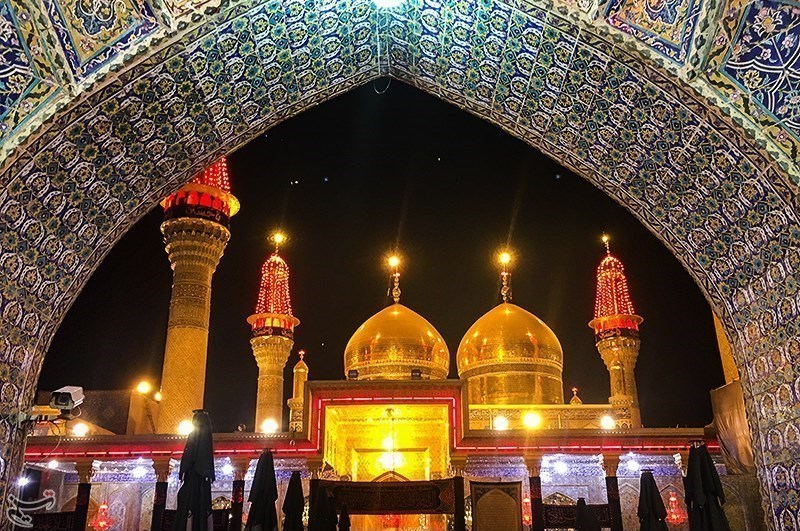 Hamed Malekpour · Wikimedia Commons · CC BY 4.0
Một số liên kết đặt chỗ là liên kết tiếp thị. Nếu bạn đặt qua chúng, chúng tôi có thể nhận được một khoản hoa hồng nhỏ mà bạn không phải trả thêm. Chúng tôi không bao giờ để điều này ảnh hưởng đến các địa điểm chúng tôi giới thiệu.
Al-Kazimiyya Mosque, also known as the Jawadayn Shrine, is a major Shia holy site in the Kādhimiya suburb of Baghdad. It contains the mausoleums of the seventh Imam, Musa al-Kazim, and the ninth Imam, Muhammad al-Jawad. The shrine also holds the tombs of the scholars Shaykh Mufīd and Shaykh Naṣīr ad-Dīn aṭ-Ṭūsi, and adjacent smaller shrines belong to Sayyid Raḍī, Sayyid Murtadā, and Qadi Abu Yusuf al-Ansari.
Đừng bỏ lỡ
- Two gold-covered domes, each 25 meters high, decorated inside with Islamic motifs and Qur’anic verses.
- Four large gold-covered minarets rising 35 meters above the ceiling, plus four smaller minaret-shaped towers.
- The two shrine rooms connected by a rectangular corridor with six doors, featuring niches and alcoves that reduce material weight.
- The outer walls contain half-open iwans and open rooms for religious students, with mirror decorations symbolizing paradise.
- The rectangular layout measures 140 meters north-south and 135 meters east-west, including the al-Rawdah area.
Vé & tour
Các cách tham quan Al-Kazimiyya Mosque
Bạn có thể tự tham quan Al-Kazimiyya Mosque. Hướng dẫn viên đáng giá cho lịch sử và chi tiết mà bạn dễ bỏ qua, và tour có thể kết hợp với các điểm gần đó.
Cách di chuyển
Điều cần biết trước khi đi
- The mosque is located northwest of central Baghdad in the Kādhimiya suburb.
- The site includes the tombs of historical scholars Shaykh Mufīd and Shaykh Naṣīr ad-Dīn aṭ-Ṭūsi, plus adjacent shrines for Sayyid Raḍī, Sayyid Murtadā, and Qadi Abu Yusuf al-Ansari.
- The mosque has been targeted in multiple terrorist attacks since 2003, including bombings during Ashura commemorations and Friday prayers.
- The forecourts have been expanded, but the expansion has been criticized for demolishing over 130 old archaeological sites, traditional houses, and Ottoman landmarks.
Một chút lịch sử
The mosque was built on a Quraysh cemetery created with the Round City of Baghdad in 762 CE. The cemetery was founded by Abbasid Caliph al-Mansur for his family. The seventh imam was buried there in 799, and the ninth imam in 834. The current building dates to a restoration by Safavid Shah Ismail I (1502–1524) and was further ornamented by Ottoman Sultan Suleiman the Magnificent after 1534. In 1611, Sultan Ahmed I granted custodianship to the al-Jamali family. During the 1920 Iraq Revolt, the mosque hosted national gatherings against the British.
Câu hỏi thường gặp
Who is buried at Al-Kazimiyya Mosque?
The seventh Shia Imam Musa al-Kazim and his grandson, the ninth Imam Muhammad al-Jawad, are buried here, along with scholars Shaykh Mufīd and Shaykh Naṣīr ad-Dīn aṭ-Ṭūsi.
When was the mosque built?
The current building dates to a restoration by Safavid Shah Ismail I between 1502 and 1524, with further ornamentation by Ottoman Sultan Suleiman the Magnificent after 1534.
What architectural features stand out?
The mosque has two gold-covered domes and four gold-covered minarets. The prayer hall contains two rectangular shrine rooms connected by a corridor with six doors, and the outer walls feature half-open iwans.
What is the significance of the gold on the domes?
The two domes are covered with 9,000 bricks of pure gold, and the four minarets are also gold-covered.
Thêm điểm tham quan ở Baghdad