Religious site
Al-Kazimiyya Mosque
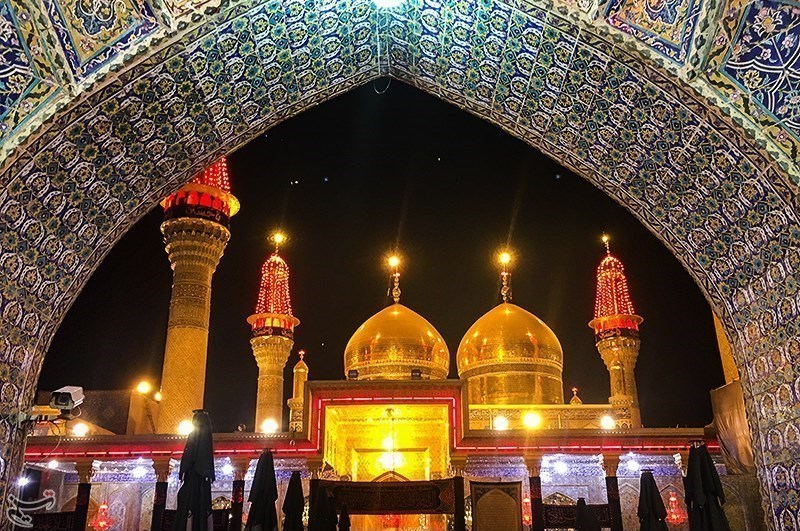 Hamed Malekpour · Wikimedia Commons · CC BY 4.0
Некоторые ссылки на бронирование являются партнёрскими. Если вы бронируете по ним, мы можем получить небольшую комиссию без дополнительных затрат для вас. Это никак не влияет на наши рекомендации.
Al-Kazimiyya Mosque, also known as the Jawadayn Shrine, is a major Shia holy site in the Kādhimiya suburb of Baghdad. It contains the mausoleums of the seventh Imam, Musa al-Kazim, and the ninth Imam, Muhammad al-Jawad. The shrine also holds the tombs of the scholars Shaykh Mufīd and Shaykh Naṣīr ad-Dīn aṭ-Ṭūsi, and adjacent smaller shrines belong to Sayyid Raḍī, Sayyid Murtadā, and Qadi Abu Yusuf al-Ansari.
Не пропустите
- Two gold-covered domes, each 25 meters high, decorated inside with Islamic motifs and Qur’anic verses.
- Four large gold-covered minarets rising 35 meters above the ceiling, plus four smaller minaret-shaped towers.
- The two shrine rooms connected by a rectangular corridor with six doors, featuring niches and alcoves that reduce material weight.
- The outer walls contain half-open iwans and open rooms for religious students, with mirror decorations symbolizing paradise.
- The rectangular layout measures 140 meters north-south and 135 meters east-west, including the al-Rawdah area.
Билеты и экскурсии
Как посетить Al-Kazimiyya Mosque
Al-Kazimiyya Mosque можно посетить самостоятельно. Гид стоит взять ради истории и деталей, которые легко пропустить. Экскурсия также может объединить это место с другими.
Как добраться
Что нужно знать перед посещением
- The mosque is located northwest of central Baghdad in the Kādhimiya suburb.
- The site includes the tombs of historical scholars Shaykh Mufīd and Shaykh Naṣīr ad-Dīn aṭ-Ṭūsi, plus adjacent shrines for Sayyid Raḍī, Sayyid Murtadā, and Qadi Abu Yusuf al-Ansari.
- The mosque has been targeted in multiple terrorist attacks since 2003, including bombings during Ashura commemorations and Friday prayers.
- The forecourts have been expanded, but the expansion has been criticized for demolishing over 130 old archaeological sites, traditional houses, and Ottoman landmarks.
Немного истории
The mosque was built on a Quraysh cemetery created with the Round City of Baghdad in 762 CE. The cemetery was founded by Abbasid Caliph al-Mansur for his family. The seventh imam was buried there in 799, and the ninth imam in 834. The current building dates to a restoration by Safavid Shah Ismail I (1502–1524) and was further ornamented by Ottoman Sultan Suleiman the Magnificent after 1534. In 1611, Sultan Ahmed I granted custodianship to the al-Jamali family. During the 1920 Iraq Revolt, the mosque hosted national gatherings against the British.
Частые вопросы
Who is buried at Al-Kazimiyya Mosque?
The seventh Shia Imam Musa al-Kazim and his grandson, the ninth Imam Muhammad al-Jawad, are buried here, along with scholars Shaykh Mufīd and Shaykh Naṣīr ad-Dīn aṭ-Ṭūsi.
When was the mosque built?
The current building dates to a restoration by Safavid Shah Ismail I between 1502 and 1524, with further ornamentation by Ottoman Sultan Suleiman the Magnificent after 1534.
What architectural features stand out?
The mosque has two gold-covered domes and four gold-covered minarets. The prayer hall contains two rectangular shrine rooms connected by a corridor with six doors, and the outer walls feature half-open iwans.
What is the significance of the gold on the domes?
The two domes are covered with 9,000 bricks of pure gold, and the four minarets are also gold-covered.
Ещё достопримечательности в Baghdad