Museum
Louvre Museum
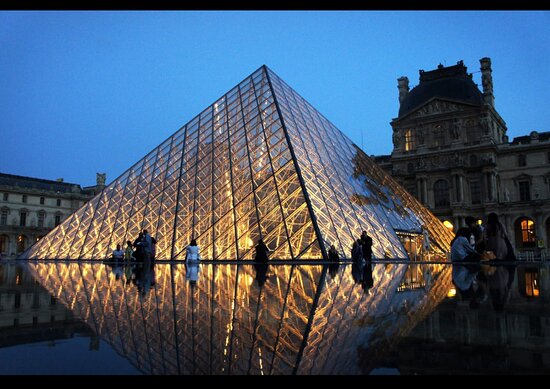 Photo via TripAdvisor (Management)
Alguns links de reserva são links de afiliados. Se você reservar por eles, podemos ganhar uma pequena comissão sem custo extra para você. Nunca deixamos que isso influencie os lugares que recomendamos.
O Museu do Louvre é um imenso tesouro de arte e história, com 72.735 metros quadrados de espaço expositivo. Originalmente uma fortaleza medieval e depois palácio real, tornou-se museu público em 1793. O visitante pode explorar oito departamentos de curadoria, das antiguidades egípcias à pintura europeia. A entrada em forma de pirâmide de vidro, projetada por I. M. Pei, é um ícone moderno. Entre as obras imperdíveis estão a Mona Lisa, de Leonardo da Vinci, a Vênus de Milo e a Vitória Alada de Samotrácia. Com mais de 35.000 objetos em exposição, uma única visita mal consegue arranhar a superfície, por isso planejar-se com antecedência é essencial. O Louvre também oferece roteiros temáticos e exposições temporárias para enriquecer a experiência.
Não perca
- Ver a Mona Lisa na Salle des États
- Admirar a Vênus de Milo e a Vitória Alada de Samotrácia
- Explorar os Apartamentos de Napoleão III, com sua opulenta decoração do século XIX
- Percorrer a Cour Marly e suas grandiosas esculturas
Ingressos e passeios
Formas de visitar Louvre Museum
Você pode visitar por conta própria (Paid entry). Um passeio adiciona transporte e guia, ou combina atrações próximas em um dia.
 Mais baratoParis: Luggage Storage close to Louvre Museum4.2★ · 19 viajantes~24 horasCancelamento grátisA partir de$9 por pessoaVer datas →
 Mais reservadoLouvre Museum Masterpieces Guided Tour with Access4.5★ · 12.946 viajantes~3 horasCancelamento grátisA partir de$74 por pessoaVer datas →
 Privado e flexívelLouvre Museum Evening Premium Guided Tour BEST Avoid The Crowds5★ · 94 viajantes~3 horasCancelamento grátisA partir de$174 por pessoaVer datas →
Getting there
Saiba antes de ir
- The nearest Métro stations are Louvre–Rivoli and Palais Royal–Musée du Louvre; the latter connects underground to the Carrousel du Louvre.
- The museum is habitually closed on Tuesdays and on some holidays.
- Cameras and video recorders are permitted inside, but flash photography is forbidden.
- The collection is divided into eight departments covering antiquities, Islamic art, sculpture, decorative arts, paintings, prints, and drawings.
Um pouco de história
The Louvre fortress gradually lost its defensive role as Paris expanded. In 1546, Francis I began converting it into a principal royal residence. The palace was repeatedly redesigned and extended, but Louis XIV moved his household to Versailles in 1682. The Louvre then served increasingly as a home for royal collections and learned institutions. Ancient Greek and Roman sculpture was displayed there from 1692, and the Académie Royale de Peinture et de Sculpture held exhibitions in the palace. Revolutionary France turned the royal collection into national property. The museum opened on 10 August 1793 with 537 paintings and 184 art objects, most drawn from royal holdings and confiscated church property. Structural problems forced a closure from 1796 to 1801. Under Napoleon, works acquired through military campaigns greatly enlarged the collection and the institution was renamed Musée Napoléon. Many seized objects were returned after his abdication, though later reigns, donations, bequests, and archaeological acquisitions continued to expand the holdings. The palace and galleries grew through major nineteenth-century projects. In the late twentieth century, the Grand Louvre program reorganized the complex, moved the Finance Ministry out of the Richelieu Wing, and created the underground entrance beneath Pei's pyramid. The result is a museum whose buildings document royal, revolutionary, imperial, and republican France alongside the collections they contain.
Perguntas frequentes
Was the Louvre always a museum?
No. It began as a medieval fortress, became a royal palace, and opened as a public museum during the French Revolution in 1793.
Can visitors see the original fortress?
Yes. Remnants of the medieval Louvre fortress are preserved in the museum basement.
What are the Louvre's best-known works?
The collection includes the Mona Lisa, the Venus de Milo, and the Winged Victory of Samothrace, along with extensive holdings across eight departments.
Where is the main entrance?
The principal entrance is Hall Napoléon beneath the Louvre Pyramid, reached from the pyramid or the underground Carrousel du Louvre.
Is photography allowed?
Cameras and video recorders are permitted, but flash photography is prohibited.
How did the collection grow?
It developed from royal collections, Revolutionary confiscations, Napoleonic acquisitions, later royal purchases, archaeological material, donations, and bequests.
Mais atrações em Paris