Museum
Louvre Museum
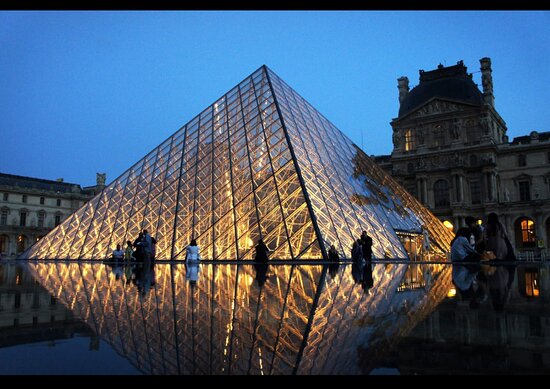 Photo via TripAdvisor (Management)
Sommige boekingslinks zijn affiliate-links. Als je via deze links boekt, kunnen wij een kleine commissie verdienen zonder extra kosten voor jou. We laten dit nooit bepalen welke plekken we aanbevelen.
Het Louvre Museum is een enorme schatkamer van kunst en geschiedenis, met 72.735 vierkante meter tentoonstellingsruimte. Oorspronkelijk een middeleeuws fort en later een koninklijk paleis, werd het in 1793 opengesteld als openbaar museum. Bezoekers kunnen acht conservatoriale afdelingen verkennen, van Egyptische oudheden tot Europese schilderijen. De glazen piramide-ingang van het museum, ontworpen door I. M. Pei, is een modern icoon. Must-see werken zijn onder meer Leonardo da Vinci's Mona Lisa, de Venus van Milo en de Gevleugelde Overwinning van Samothrake. Met meer dan 35.000 tentoongestelde objecten kan een enkel bezoek slechts een oppervlakkige indruk geven, dus voorbereiding is essentieel. Het Louvre biedt ook themaroutes en tijdelijke tentoonstellingen om de ervaring te verrijken.
Niet te missen
- Bekijk de Mona Lisa in de Salle des États
- Bewonder de Venus van Milo en de Gevleugelde Overwinning van Samothrake
- Verken de Napoleon III-appartementen voor weelderig 19e-eeuws decor
- Wandel door de Cour Marly met zijn grote sculpturen
Tickets & rondleidingen
Manieren om Louvre Museum te bezoeken
Je kunt op eigen gelegenheid bezoeken (Paid entry). Een rondleiding voegt vervoer en een gids toe, of combineert nabijgelegen bezienswaardigheden in één dag.
 Goedkoopste optieParis: Luggage Storage close to Louvre Museum4.2★ · 19 reizigers~24 uurGratis annulerenVanaf$9 per persoonData bekijken →
 Meest geboektLouvre Museum Masterpieces Guided Tour with Access4.5★ · 12.946 reizigers~3 uurGratis annulerenVanaf$74 per persoonData bekijken →
 Privé & flexibelLouvre Museum Evening Premium Guided Tour BEST Avoid The Crowds5★ · 94 reizigers~3 uurGratis annulerenVanaf$174 per persoonData bekijken →
Getting there
Goed om te weten
- The nearest Métro stations are Louvre–Rivoli and Palais Royal–Musée du Louvre; the latter connects underground to the Carrousel du Louvre.
- The museum is habitually closed on Tuesdays and on some holidays.
- Cameras and video recorders are permitted inside, but flash photography is forbidden.
- The collection is divided into eight departments covering antiquities, Islamic art, sculpture, decorative arts, paintings, prints, and drawings.
Een stukje geschiedenis
The Louvre fortress gradually lost its defensive role as Paris expanded. In 1546, Francis I began converting it into a principal royal residence. The palace was repeatedly redesigned and extended, but Louis XIV moved his household to Versailles in 1682. The Louvre then served increasingly as a home for royal collections and learned institutions. Ancient Greek and Roman sculpture was displayed there from 1692, and the Académie Royale de Peinture et de Sculpture held exhibitions in the palace. Revolutionary France turned the royal collection into national property. The museum opened on 10 August 1793 with 537 paintings and 184 art objects, most drawn from royal holdings and confiscated church property. Structural problems forced a closure from 1796 to 1801. Under Napoleon, works acquired through military campaigns greatly enlarged the collection and the institution was renamed Musée Napoléon. Many seized objects were returned after his abdication, though later reigns, donations, bequests, and archaeological acquisitions continued to expand the holdings. The palace and galleries grew through major nineteenth-century projects. In the late twentieth century, the Grand Louvre program reorganized the complex, moved the Finance Ministry out of the Richelieu Wing, and created the underground entrance beneath Pei's pyramid. The result is a museum whose buildings document royal, revolutionary, imperial, and republican France alongside the collections they contain.
Veelgestelde vragen
Was the Louvre always a museum?
No. It began as a medieval fortress, became a royal palace, and opened as a public museum during the French Revolution in 1793.
Can visitors see the original fortress?
Yes. Remnants of the medieval Louvre fortress are preserved in the museum basement.
What are the Louvre's best-known works?
The collection includes the Mona Lisa, the Venus de Milo, and the Winged Victory of Samothrace, along with extensive holdings across eight departments.
Where is the main entrance?
The principal entrance is Hall Napoléon beneath the Louvre Pyramid, reached from the pyramid or the underground Carrousel du Louvre.
Is photography allowed?
Cameras and video recorders are permitted, but flash photography is prohibited.
How did the collection grow?
It developed from royal collections, Revolutionary confiscations, Napoleonic acquisitions, later royal purchases, archaeological material, donations, and bequests.
Meer bezienswaardigheden in Parijs