Museum
Louvre Museum
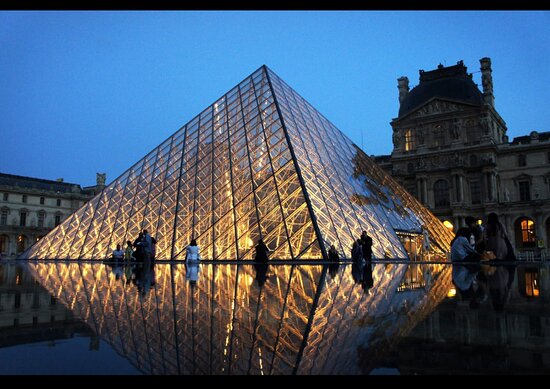 Photo via TripAdvisor (Management)
Some booking links are affiliate links. If you book through them, we may earn a small commission at no extra cost to you. We never let this influence which places we recommend.
The Louvre is France's national art museum, housed in the Louvre Palace on the Right Bank of the Seine in central Paris. Its setting is part of the experience: the palace began as a fortress built under Philip II in the late twelfth and early thirteenth centuries, and remains of that medieval structure can still be seen in the museum basement. Successive rulers enlarged and reshaped the building before it became a public museum during the French Revolution. The permanent collection spans antiquity to the modern era and is organized into eight departments: Egyptian Antiquities; Near Eastern Antiquities; Greek, Etruscan, and Roman Antiquities; Islamic Art; Sculpture; Decorative Arts; Paintings; and Prints and Drawings. Celebrated works include the Mona Lisa, the Venus de Milo, and the Winged Victory of Samothrace, but the scale and range of the collection make the museum much more than a route between three icons. Visitors encounter archaeological finds, sculpture, painting, decorative objects, and works on paper within rooms that also reveal the history of a royal palace. The main arrival space is Hall Napoléon beneath I. M. Pei's glass pyramid. The museum reports approximately 500,000 objects across eight departments, with more than 60,600 square metres dedicated to the permanent collection.
Don't miss
- The medieval fortress foundations preserved below the later Louvre Palace
- The Mona Lisa in the paintings collection
- The ancient Greek Venus de Milo and Winged Victory of Samothrace
- The eight curatorial departments, from Near Eastern antiquities to prints and drawings
- I. M. Pei's glass pyramid and the underground Hall Napoléon entrance
- The palace rooms and galleries, which retain evidence of the Louvre's royal past
Tickets & tours
Ways to visit Louvre Museum
You can visit on your own (Paid entry). A tour adds transport and a guide, or combines nearby sights into one day.
 Cheapest way inParis: Luggage Storage close to Louvre Museum4.2★ · 19 travelers~24 hoursFree cancellationFrom$9 per personSee dates →
 Most bookedLouvre Museum Masterpieces Guided Tour with Access4.5★ · 12,946 travelers~3 hoursFree cancellationFrom$74 per personSee dates →
 Private & flexibleLouvre Museum Evening Premium Guided Tour BEST Avoid The Crowds5★ · 94 travelers~3 hoursFree cancellationFrom$174 per personSee dates →
Getting there
Know before you go
- The nearest Métro stations are Louvre–Rivoli and Palais Royal–Musée du Louvre; the latter connects underground to the Carrousel du Louvre.
- The museum is habitually closed on Tuesdays and on some holidays.
- Cameras and video recorders are permitted inside, but flash photography is forbidden.
- The collection is divided into eight departments covering antiquities, Islamic art, sculpture, decorative arts, paintings, prints, and drawings.
A bit of history
The Louvre fortress gradually lost its defensive role as Paris expanded. In 1546, Francis I began converting it into a principal royal residence. The palace was repeatedly redesigned and extended, but Louis XIV moved his household to Versailles in 1682. The Louvre then served increasingly as a home for royal collections and learned institutions. Ancient Greek and Roman sculpture was displayed there from 1692, and the Académie Royale de Peinture et de Sculpture held exhibitions in the palace. Revolutionary France turned the royal collection into national property. The museum opened on 10 August 1793 with 537 paintings and 184 art objects, most drawn from royal holdings and confiscated church property. Structural problems forced a closure from 1796 to 1801. Under Napoleon, works acquired through military campaigns greatly enlarged the collection and the institution was renamed Musée Napoléon. Many seized objects were returned after his abdication, though later reigns, donations, bequests, and archaeological acquisitions continued to expand the holdings. The palace and galleries grew through major nineteenth-century projects. In the late twentieth century, the Grand Louvre program reorganized the complex, moved the Finance Ministry out of the Richelieu Wing, and created the underground entrance beneath Pei's pyramid. The result is a museum whose buildings document royal, revolutionary, imperial, and republican France alongside the collections they contain.
Common questions
Was the Louvre always a museum?
No. It began as a medieval fortress, became a royal palace, and opened as a public museum during the French Revolution in 1793.
Can visitors see the original fortress?
Yes. Remnants of the medieval Louvre fortress are preserved in the museum basement.
What are the Louvre's best-known works?
The collection includes the Mona Lisa, the Venus de Milo, and the Winged Victory of Samothrace, along with extensive holdings across eight departments.
Where is the main entrance?
The principal entrance is Hall Napoléon beneath the Louvre Pyramid, reached from the pyramid or the underground Carrousel du Louvre.
Is photography allowed?
Cameras and video recorders are permitted, but flash photography is prohibited.
How did the collection grow?
It developed from royal collections, Revolutionary confiscations, Napoleonic acquisitions, later royal purchases, archaeological material, donations, and bequests.
More attractions in Paris