Park & nature
Hortus Botanicus (Amsterdam)
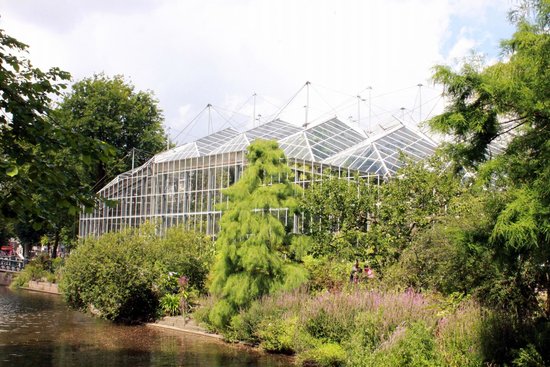 Photo via TripAdvisor (simospeci)
Sommige boekingslinks zijn affiliate-links. Als je via deze links boekt, kunnen wij een kleine commissie verdienen zonder extra kosten voor jou. We laten dit nooit bepalen welke plekken we aanbevelen.
Hortus Botanicus Amsterdam, opgericht in 1638, is een van de oudste botanische tuinen ter wereld. Gelegen in de Plantagebuurt biedt het een rustige ontsnapping aan de drukte van de stad. De tuin herbergt een enorme collectie planten van over de hele wereld, waaronder een historisch palmenhuis, een vlinderkas en een driegangenkas. Bezoekers kunnen dwalen door thematische gedeelten zoals de Japanse tuin en de medicinale plantentuin. Het café en terras van de tuin bieden een ontspannen plek om van het groen te genieten. Het is een paradijs voor plantenliefhebbers en wie op zoek is naar rust in Amsterdam.
Niet te missen
- Bezoek het historische Palmenhuis (1912) met zijn tropische planten
- Verken de Vlinderkas, waar vlinders vrij rondvliegen
- Bekijk de 300 jaar oude Oost-Kaapse reuzenpalmvaren in de subtropische kas
- Wandel door de Japanse tuin en de systematische tuin
- Ontspan bij café De Oranjerie met uitzicht op de tuin
Tickets & rondleidingen
Manieren om Hortus Botanicus (Amsterdam) te bezoeken
Je kunt Hortus Botanicus (Amsterdam) in je eigen tempo verkennen. Een tour is vooral de moeite waard vanwege het vervoer, of om het te combineren met nabijgelegen bezienswaardigheden in één dag.
 Goedkoopste optieAbsolutely Amsterdam - the Essential Introductory Walking Tour4.9★ · 4.033 reizigers~3 uurGratis annulerenVanaf$6 per persoonData bekijken →
 Meest geboektAmsterdam Classic Saloon Boat Cruise with Drinks and Cheese4.8★ · 33.201 reizigers~1 uurGratis annulerenVanaf$19 per persoonData bekijken →
 Privé & flexibelDeparture from Amsterdam City to Amsterdam Airport AMS by Minivan5★ · 15 reizigers~1 uurGratis annulerenVanaf$102 per persoonData bekijken →
Getting there
Goed om te weten
- The garden is located in the leafy Plantage district, which also features Artis Zoo and grand mansions.
- A single coffee plant from this garden is the ancestor of all coffee cultivation in Central and South America.
- Two small potted oil palms from Mauritius produced seeds that became a major source of revenue in the Dutch East Indies.
Een stukje geschiedenis
The garden was founded by Amsterdam City Council in 1638 as the Hortus Medicus, serving as a training and examination site for physicians and pharmacists. In the 17th century, traders from the Dutch East India Company brought back plants and seeds for medicinal and commercial use. A single coffee plant from the collection became the parent of all coffee cultivation in Central and South America, and two potted oil palms from Mauritius produced seeds that spread throughout Southeast Asia, becoming a major revenue source in the Dutch East Indies. Johannes Snippendaal, director in 1646, catalogued 796 plant species, mostly medicinal, many still grown in the Snippendaal Garden, known as 'the 17th century pharmacopoeia of Amsterdam'. The hexagonal pavilion dates to the late 1600s, the entrance gate to the early 1700s, the Orangery to 1875, and the Palm House and Hugo de Vries Laboratory (both Amsterdam School expressionist architecture) to 1912 and 1915. Hugo de Vries, director from 1885 to 1918, brought international attention. In 1987, the garden nearly closed when the University of Amsterdam stopped funding, but community supporters prevented closure, and it is now supported by the Amsterdam City Council.
Veelgestelde vragen
What is the historical significance of Hortus Botanicus?
It is one of the world's oldest botanical gardens, founded in 1638 as a herbal garden for doctors and apothecaries, and it played a key role in the global spread of coffee and oil palm cultivation.
What architectural features should I look for?
Look for the hexagonal pavilion (late 1600s), the early 1700s entrance gate, the 1875 Orangery, and the Palm House and Hugo de Vries Laboratory, both in Amsterdam School expressionist architecture from 1912 and 1915.
Are there any rare or endangered plants?
Yes, the collection is famous for its trees and plants, some of which are endangered, including the Persian ironwood tree.
What is the Snippendaal Garden?
It is a section of the garden that recreates the 17th-century collection of medicinal plants, often called 'the 17th century pharmacopoeia of Amsterdam', with many species still grown today.
Can I visit the hothouse?
Yes, there is a large hothouse that incorporates three different tropical climates.
Meer bezienswaardigheden in Amsterdam