Park & nature
Hortus Botanicus (Amsterdam)
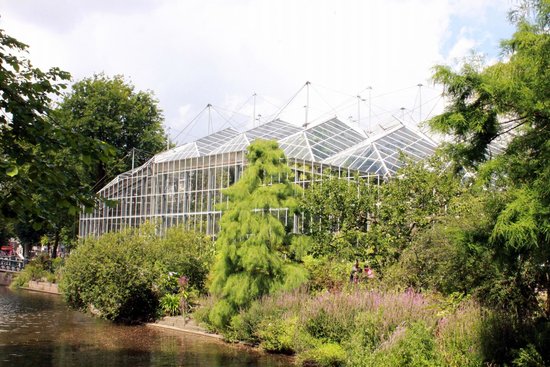 Photo via TripAdvisor (simospeci)
Some booking links are affiliate links. If you book through them, we may earn a small commission at no extra cost to you. We never let this influence which places we recommend.
Hortus Botanicus is a historic botanical garden in the Plantage district of Amsterdam, founded in 1638 as a herbal garden for doctors and apothecaries. It is one of the world's oldest botanical gardens and a popular attraction for both Dutch and international visitors.
Don't miss
- The Snippendaal Garden, a recreated 17th-century pharmacopoeia with many original medicinal plant species.
- The Palm House and Hugo de Vries Laboratory, both built in Amsterdam School expressionist architecture from 1912 and 1915.
- A large hothouse that incorporates three different tropical climates.
- The hexagonal pavilion from the late 1600s and the early 1700s entrance gate.
- The Orangery, dating from 1875.
- Famous trees like the Persian ironwood tree and endangered plant species.
Tickets & tours
Ways to visit Hortus Botanicus (Amsterdam)
You can explore Hortus Botanicus (Amsterdam) at your own pace. A tour is worth it mainly for transport, or for pairing it with nearby sights in one day.
 Cheapest way inAbsolutely Amsterdam - the Essential Introductory Walking Tour4.9★ · 4,032 travelers~3 hoursFree cancellationFrom$6 per personSee dates →
 Most bookedAmsterdam Classic Saloon Boat Cruise with Drinks and Cheese4.8★ · 33,192 travelers~1 hourFree cancellationFrom$19 per personSee dates →
 Private & flexibleDeparture from Amsterdam City to Amsterdam Airport AMS by Minivan5★ · 15 travelers~1 hourFree cancellationFrom$102 per personSee dates →
Know before you go
- The garden is located in the leafy Plantage district, which also features Artis Zoo and grand mansions.
- A single coffee plant from this garden is the ancestor of all coffee cultivation in Central and South America.
- Two small potted oil palms from Mauritius produced seeds that became a major source of revenue in the Dutch East Indies.
A bit of history
The garden was founded by Amsterdam City Council in 1638 as the Hortus Medicus, serving as a training and examination site for physicians and pharmacists. In the 17th century, traders from the Dutch East India Company brought back plants and seeds for medicinal and commercial use. A single coffee plant from the collection became the parent of all coffee cultivation in Central and South America, and two potted oil palms from Mauritius produced seeds that spread throughout Southeast Asia, becoming a major revenue source in the Dutch East Indies. Johannes Snippendaal, director in 1646, catalogued 796 plant species, mostly medicinal, many still grown in the Snippendaal Garden, known as 'the 17th century pharmacopoeia of Amsterdam'. The hexagonal pavilion dates to the late 1600s, the entrance gate to the early 1700s, the Orangery to 1875, and the Palm House and Hugo de Vries Laboratory (both Amsterdam School expressionist architecture) to 1912 and 1915. Hugo de Vries, director from 1885 to 1918, brought international attention. In 1987, the garden nearly closed when the University of Amsterdam stopped funding, but community supporters prevented closure, and it is now supported by the Amsterdam City Council.
Common questions
What is the historical significance of Hortus Botanicus?
It is one of the world's oldest botanical gardens, founded in 1638 as a herbal garden for doctors and apothecaries, and it played a key role in the global spread of coffee and oil palm cultivation.
What architectural features should I look for?
Look for the hexagonal pavilion (late 1600s), the early 1700s entrance gate, the 1875 Orangery, and the Palm House and Hugo de Vries Laboratory, both in Amsterdam School expressionist architecture from 1912 and 1915.
Are there any rare or endangered plants?
Yes, the collection is famous for its trees and plants, some of which are endangered, including the Persian ironwood tree.
What is the Snippendaal Garden?
It is a section of the garden that recreates the 17th-century collection of medicinal plants, often called 'the 17th century pharmacopoeia of Amsterdam', with many species still grown today.
Can I visit the hothouse?
Yes, there is a large hothouse that incorporates three different tropical climates.
More attractions in Amsterdam