Park & nature
Hortus Botanicus (Amsterdam)
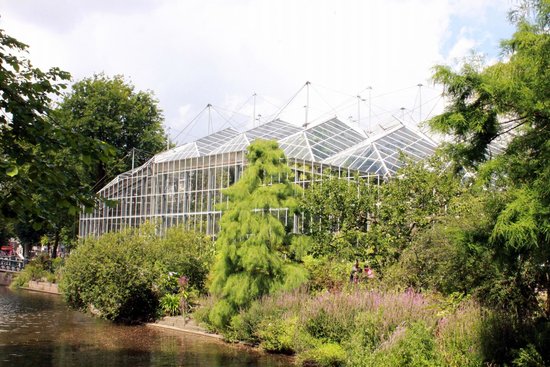 Photo via TripAdvisor (simospeci)
Einige Buchungslinks sind Affiliate-Links. Wenn du darüber buchst, erhalten wir eventuell eine kleine Provision ohne Mehrkosten für dich. Das beeinflusst niemals, welche Orte wir empfehlen.
Der 1638 gegründete Hortus Botanicus Amsterdam ist einer der ältesten botanischen Gärten der Welt. Im Stadtteil Plantage gelegen, bietet er eine friedliche Oase abseits des städtischen Trubels. Der Garten beherbergt eine umfangreiche Pflanzensammlung aus aller Welt, darunter ein historisches Palmenhaus, ein Schmetterlingshaus und ein Dreiklima-Gewächshaus. Besucher können durch thematische Bereiche wie den Japanischen Garten und den Arzneipflanzengarten schlendern. Das Café und die Terrasse des Gartens laden zum Entspannen mit Blick auf das Grün ein. Ein Paradies für Pflanzenliebhaber und alle, die in Amsterdam Ruhe suchen.
Nicht verpassen
- Besuchen Sie das historische Palmenhaus (1912) mit seinen tropischen Pflanzen
- Erkunden Sie das Schmetterlingshaus mit frei fliegenden Schmetterlingen
- Sehen Sie den 300 Jahre alten Riesenpalmfarn aus der Ostkap-Region im subtropischen Gewächshaus
- Schlendern Sie durch den Japanischen Garten und den Systematischen Garten
- Entspannen Sie im Orangerie-Café mit Blick auf den Garten
Tickets & Touren
Möglichkeiten, Hortus Botanicus (Amsterdam) zu besuchen
Hortus Botanicus (Amsterdam) kannst du in deinem eigenen Tempo erkunden. Eine Tour lohnt sich hauptsächlich für den Transport oder um den Park mit nahegelegenen Sehenswürdigkeiten an einem Tag zu verbinden.
 Günstigster EintrittAbsolutely Amsterdam - the Essential Introductory Walking Tour4.9★ · 4.033 Reisende~3 StundenKostenlose StornierungAb$6 pro PersonTermine ansehen →
 Am meisten gebuchtAmsterdam Classic Saloon Boat Cruise with Drinks and Cheese4.8★ · 33.195 Reisende~1 StundeKostenlose StornierungAb$19 pro PersonTermine ansehen →
 Privat & flexibelDeparture from Amsterdam City to Amsterdam Airport AMS by Minivan5★ · 15 Reisende~1 StundeKostenlose StornierungAb$102 pro PersonTermine ansehen →
Vor dem Besuch
- The garden is located in the leafy Plantage district, which also features Artis Zoo and grand mansions.
- A single coffee plant from this garden is the ancestor of all coffee cultivation in Central and South America.
- Two small potted oil palms from Mauritius produced seeds that became a major source of revenue in the Dutch East Indies.
Ein bisschen Geschichte
The garden was founded by Amsterdam City Council in 1638 as the Hortus Medicus, serving as a training and examination site for physicians and pharmacists. In the 17th century, traders from the Dutch East India Company brought back plants and seeds for medicinal and commercial use. A single coffee plant from the collection became the parent of all coffee cultivation in Central and South America, and two potted oil palms from Mauritius produced seeds that spread throughout Southeast Asia, becoming a major revenue source in the Dutch East Indies. Johannes Snippendaal, director in 1646, catalogued 796 plant species, mostly medicinal, many still grown in the Snippendaal Garden, known as 'the 17th century pharmacopoeia of Amsterdam'. The hexagonal pavilion dates to the late 1600s, the entrance gate to the early 1700s, the Orangery to 1875, and the Palm House and Hugo de Vries Laboratory (both Amsterdam School expressionist architecture) to 1912 and 1915. Hugo de Vries, director from 1885 to 1918, brought international attention. In 1987, the garden nearly closed when the University of Amsterdam stopped funding, but community supporters prevented closure, and it is now supported by the Amsterdam City Council.
Häufige Fragen
What is the historical significance of Hortus Botanicus?
It is one of the world's oldest botanical gardens, founded in 1638 as a herbal garden for doctors and apothecaries, and it played a key role in the global spread of coffee and oil palm cultivation.
What architectural features should I look for?
Look for the hexagonal pavilion (late 1600s), the early 1700s entrance gate, the 1875 Orangery, and the Palm House and Hugo de Vries Laboratory, both in Amsterdam School expressionist architecture from 1912 and 1915.
Are there any rare or endangered plants?
Yes, the collection is famous for its trees and plants, some of which are endangered, including the Persian ironwood tree.
What is the Snippendaal Garden?
It is a section of the garden that recreates the 17th-century collection of medicinal plants, often called 'the 17th century pharmacopoeia of Amsterdam', with many species still grown today.
Can I visit the hothouse?
Yes, there is a large hothouse that incorporates three different tropical climates.
Weitere Sehenswürdigkeiten in Amsterdam