Landmark
Lenin's Mausoleum
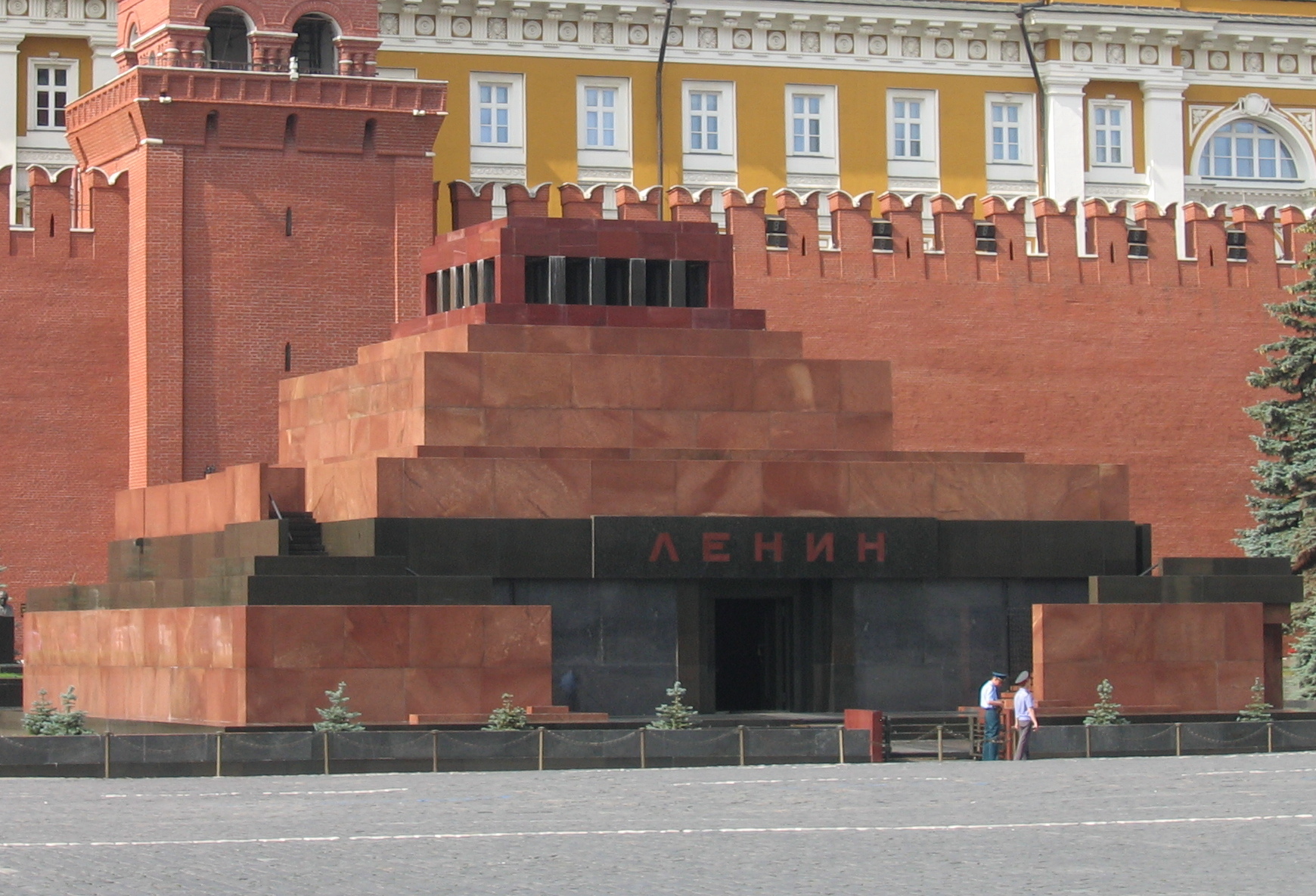 Staron · Wikimedia Commons · CC BY-SA 3.0
Lenin's Mausoleum, also known as Lenin's Tomb, is the resting place of Soviet leader Vladimir Lenin on Red Square in Moscow. Lenin’s embalmed body was placed there after his death in 1924. The structure, designed by architect Alexey Shchusev, incorporates elements from ancient mausoleums such as the Step Pyramid and the Tomb of Cyrus the Great. The outdoor tribune above the entrance was used by Soviet leaders to observe military parades.
不容错过
- The Mourning Hall is a ten-meter cube with a stepped ceiling, featuring black labradorite, red porphyry pilasters, and bright red smalt that creates an effect of flames and banners.
- The sarcophagus has an upper stepped slab supported by four inconspicuous metal columns, making it appear to hang in the air, with a lower slab covered in reddish jasper.
- Illuminators and light filters in the bronze frame give Lenin's body an animating pink coloring while reducing heat.
- Battle and labour bronze banners flank the sarcophagus, appearing satiny due to special illumination.
- The vestibule contains a huge granite block bearing the State Emblem of the Soviet Union opposite the entrance.
- The mausoleum's exterior uses red Karelian Shoksha quartzite and granite from all republics of the USSR.
门票与行程
游览Lenin's Mausoleum的方式
你可以自行参观Lenin's Mausoleum。参加行程适合了解背后的故事、需要交通,或想一天内结合附近景点的情况。
 最省钱Communist Walking Tour of Sofia4.9★ · 755位游客约3小时免费取消起价$21 每人查看日期 →
 最受欢迎Paris: Famous Graves of Pere Lachaise Cemetery Guided Tour4.6★ · 1,200位游客约2小时免费取消起价$22 每人查看日期 →
 私享灵活Agra: Taj Mahal and Mausoleum Guided Tour with Skip-the-Line5★ · 23位游客约6小时免费取消起价$22 每人查看日期 →
如何到达
行前须知
- Alexey Shchusev’s design draws on ancient precedents including the Step Pyramid and the Tomb of Cyrus the Great.
- The 1930 structure combines marble, porphyry, granite, labradorite and red Karelian quartzite.
- Stalin’s body shared the mausoleum from 1953 until it was removed during de-Stalinization in 1961.
历史背景
Two days after Lenin's death on 21 January 1924, Shchusev built a wooden tomb on Red Square, ready by 27 January. Over 100,000 people visited in the next six weeks. A larger wooden mausoleum opened on 1 August 1924. In 1930, a stone mausoleum of marble, porphyry, granite, and labradorite replaced it. From 1953 to 1961, Stalin's body was also displayed inside before being removed during de-Stalinization. The body was evacuated to Tyumen, Siberia, in October 1941 during World War II and returned after the war.
常见问题
Why is the mausoleum made of stone?
The original wooden mausoleum developed mold, so a stone structure of marble, porphyry, granite, and labradorite was completed in 1930.
Was Stalin ever in the mausoleum?
Yes, from 1953 to 1961, Stalin's embalmed body was displayed next to Lenin's before being removed and buried in the Kremlin Wall Necropolis.
Moscow更多景点