Landmark
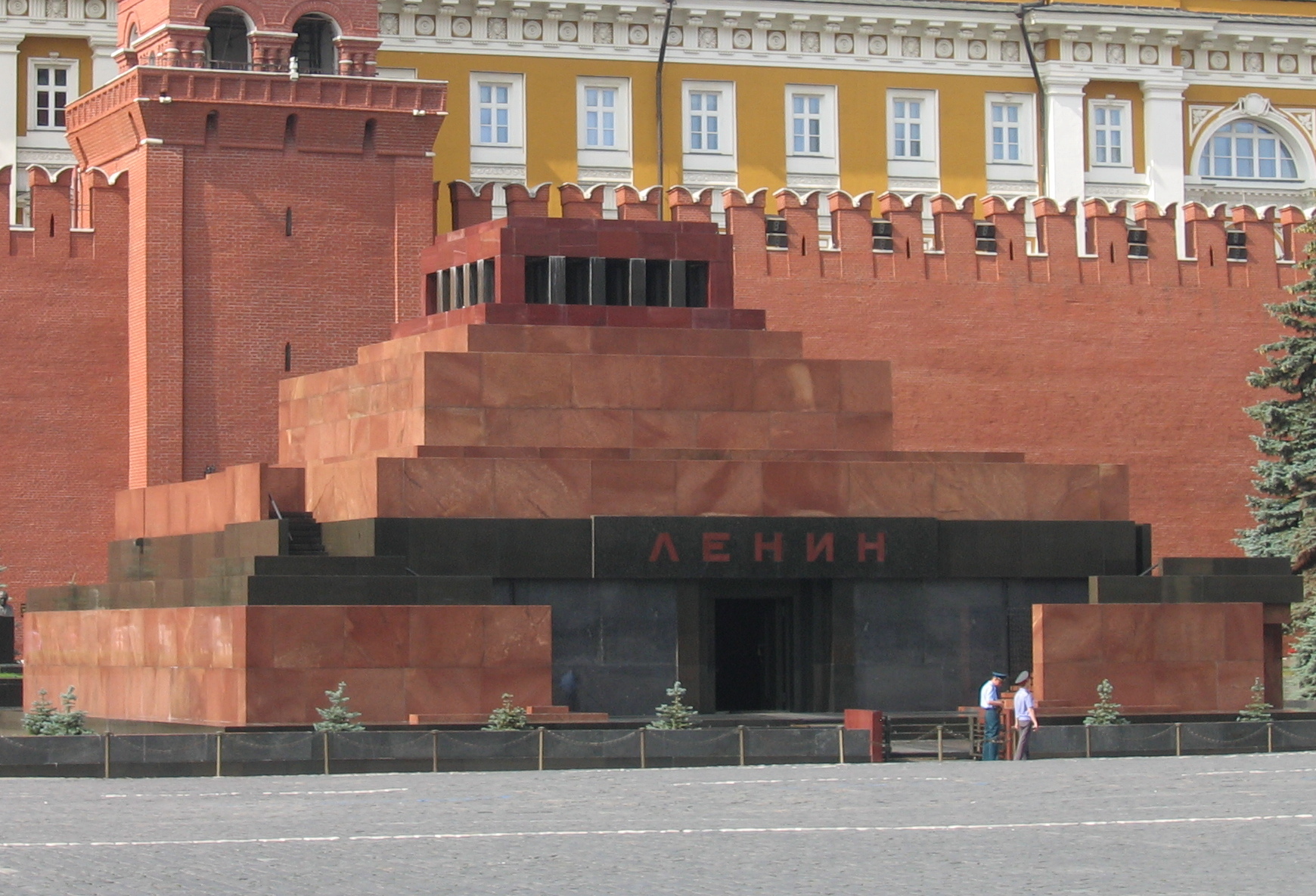
Lenin's Mausoleum
 Staron · Wikimedia Commons · CC BY-SA 3.0
Alguns links de reserva são links de afiliados. Se você reservar por eles, podemos receber uma pequena comissão sem custo extra para você. Isso nunca influencia quais lugares recomendamos.
Lenin's Mausoleum, also known as Lenin's Tomb, is the resting place of Soviet leader Vladimir Lenin on Red Square in Moscow. Lenin’s embalmed body was placed there after his death in 1924. The structure, designed by architect Alexey Shchusev, incorporates elements from ancient mausoleums such as the Step Pyramid and the Tomb of Cyrus the Great. The outdoor tribune above the entrance was used by Soviet leaders to observe military parades.
Não perca
- The Mourning Hall is a ten-meter cube with a stepped ceiling, featuring black labradorite, red porphyry pilasters, and bright red smalt that creates an effect of flames and banners.
- The sarcophagus has an upper stepped slab supported by four inconspicuous metal columns, making it appear to hang in the air, with a lower slab covered in reddish jasper.
- Illuminators and light filters in the bronze frame give Lenin's body an animating pink coloring while reducing heat.
- Battle and labour bronze banners flank the sarcophagus, appearing satiny due to special illumination.
- The vestibule contains a huge granite block bearing the State Emblem of the Soviet Union opposite the entrance.
- The mausoleum's exterior uses red Karelian Shoksha quartzite and granite from all republics of the USSR.
Ingressos e passeios
Formas de visitar Lenin's Mausoleum
Você pode ver Lenin's Mausoleum por conta própria. Um passeio vale a pena pela história por trás, por transporte ou para combinar pontos próximos em um dia.
 Entrada mais barataCommunist Walking Tour of Sofia4.9★ · 755 viajantes~3 horasCancelamento grátisA partir de$21 por pessoaVer datas →
 Mais reservadoParis: Famous Graves of Pere Lachaise Cemetery Guided Tour4.6★ · 1.200 viajantes~2 horasCancelamento grátisA partir de$22 por pessoaVer datas →
 Privado e flexívelAgra: Taj Mahal and Mausoleum Guided Tour with Skip-the-Line5★ · 23 viajantes~6 horasCancelamento grátisA partir de$22 por pessoaVer datas →
Como chegar
Antes de ir
- Alexey Shchusev’s design draws on ancient precedents including the Step Pyramid and the Tomb of Cyrus the Great.
- The 1930 structure combines marble, porphyry, granite, labradorite and red Karelian quartzite.
- Stalin’s body shared the mausoleum from 1953 until it was removed during de-Stalinization in 1961.
Um pouco de história
Two days after Lenin's death on 21 January 1924, Shchusev built a wooden tomb on Red Square, ready by 27 January. Over 100,000 people visited in the next six weeks. A larger wooden mausoleum opened on 1 August 1924. In 1930, a stone mausoleum of marble, porphyry, granite, and labradorite replaced it. From 1953 to 1961, Stalin's body was also displayed inside before being removed during de-Stalinization. The body was evacuated to Tyumen, Siberia, in October 1941 during World War II and returned after the war.
Perguntas frequentes
Why is the mausoleum made of stone?
The original wooden mausoleum developed mold, so a stone structure of marble, porphyry, granite, and labradorite was completed in 1930.
Was Stalin ever in the mausoleum?
Yes, from 1953 to 1961, Stalin's embalmed body was displayed next to Lenin's before being removed and buried in the Kremlin Wall Necropolis.
Mais atrações em Moscow