
Southwest Papua
Tours in Raja Ampat
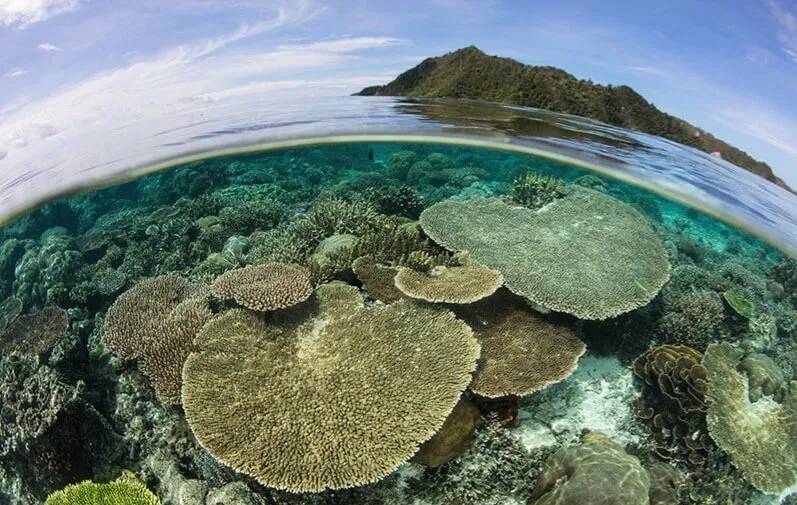
Raja Ampat holds the richest marine biodiversity recorded anywhere on earth: more coral species in this one archipelago than in the entire Caribbean. It is also remote and expensive to reach, and those two facts are related, because the difficulty is a large part of why the reefs are in the condition they are. Getting here takes two flights and a ferry from most of the world, and everyone pays a marine park permit that funds conservation and local communities.
Booking a trip to Raja Ampat
Asik Travel arrange trips across Indonesia and are adding destinations steadily, though they have not published a fixed Raja Ampat itinerary yet. Their planning team builds custom routes, so Raja Ampat is worth asking them about directly rather than waiting for a listing to appear.
What Raja Ampat is actually good for
The reefs themselves
The highest recorded coral and reef fish diversity on the planet. Even snorkelling off a homestay jetty here beats dedicated dive sites in most countries.
Piaynemo and Wayag viewpoints
The karst lagoon views the region is known for. Piaynemo is the accessible one with a stairway to the viewpoint; Wayag is far more remote and usually needs a longer charter.
Manta cleaning stations
Reef and oceanic mantas at several established sites, with encounters that are reliable enough to plan a trip around while still being genuinely wild.
Homestays run by local families
Simple over-water huts run by Papuan families, the way most independent travellers do Raja Ampat. Basic conditions, and the money stays in the community.
Birds of paradise
Wilson's and red birds of paradise display on Waigeo at dawn. It means a very early start on land, and it is one of the few places in the world you can see them.
When to go
October to April is the main season, with the calmest seas and the best visibility. July and August bring stronger winds and rougher crossings, and some homestays and liveaboards close entirely. Manta season peaks in the wetter months.
Getting there
Fly to Sorong in Southwest Papua, usually via Jakarta, Makassar or Manado, then take the ferry to Waisai on Waigeo, which takes about two hours. From Waisai, boats run to the homestays and islands. Budget a full day of travel at each end.
What it costs
The marine park permit is a fixed cost every visitor pays, valid for the year, and it funds conservation and local communities. Beyond that, homestays are relatively affordable and liveaboards are expensive. Boat transfers between islands are the hidden cost that surprises people.
Worth knowing first
- The marine park permit is compulsory and checked. Buy it through your homestay, operator or on arrival, and keep the card with you.
- There are no ATMs on the islands and homestays are cash only. Draw everything you need in Sorong.
- Boat transfers between islands are expensive and add up quickly. Pick one or two bases rather than island-hopping every night.
- Homestays are genuinely basic: a hut, a mattress, shared bathrooms, no air conditioning and often no reliable power. That is the deal, and people who arrive expecting a resort are the only ones who leave disappointed.
Raja Ampat questions people actually ask
How much does a trip to Raja Ampat cost?
The unavoidable costs are the flights to Sorong, the ferry to Waisai, the marine park permit and boat transfers. Accommodation splits sharply: family homestays are affordable and basic, liveaboards run into thousands. The boat transfers between islands are what most people underestimate.
Homestay or liveaboard?
A homestay keeps the money local, costs far less and gives you a real sense of the place, at the price of basic conditions and limited range. A liveaboard reaches the far sites including Wayag and Misool that are impractical from a fixed base, for considerably more money. Divers chasing specific sites take the boat; most other people are happier and poorer-in-nothing at a homestay.
Do I need to dive to enjoy Raja Ampat?
No. The snorkelling directly off many homestay jetties is exceptional because the reef starts in shallow water. Diving opens up more sites, but plenty of people come here and never put on a tank.
When is the best time to visit Raja Ampat?
October to April, when seas are calmest and visibility is best. July and August have the strongest winds, rougher crossings and some closures. Mantas are most active in the wetter part of the season, so there is a genuine trade-off between comfort and wildlife.
Elsewhere in Indonesia
Photographs by TripAdvisor (MaryTizi), TripAdvisor (danpG5842DU), TripAdvisor (traveldoc65), TripAdvisor (sahaooon).
We may earn a commission when you book through links on this page, at no extra cost to you. It does not change what you pay, and it does not decide which trips appear here.