Museum
Louvre Museum
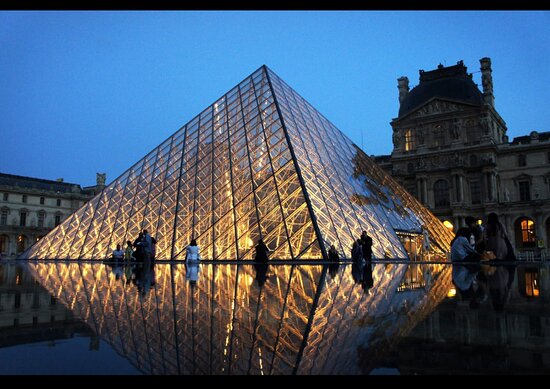 Photo via TripAdvisor (Management)
일부 예약 링크는 제휴 링크입니다. 이 링크를 통해 예약하시면 추가 비용 없이 저희가 소액의 수수료를 받을 수 있습니다. 이는 저희가 추천하는 장소에 절대 영향을 주지 않습니다.
루브르 박물관은 72,735제곱미터의 전시 공간에 예술과 역사의 방대한 보물을 품고 있습니다. 원래 중세 요새였고 이후 왕궁으로 쓰이다가 1793년에 공공 박물관이 되었습니다. 방문객은 이집트 고대 유물부터 유럽 회화까지 여덟 개 학예 부문을 둘러볼 수 있습니다. I. M. 페이가 설계한 박물관의 유리 피라미드 입구는 현대의 상징입니다. 꼭 봐야 할 작품으로는 레오나르도 다빈치의 모나리자와 밀로의 비너스, 사모트라케의 니케가 있습니다. 35,000점이 넘는 유물이 전시되어 있어 한 번의 방문으로는 극히 일부만 볼 수 있으므로 미리 계획하는 것이 중요합니다. 루브르는 관람 경험을 더욱 풍성하게 해줄 테마 코스와 기획 전시도 제공합니다.
놓치지 마세요
- 살 데 제타에서 모나리자 보기
- 밀로의 비너스와 사모트라케의 니케 감상하기
- 화려한 19세기 장식을 볼 수 있는 나폴레옹 III 아파트 둘러보기
- 웅장한 조각이 있는 쿠르 말리 거닐기
티켓 & 투어
Louvre Museum 즐기는 방법
자유롭게 방문할 수 있어요 (Paid entry). 투어를 이용하면 교통편과 가이드가 포함되거나, 주변 명소를 하루에 묶어 즐길 수 있습니다.
 최저가 입장Paris: Luggage Storage close to Louvre Museum4.2★ · 여행자 19명~24시간무료 취소부터$9 1인당날짜 확인 →
 가장 많이 예약됨Louvre Museum Masterpieces Guided Tour with Access4.5★ · 여행자 12,934명~3시간무료 취소부터$75 1인당날짜 확인 →
 프라이빗 & 자유Louvre Museum Evening Premium Guided Tour BEST Avoid The Crowds5★ · 여행자 94명~3시간무료 취소부터$175 1인당날짜 확인 →
방문 전 알아두기
- The nearest Métro stations are Louvre–Rivoli and Palais Royal–Musée du Louvre; the latter connects underground to the Carrousel du Louvre.
- The museum is habitually closed on Tuesdays and on some holidays.
- Cameras and video recorders are permitted inside, but flash photography is forbidden.
- The collection is divided into eight departments covering antiquities, Islamic art, sculpture, decorative arts, paintings, prints, and drawings.
역사 이야기
The Louvre fortress gradually lost its defensive role as Paris expanded. In 1546, Francis I began converting it into a principal royal residence. The palace was repeatedly redesigned and extended, but Louis XIV moved his household to Versailles in 1682. The Louvre then served increasingly as a home for royal collections and learned institutions. Ancient Greek and Roman sculpture was displayed there from 1692, and the Académie Royale de Peinture et de Sculpture held exhibitions in the palace. Revolutionary France turned the royal collection into national property. The museum opened on 10 August 1793 with 537 paintings and 184 art objects, most drawn from royal holdings and confiscated church property. Structural problems forced a closure from 1796 to 1801. Under Napoleon, works acquired through military campaigns greatly enlarged the collection and the institution was renamed Musée Napoléon. Many seized objects were returned after his abdication, though later reigns, donations, bequests, and archaeological acquisitions continued to expand the holdings. The palace and galleries grew through major nineteenth-century projects. In the late twentieth century, the Grand Louvre program reorganized the complex, moved the Finance Ministry out of the Richelieu Wing, and created the underground entrance beneath Pei's pyramid. The result is a museum whose buildings document royal, revolutionary, imperial, and republican France alongside the collections they contain.
자주 묻는 질문
Was the Louvre always a museum?
No. It began as a medieval fortress, became a royal palace, and opened as a public museum during the French Revolution in 1793.
Can visitors see the original fortress?
Yes. Remnants of the medieval Louvre fortress are preserved in the museum basement.
What are the Louvre's best-known works?
The collection includes the Mona Lisa, the Venus de Milo, and the Winged Victory of Samothrace, along with extensive holdings across eight departments.
Where is the main entrance?
The principal entrance is Hall Napoléon beneath the Louvre Pyramid, reached from the pyramid or the underground Carrousel du Louvre.
Is photography allowed?
Cameras and video recorders are permitted, but flash photography is prohibited.
How did the collection grow?
It developed from royal collections, Revolutionary confiscations, Napoleonic acquisitions, later royal purchases, archaeological material, donations, and bequests.
파리의 다른 명소