Museum
Louvre Museum
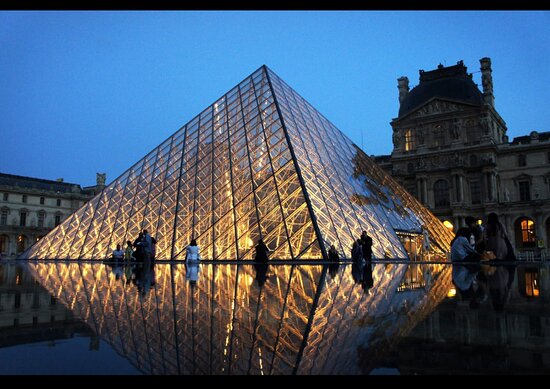 Photo via TripAdvisor (Management)
卢浮宫博物馆是一座浩瀚的艺术与历史宝库,展览面积达72,735平方米。它最初是一座中世纪堡垒,后成为皇家宫殿,1793年作为公共博物馆开放。游客可以探索八个策展部门,从埃及古物到欧洲绘画。博物馆由贝聿铭设计的玻璃金字塔入口是现代标志性建筑。必看作品包括列奥纳多·达·芬奇的《蒙娜丽莎》、《米洛的维纳斯》和《萨莫色雷斯的胜利女神》。展出的藏品超过35,000件,一次参观只能走马观花,因此提前规划至关重要。卢浮宫还提供主题导览和临时展览以丰富体验。
不容错过
- 在德农厅观赏《蒙娜丽莎》
- 欣赏《米洛的维纳斯》和《萨莫色雷斯的胜利女神》
- 探索拿破仑三世套房,感受19世纪的奢华装饰
- 漫步马利中庭,欣赏大型雕塑
门票与旅行团
游览Louvre Museum的方式
您可以自行游览(Paid entry)。参团可提供交通和导游,或将附近景点整合到一天内。
 最省钱方式Paris: Luggage Storage close to Louvre Museum4.2★ · 19位旅客约24小时免费取消起价$9 每人查看日期 →
 最多预订Louvre Museum Masterpieces Guided Tour with Access4.5★ · 12,934位旅客约3小时免费取消起价$75 每人查看日期 →
 私享灵活Louvre Museum Evening Premium Guided Tour BEST Avoid The Crowds5★ · 94位旅客约3小时免费取消起价$175 每人查看日期 →
行前须知
- The nearest Métro stations are Louvre–Rivoli and Palais Royal–Musée du Louvre; the latter connects underground to the Carrousel du Louvre.
- The museum is habitually closed on Tuesdays and on some holidays.
- Cameras and video recorders are permitted inside, but flash photography is forbidden.
- The collection is divided into eight departments covering antiquities, Islamic art, sculpture, decorative arts, paintings, prints, and drawings.
历史一瞥
The Louvre fortress gradually lost its defensive role as Paris expanded. In 1546, Francis I began converting it into a principal royal residence. The palace was repeatedly redesigned and extended, but Louis XIV moved his household to Versailles in 1682. The Louvre then served increasingly as a home for royal collections and learned institutions. Ancient Greek and Roman sculpture was displayed there from 1692, and the Académie Royale de Peinture et de Sculpture held exhibitions in the palace. Revolutionary France turned the royal collection into national property. The museum opened on 10 August 1793 with 537 paintings and 184 art objects, most drawn from royal holdings and confiscated church property. Structural problems forced a closure from 1796 to 1801. Under Napoleon, works acquired through military campaigns greatly enlarged the collection and the institution was renamed Musée Napoléon. Many seized objects were returned after his abdication, though later reigns, donations, bequests, and archaeological acquisitions continued to expand the holdings. The palace and galleries grew through major nineteenth-century projects. In the late twentieth century, the Grand Louvre program reorganized the complex, moved the Finance Ministry out of the Richelieu Wing, and created the underground entrance beneath Pei's pyramid. The result is a museum whose buildings document royal, revolutionary, imperial, and republican France alongside the collections they contain.
常见问题
Was the Louvre always a museum?
No. It began as a medieval fortress, became a royal palace, and opened as a public museum during the French Revolution in 1793.
Can visitors see the original fortress?
Yes. Remnants of the medieval Louvre fortress are preserved in the museum basement.
What are the Louvre's best-known works?
The collection includes the Mona Lisa, the Venus de Milo, and the Winged Victory of Samothrace, along with extensive holdings across eight departments.
Where is the main entrance?
The principal entrance is Hall Napoléon beneath the Louvre Pyramid, reached from the pyramid or the underground Carrousel du Louvre.
Is photography allowed?
Cameras and video recorders are permitted, but flash photography is prohibited.
How did the collection grow?
It developed from royal collections, Revolutionary confiscations, Napoleonic acquisitions, later royal purchases, archaeological material, donations, and bequests.
巴黎的更多景点