Landmark
Capitoline Hill
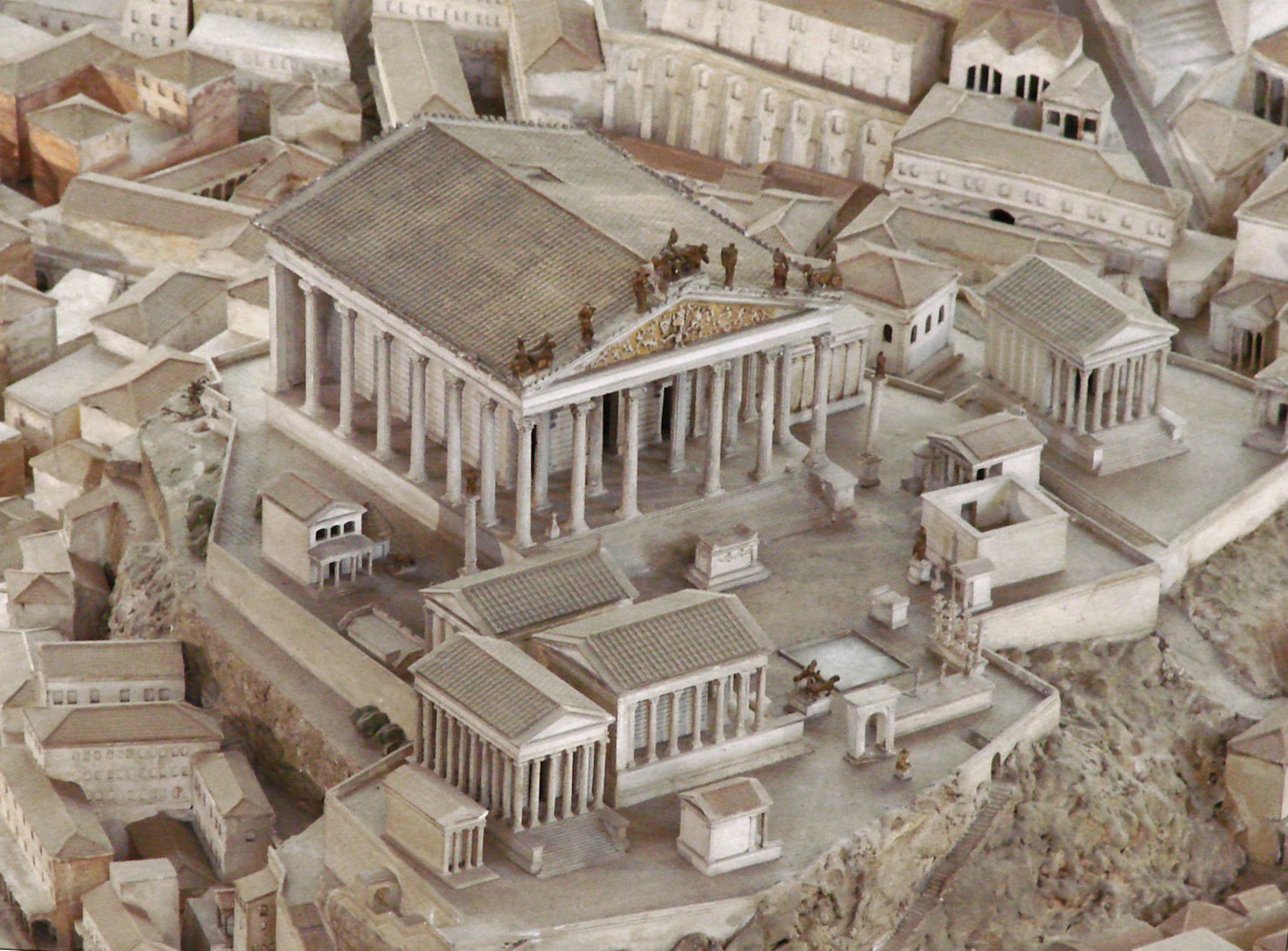 Jean-Pierre Dalbéra from Paris, France · Wikimedia Commons · CC BY 2.0
Some booking links are affiliate links. If you book through them, we may earn a small commission at no extra cost to you. We never let this influence which places we recommend.
The Capitoline Hill is one of the Seven Hills of Rome, located between the Roman Forum and the Campus Martius. In ancient times it was the geographical and ceremonial center of the city, home to the Temple of Jupiter Optimus Maximus. Today the hilltop is dominated by Michelangelo’s Piazza del Campidoglio, a trapezoidal plaza surrounded by three palazzi that house the Capitoline Museums. From the square you can see the original bronze equestrian statue of Marcus Aurelius (a copy stands in the piazza; the original is inside the museum) and look out over the Roman Forum.
Don't miss
- Piazza del Campidoglio, designed by Michelangelo with a trapezoidal shape, oval paving pattern, and an interlaced twelve-pointed star
- Equestrian statue of Marcus Aurelius (a modern copy; the original is in the Palazzo dei Conservatori)
- Palazzo dei Conservatori, Palazzo Senatorio, and Palazzo Nuovo, which together house the Capitoline Museums
- Cordonata, the ramped staircase leading up to the piazza
- Tabularium, an ancient Roman building that held state records, with views of the Roman Forum
- Church of Santa Maria in Aracoeli, adjacent to the square, built near the site of the ancient arx
Tickets & tours
Ways to visit Capitoline Hill
You don't need a tour to visit, entry is free. A tour is worth it if you want transport, a guide, or to combine Capitoline Hill with nearby sights in one day. That's what these do well.
 Cheapest way inColosseum, Palatine Hill and Roman Forum Guided Group Tour4.8★ · 69 travelers1-3 hoursFrom$23 per personSee dates →
 Most bookedRome: Colosseum, Roman Forum and Palatine Hill Guided Tour4.5★ · 25,099 travelers~3 hoursFrom$40 per personSee dates →
 Top ratedRome Colosseum Guided Tour with Roman Forum & Palatine Hill4.8★ · 726 travelers2-3 hoursFrom$69 per personSee dates →
Know before you go
- The three palazzi around the piazza are now the Capitoline Museums, with an enormous collection of Roman sculptures and artefacts.
- The Tarpeian Rock, a steep cliff overlooking the Roman Forum, was a frequent execution site in ancient Rome.
A bit of history
The hill was earlier known as Mons Saturnius, dedicated to the god Saturn. The word Capitolium first referred to the Temple of Jupiter Optimus Maximus, but later came to mean the whole hill. The Sabines entered the hill through the treachery of Tarpeia, who was thrown from the Tarpeian Rock for her betrayal. In 390 BC, when Gauls raided Rome, the Capitoline was the only section to evade capture, thanks to the sacred geese of Juno that alerted the defenders. During the Middle Ages the hill became the center of Rome’s civic government, and in 1144 a senator took up residence there. Michelangelo redesigned the piazza and surrounding palazzi in 1536–1546 for Pope Paul III, turning the civic center to face away from the Roman Forum and toward St. Peter’s Basilica.
Common questions
Who designed the current layout of the Piazza del Campidoglio?
Michelangelo Buonarroti designed the piazza and the surrounding palazzi in 1536–1546, commissioned by Pope Paul III.
Why is the equestrian statue of Marcus Aurelius in the piazza a copy?
The original bronze statue is held in the Palazzo dei Conservatori nearby; the copy in the piazza was placed there to protect the original.
What is the Tabularium?
It is a 1st-century BC building located underground beneath the piazza that once held Roman state records. It offers views of the Roman Forum.
More attractions in Rome