Religious site
Kazan Cathedral, Saint Petersburg
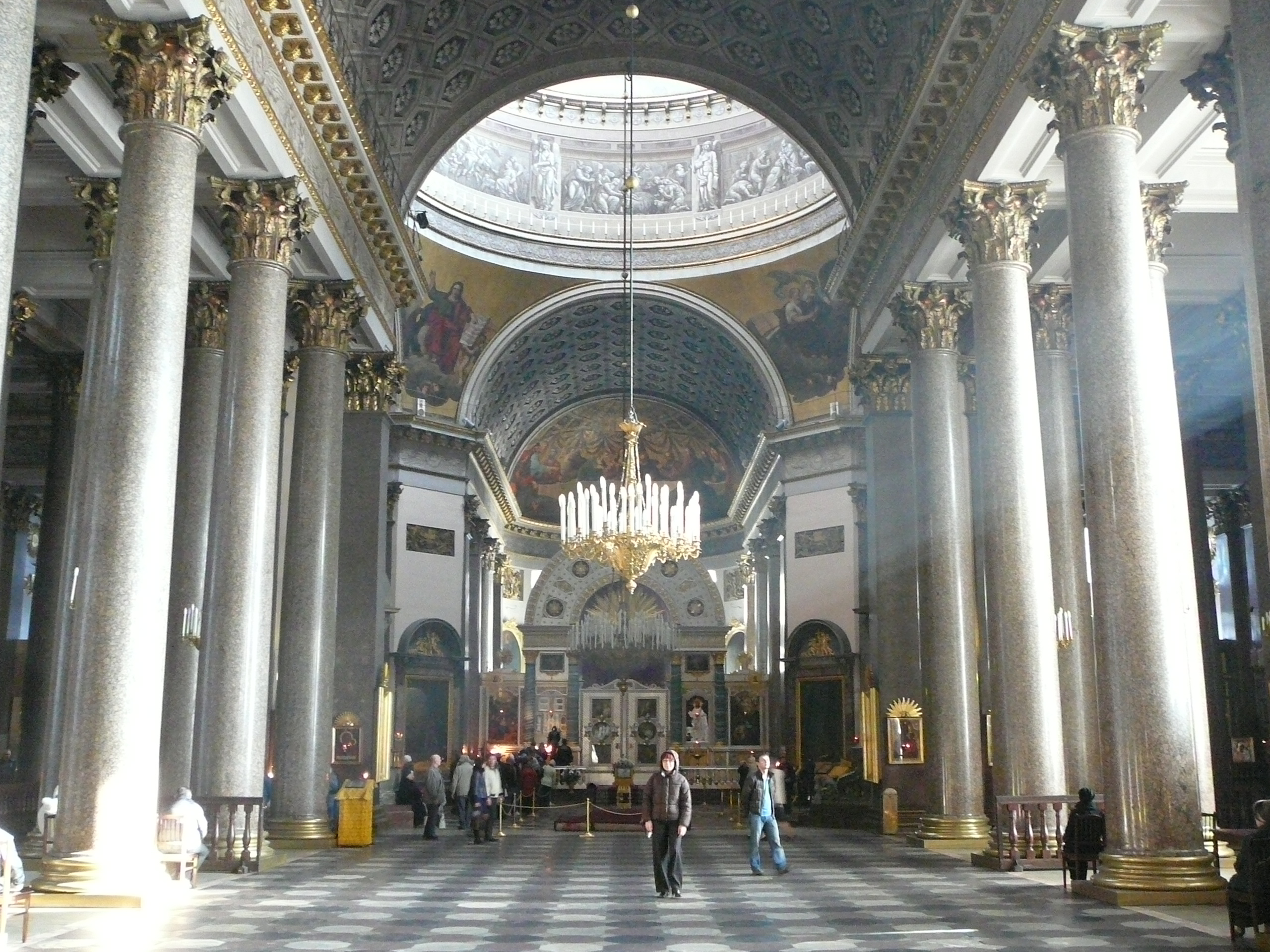 Алексеев Игорь Евгеньевич · Wikimedia Commons · Public domain
Certains liens de réservation sont des liens affiliés. Si vous réservez via ces liens, nous pouvons percevoir une petite commission sans frais supplémentaires pour vous. Cela n'influence jamais nos recommandations.
Kazan Cathedral is a Russian Orthodox cathedral on Nevsky Prospekt in Saint Petersburg, dedicated to Our Lady of Kazan, one of Russia's most venerated icons. Its exterior features a grand colonnade modeled on St. Peter's Basilica in Rome, and the interior, with numerous columns, feels like a palatial hall. After the Napoleonic Wars, it became a memorial to Russia's victory over Napoleon.
À ne pas manquer
- The huge bronze doors, a copy of the original doors of the Baptistery in Florence, Italy.
- Two bronze statues of General Kutuzov and Barclay de Tolly in front of the cathedral, designed by Boris Orlovsky in 1837.
- The interior's numerous columns, sculptures, and icons by leading Russian artists of the early 1800s.
- A wrought-iron grille separating the cathedral from a small square behind it, sometimes cited as one of the finest ever constructed.
- The royal doors of the central iconostasis, with six paintings by Vladimir Borovikovsky depicting biblical figures.
Billets et visites
Différentes façons de visiter Kazan Cathedral, Saint Petersburg
Vous pouvez visiter Kazan Cathedral, Saint Petersburg par vous-même. Un guide vaut le coup pour l'histoire et les détails que l'on pourrait manquer, et une visite peut le combiner avec les sites voisins.
 Le moins cherImagine Museum of Contemporary Glass Art General Admission4.2★ · 24 voyageurs1-2 heuresAnnulation gratuiteDès$5 par personneVoir les dates →
 Le plus réservéSt. Petersburg Jungle Prada Site History Tour5★ · 630 voyageurs~2 heuresAnnulation gratuiteDès$18 par personneVoir les dates →
 Privé et flexiblePrivate Golf Cart Tour - The History of St. Petersburg5★ · 13 voyageurs~2 heuresAnnulation gratuiteDès$49 par personneVoir les dates →
Comment s'y rendre
Bon à savoir avant de partir
- The cathedral is located on Nevsky Prospekt, Saint Petersburg's main avenue.
- It is dedicated to Our Lady of Kazan, a highly venerated Russian icon.
Un peu d'histoire
Construction began in 1801 and was completed in 1811, replacing the Church of Nativity of the Theotokos. Architect Andrey Voronikhin modeled it on St. Peter's Basilica, despite disapproval from the Orthodox Church. After Napoleon's 1812 invasion, the cathedral became a victory memorial. General Mikhail Kutuzov was interred there in 1813, and keys to 17 cities and 8 fortresses were placed in its sacristy. In 1876, the first political demonstration in Russia took place in front of the church. After the 1917 Revolution, it was closed in 1932 and reopened as the Museum of the History of Religion and Atheism.
Questions fréquentes
Why is the cathedral associated with the Napoleonic Wars?
After Napoleon's 1812 invasion, the cathedral became a memorial to Russia's victory. General Kutuzov is buried here, and keys from captured cities and fortresses are kept in the sacristy.
What is the significance of the bronze doors?
They are one of four copies of the original doors of the Baptistery in Florence, Italy.
Was the cathedral always a place of worship?
No. After the 1917 Revolution, it was closed in 1932 and became the Museum of the History of Religion and Atheism.
Plus d'attractions à Saint Petersburg