Landmark
Marble Throne
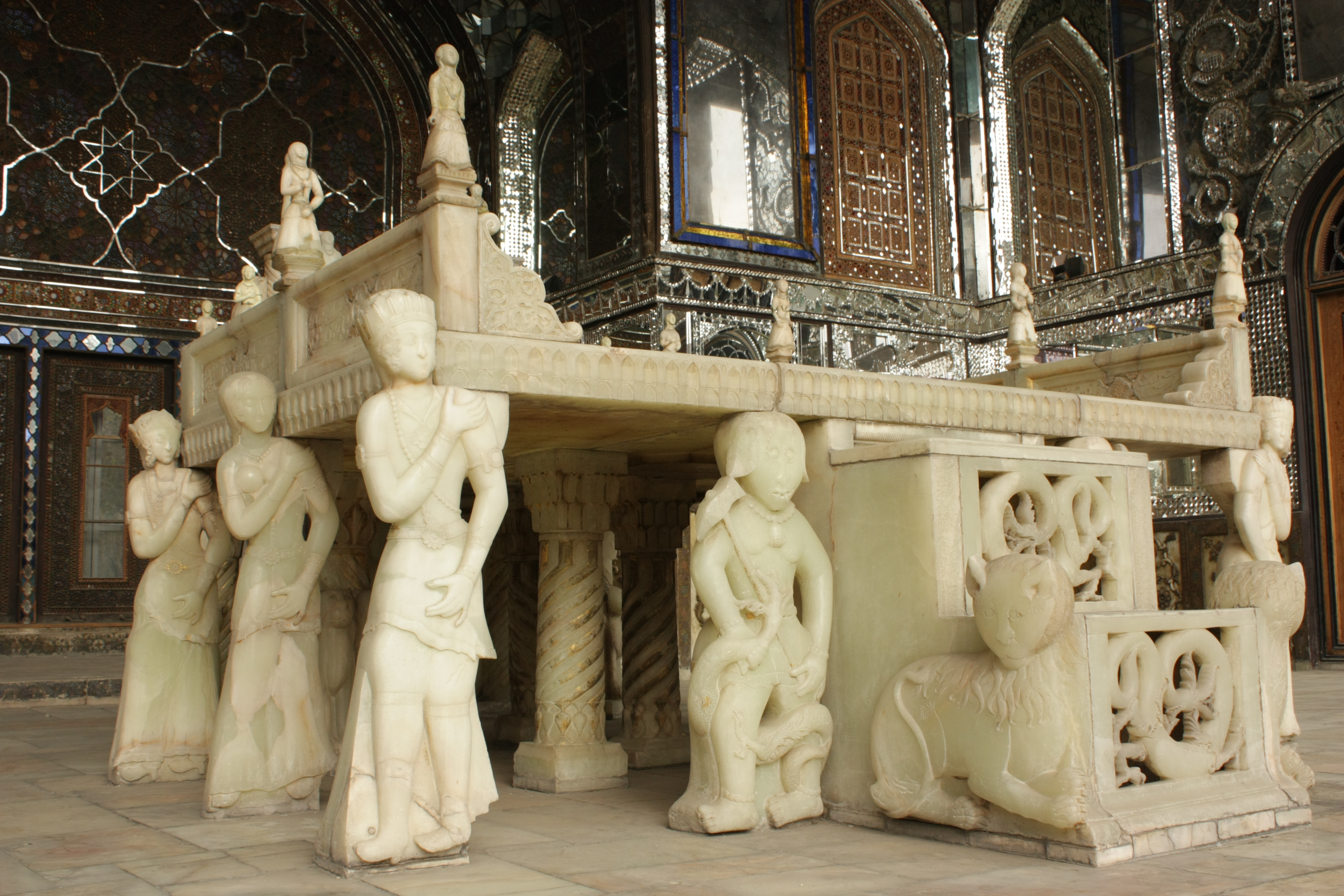 Photo:مانفی · Wikimedia Commons · CC BY-SA 3.0
Certains liens de réservation sont des liens affiliés. Si vous réservez via ces liens, nous pouvons percevoir une petite commission sans frais supplémentaires pour vous. Cela n'influence jamais nos recommandations.
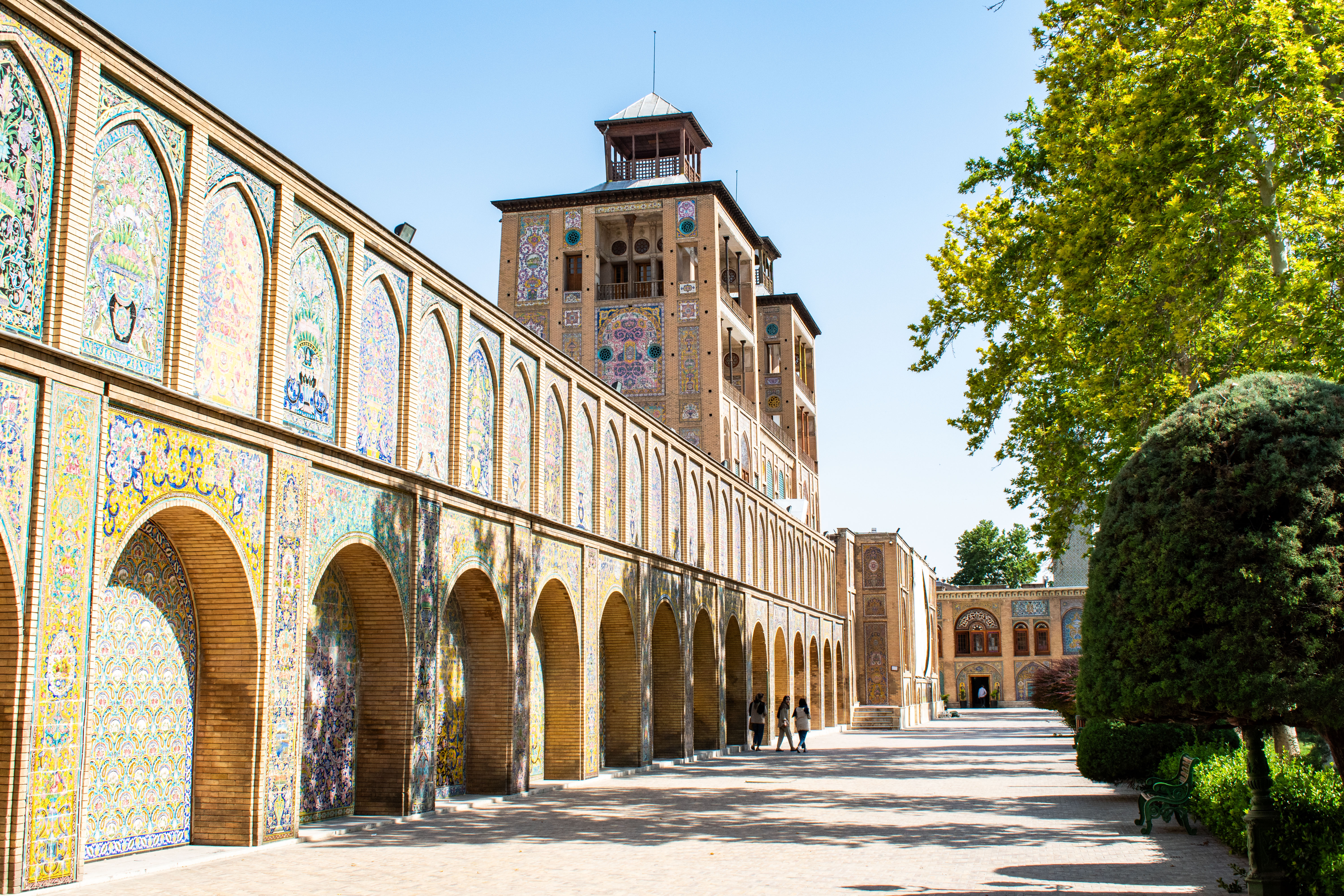
The Marble Throne is a Qajar-era throne located in Golestan Palace, Tehran. It sits in a spectacular terrace (iwan) adorned with paintings, marble-carvings, tile-work, stucco, mirrors, enamel, woodcarvings, and lattice windows. The throne itself is made of yellow marble from Yazd province and is one of the oldest buildings of the historic Arg.
À ne pas manquer
- The throne made of 65 pieces of yellow marble from Yazd province
- Supports carved as men, women, fairies, and demons
- The terrace (iwan) adorned with paintings, marble-carvings, tile-work, stucco, mirrors, enamel, woodcarvings, and lattice windows
- One of the oldest buildings of the historic Arg in Tehran
Billets et visites
Différentes façons de visiter Marble Throne
Vous pouvez visiter par vous-même (Entry to the gardens is paid; separate tickets are required for the main buildings and other rooms). Une visite ajoute le transport et un guide, ou combine les sites voisins en une journée.
 Le moins cherSheki Wonders From Khans Palace to the Silk Road4.8★ · 19 voyageurs12-14 heuresAnnulation gratuiteDès$35 par personneVoir les dates →
 Le plus réservéGolden Buddha Reclining Buddha and Marble Temple Private Tour5★ · 43 voyageurs4-5 heuresAnnulation gratuiteDès$120 par personneVoir les dates →
 Privé et flexiblePrivate tour to Golden Buddha, Reclining Buddha and Marble Temple5★ · 40 voyageurs4-5 heuresAnnulation gratuiteDès$120 par personneVoir les dates →
Comment s'y rendre
Bon à savoir avant de partir
- The Marble Throne is located within Golestan Palace, at Khordad Sq. 15, Pamenar, Tehran.
- Golestan Palace was added to the UNESCO World Heritage List in 2013.
Un peu d'histoire
Commissioned by Fath-Ali Shah Qajar in 1805, the throne was designed by Mirza Baba Shirazi and royal stonecutter Mohammad Ebrahim Esfahani. It consists of 65 marble stone pieces from a mine in Yazd. The throne's supports are carved in the shape of men, women, fairies, and demons. It was modeled after the throne of Solomon, and the terrace was named Takht-e Marmar after the throne was placed there. On 2 March 2026, the throne was damaged by the shockwave of an airstrike on Arg Square during the 2026 Iran war.
Questions fréquentes
What is the Marble Throne made of?
The throne is made of 65 marble stone pieces from a mine in Yazd, specifically yellow marble.
Who commissioned the Marble Throne?
It was commissioned by Fath-Ali Shah Qajar in 1805.
What happened to the Marble Throne in 2026?
On 2 March 2026, the throne was damaged by the shockwave of an airstrike on Arg Square during the 2026 Iran war.
Plus d'attractions à Tehran