Landmark
Haveli Sujan Singh
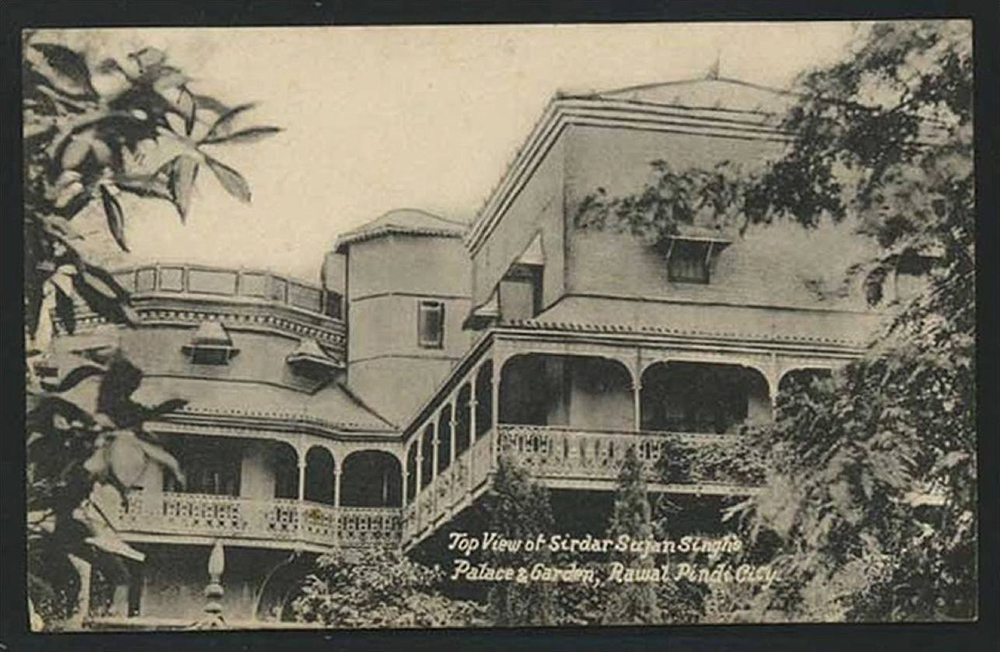 Unknown · Wikimedia Commons · Public domain
Some booking links are affiliate links. If you book through them, we may earn a small commission at no extra cost to you. We never let this influence which places we recommend.
Haveli Sujan Singh is a historic mansion in the congested Bhabra Bazar market of Rawalpindi, Pakistan. Built in 1893 by timber merchant Rai Bahadur Sujan Singh, it was designed to resemble a royal palace with a golden throne, ivory furniture, and courtyards where peacocks danced. The four-story haveli has 45 rooms, ornate staircases, and Central Asian woodwork.
Don't miss
- Ornate curved staircase from ground to fourth floor
- Carved false wooden overlays on first-floor ceilings with Central Asian patterns
- Original Victorian furniture and family silverware once displayed
- Bridge connecting two main wings at the fourth floor
- Panoramic views of Rawalpindi from the top floors, added as lookout posts
Tickets & tours
Ways to visit Haveli Sujan Singh
You can see Haveli Sujan Singh on your own. A tour is worth it for the story behind it, for transport, or for combining nearby sights into one day.
 Cheapest way inPrivate Same day Jaipur Tour from New Delhi4.8★ · 96 travelers12-15 hoursFree cancellationFrom$6 per personSee dates →
 Best full day8-Day Golden Triangle & Rajasthan Private Tour from Delhi5★ · 135 travelers~192 hoursFree cancellationFrom$409 per personSee dates →
 Private & flexibleJaipur City Private Day Tour From Delhi By Car-All Inclusive Tour5★ · 15 travelers~15 hoursFree cancellationFrom$97 per personSee dates →
Getting there
Know before you go
- The haveli is located in the congested Bhabra Bazar market area of Rawalpindi.
- Built in 1893, the haveli has 45 rooms across four stories.
- Restoration by the National College of Arts began in 2014, including plans for a museum and field school.
A bit of history
The haveli was built in 1893 by Rai Bahadur Sujan Singh, a wealthy timber merchant who also constructed Rawalpindi's Odeon cinema house and a library. The family lived there until moving to the cantonment, then donated it for Sikh military officers. After Partition, Kashmiri refugees occupied it until 1980, damaging the woodwork. In 2006, it was handed to Fatima Jinnah Women University, and in 2014 the National College of Arts began restoration.
Common questions
Who built Haveli Sujan Singh?
It was built in 1893 by Rai Bahadur Sujan Singh, a wealthy timber merchant and businessman.
What architectural styles influenced the haveli?
It was built in Sikh architectural style with Mughal, British, and Central Asian motifs.
What happened to the haveli after Partition?
It fell into ruin; Kashmiri refugees lived there until 1980 and damaged the woodwork. It was later handed to Fatima Jinnah Women University.
More attractions in Rawalpindi