Museum
Natural History Museum, Vienna
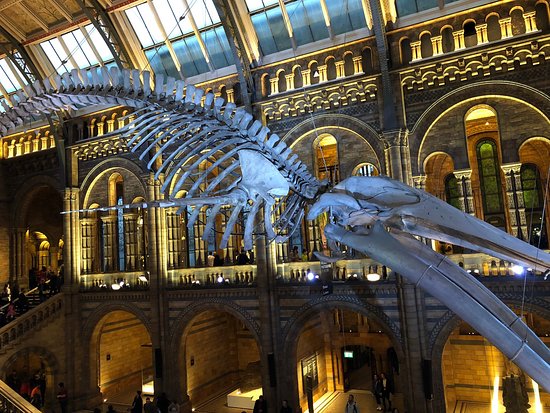 Photo via TripAdvisor (885mihaelaa)
Some booking links are affiliate links. If you book through them, we may earn a small commission at no extra cost to you. We never let this influence which places we recommend.
The Natural History Museum Vienna is one of the largest natural history museums in Austria, with 39 exhibition rooms covering 8,460 square meters and displaying more than 100,000 objects. It is also a major research institution, home to 30 million objects used by over 60 scientists. Visitors can see a vast range of natural history specimens, including the famous 24,000-year-old Venus of Willendorf.
Don't miss
- The Venus of Willendorf, a 24,000-year-old figurine found near Vienna
- 30 million objects including rare fossils, minerals, precious stones, and meteorites
- A 450-kilogram amethyst specimen from Brazil donated by patron Isidor Weinberger
- Exhibition rooms covering 8,460 square meters with over 100,000 objects on display
- Collections from major 19th-century expeditions, including the Novara world voyage and the Austro-Hungarian North Pole expedition
Tickets & tours
Ways to visit Natural History Museum, Vienna
You can visit Natural History Museum, Vienna on your own. A guide mainly adds context, what you are looking at and why it matters, and a tour can add transport or combine nearby sights into one day.
 Cheapest way inEntrance tickets for the KunstHausWien. Museum Hundertwasser4.5★ · 91 travelers1-2 hoursFree cancellationFrom$5 per personSee dates →
 Most bookedBest of Vienna : Historic Center Walking Tour4.9★ · 1,918 travelers~3 hoursFree cancellationFrom$89 per personSee dates →
 Top ratedHistorical Hitler Walking Tour of Vienna4.8★ · 983 travelers~3 hoursFree cancellationFrom$31 per personSee dates →
Getting there
Know before you go
- The museum is located in central Vienna, opposite the Museum of Fine Arts, both designed by the same architects.
- The museum opened to the public in 1889 and was initially free on Thursdays, Saturdays, and Sundays.
- It is an active research institution with over 60 scientists working on collections in human sciences, earth sciences, and life sciences.
A bit of history
The museum's collections began over 250 years ago when Holy Roman Emperor Francis I purchased the world's largest natural history collection from scholar Jean de Baillou in 1750. After the emperor's death, Maria Theresa gave the collection to the state and opened it to the public, creating the first museum based on Enlightenment principles. The current building was commissioned by Emperor Franz Joseph I, designed by architects Gottfried Semper and Carl Hasenauer, and opened on August 10, 1889.
Common questions
What is the most famous object in the museum?
The Venus of Willendorf, a 24,000-year-old figurine found near Vienna, is one of the museum's most famous artifacts.
How many objects does the museum hold?
The museum houses 30 million objects, with more than 100,000 on display across 39 exhibition rooms.
Who designed the museum building?
The building was designed by architects Gottfried Semper and Carl Hasenauer, commissioned by Emperor Franz Joseph I.
More attractions in Vienna