Religious site
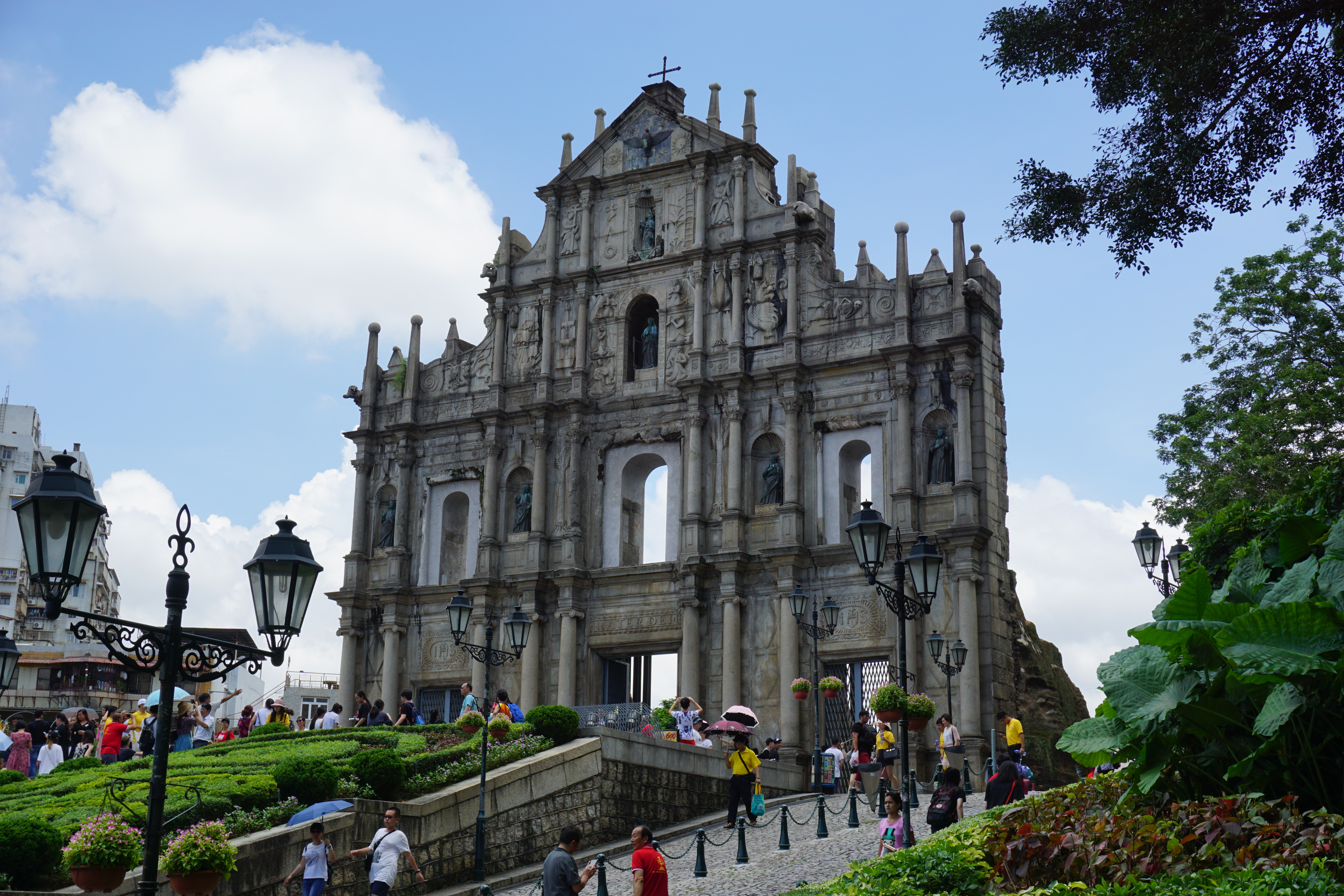
Ruins of Saint Paul's
 GG001213 · Wikimedia Commons · CC0
部分预订链接为联盟链接。通过它们预订,我们可能获得小额佣金,但不会增加你的费用。我们绝不会因此影响推荐。
The Ruins of Saint Paul's are the remnants of a 17th-century Catholic religious complex in Macau, including St. Paul's College and the Church of St. Paul. Today, the stone frontispiece stands on a small hill with 68 stone steps leading up to it. A museum is located behind the façade.
不容错过
- The stone frontispiece, shaped like a retable and themed around the Assumption of Mary
- Carvings showing Mary stepping on a seven-headed hydra, described in Chinese characters as 'Holy Mother tramples the heads of the dragon'
- Six Chinese guardian lions carved from stone at the base of the structure
- The museum behind the façade, which displays bones of persecuted Japanese Christians
- The crypt and foundations uncovered during excavations from 1990 to 1995
门票与行程
游览Ruins of Saint Paul's的方式
你可以自行游览Ruins of Saint Paul's。导游值得考虑,因为能提供历史和细节,这些容易错过,行程还可结合附近景点。
如何到达
行前须知
- 68 stone steps lead up to the façade.
- A museum is located behind the façade, housing religious artifacts and relics.
- Tourists are no longer allowed to climb the façade due to preservation concerns.
历史背景
Built from 1602 to 1640 by the Jesuits, the church was one of the largest Catholic churches in Asia at the time. It was destroyed by a fire during a typhoon on 26 January 1835. The façade was likely influenced by Japanese Christian craftsmen who worked on it, and includes carvings with Asian traditions, such as Mary stepping on a seven-headed hydra and six Chinese guardian lions at the base. The remains of around 250 Korean and Japanese slaves from the Portuguese slave trade are buried near the church.
常见问题
What caused the destruction of the church?
The church was destroyed by a fire during a typhoon on 26 January 1835.
Are there any Asian influences in the carvings?
Yes, the façade includes carvings with Asian traditions, such as Mary stepping on a seven-headed hydra and six Chinese guardian lions at the base.
Can I see the crypt?
Yes, the crypt and foundations were uncovered during excavations from 1990 to 1995 and are part of the museum.
Zhuhai更多景点