Religious site
Sagrada Família
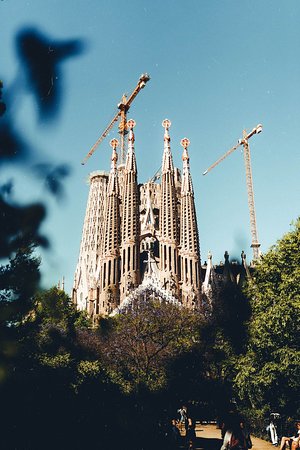 Photo via TripAdvisor (CNTravelerSpain)
Some booking links are affiliate links. If you book through them, we may earn a small commission at no extra cost to you. We never let this influence which places we recommend.
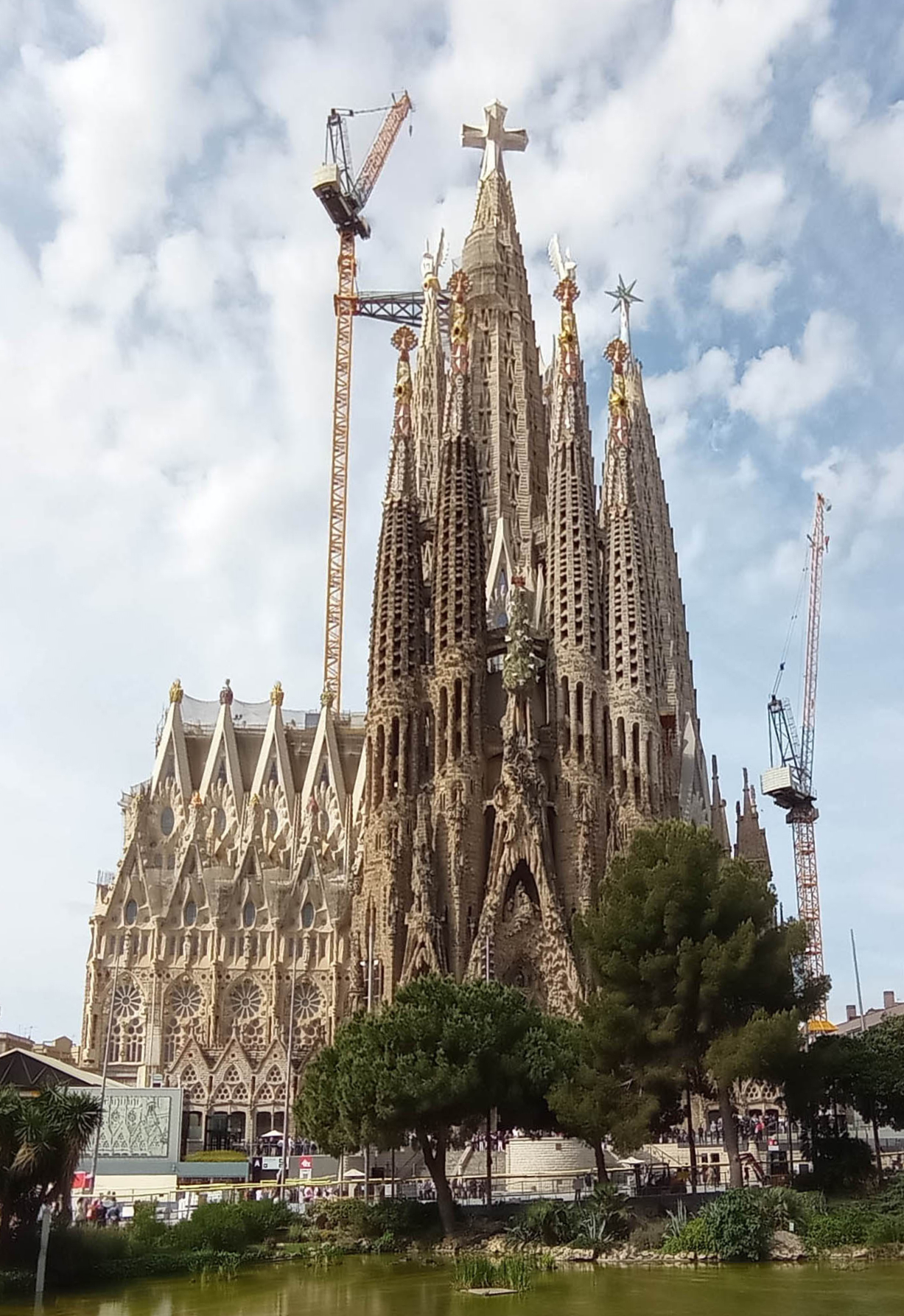
Sagrada Família is a Catholic basilica in Barcelona's Eixample district and the defining project of Catalan architect Antoni Gaudí. Construction began in 1882 under Francisco de Paula del Villar. Gaudí assumed responsibility the following year and replaced the conventional Gothic Revival proposal with a far more complex design that combines Gothic structure, Catalan Modernism, curving forms, sculpture, colored glass, and carefully planned religious symbolism. The church is not Barcelona's cathedral, a title held by the Cathedral of the Holy Cross and Saint Eulalia. Pope Benedict XVI consecrated Sagrada Família and proclaimed it a basilica in 2010. The Nativity façade and crypt form part of UNESCO's Works of Antoni Gaudí World Heritage listing. Visitors can compare three very different narrative façades. The richly carved Nativity façade carries Gaudí's most direct influence, while the Passion façade uses the spare, angular figures of sculptor Josep Maria Subirachs. The Glory façade is planned as the principal and largest entrance. Inside, branching columns support the nave, and the design has few straight lines or exact right angles. Gaudí's full scheme calls for eighteen spires representing the Twelve Apostles, four Evangelists, the Virgin Mary, and Jesus Christ. The building remains both a functioning place of worship and an active construction site funded by private donations and visitor income.
Don't miss
- The Nativity façade, completed before the 1936 interruption and carrying Gaudí's strongest direct influence
- The Passion façade's stark sculptural program by Josep Maria Subirachs
- Branching interior columns, richly ornamented surfaces, and a plan with few straight lines
- The crypt where Gaudí is buried, part of the UNESCO-listed Works of Antoni Gaudí
- Spires dedicated to the Apostles, Evangelists, Virgin Mary, and Jesus Christ
- The Sagrada Família Schools building, designed by Gaudí in 1909 for construction workers' children
Tickets & tours
Ways to visit Sagrada Família
You can visit on your own (Paid entry). A tour adds transport and a guide, or combines nearby sights into one day.
 Cheapest way inBarcelona Gaudi and Sagrada Familia Tour4.9★ · 240 travelers~3 hoursFrom$4 per personSee dates →
 Best full dayBarcelona in 1 Day: Sagrada Familia, Park Guell,Old Town & Pickup4.9★ · 16,257 travelers~8 hoursFree cancellationFrom$116 per personSee dates →
 Private & flexibleSagrada Familia and Park Guell Private Barcelona Tour4.8★ · 934 travelers6-7 hoursFree cancellationFrom$229 per personSee dates →
Know before you go
- Sagrada Família is a basilica and active place of worship, but it is not the cathedral of Barcelona.
- The church is still a construction project, so completed historic work and modern continuation can be seen together.
- Visitor entrance income helps finance the privately funded construction.
- The chapel of the Blessed Sacrament and Penitence is available for prayer.
A bit of history
Bookseller José María Bocabella conceived an expiatory church after visiting the Vatican in 1872. Villar began the crypt on 19 March 1882, but resigned in 1883. Gaudí radically transformed the project and eventually devoted the rest of his life to it. He designed not only the church's forms and symbolism but also structural models and studies for details such as its acoustics. When he died in 1926, only about a quarter of the project had been completed, and he was buried in the crypt. Work continued under his disciple Domènec Sugrañes i Gras until the Spanish Civil War interrupted construction in 1936. A fire damaged the crypt and workshop and destroyed parts of Gaudí's plans and models. Later architects continued from saved workshop material, reconstructed versions of burned plans, published plans, photographs, and modern adaptations. Construction resumed intermittently in the 1950s. Computer-aided design and computer-controlled stone cutting later accelerated work that had previously depended on hand carving. The central nave vaulting was finished in 2000, and the covered nave and installed organ allowed the still-unfinished building to be used for liturgies in 2010. That year Pope Benedict XVI consecrated the still-unfinished church before thousands of worshippers. The long project therefore records several eras of craft, engineering, interpretation, and debate over how faithfully later builders can realize Gaudí's incomplete vision.
Common questions
Who designed Sagrada Família?
Francisco de Paula del Villar began the project in 1882. Antoni Gaudí took over in 1883, radically changed the design, and devoted the remainder of his life to it.
Is Sagrada Família Barcelona's cathedral?
No. It is a Catholic basilica. Barcelona's cathedral is the Cathedral of the Holy Cross and Saint Eulalia.
Why did construction take so long?
The project relied on private donations, suffered major disruption and loss of plans during the Spanish Civil War, and required later architects to reconstruct and interpret Gaudí's complex design.
What do the three façades represent?
The eastern Nativity façade focuses on Christ's birth, the western Passion façade presents his suffering and death, and the southern Glory façade is planned around the path toward God.
How many spires did Gaudí plan?
The design calls for eighteen, representing the Twelve Apostles, four Evangelists, the Virgin Mary, and Jesus Christ.
More attractions in Barcelona