Historic site
Tomb of Tự Đức
 Bùi Thụy Đào Nguyên · Wikimedia Commons · CC BY-SA 4.0
Alguns links de reserva são links de afiliados. Se você reservar por eles, podemos receber uma pequena comissão sem custo extra para você. Isso nunca influencia quais lugares recomendamos.
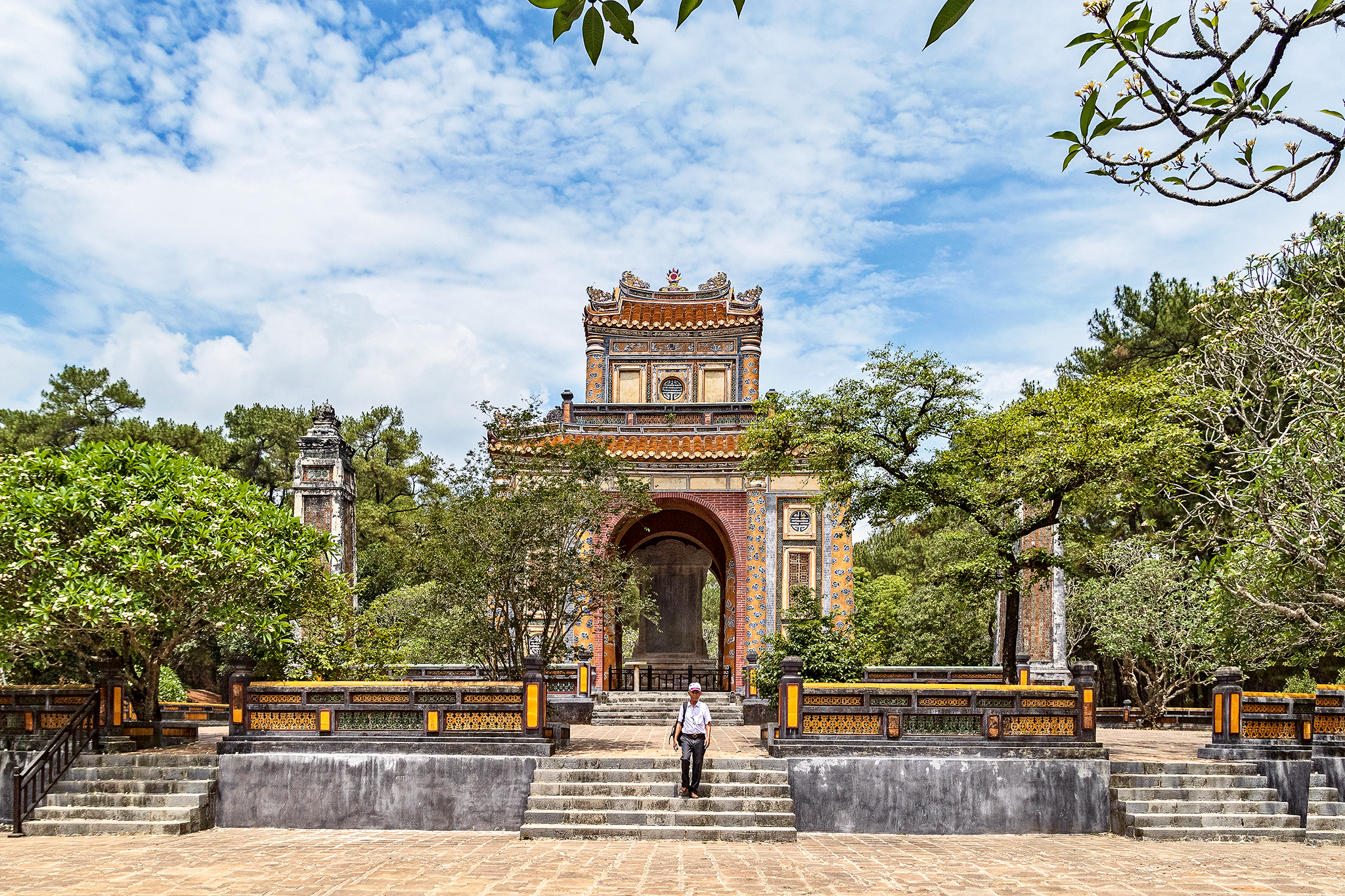
The Tomb of Tự Đức, officially Khiêm Mausoleum, honors the longest-reigning monarch of the Nguyễn dynasty and is divided into Temple and Tomb areas. Much of it was completed between 1864 and 1867, and its palace buildings served as the emperor's residence and retreat. Tự Đức boated on the lake, hunted on its island, and composed poetry at Xung Khiem Pavilion. Boats landed at Du Khiem Pavilion beside the palace area. East of the tomb stands the emperor's self-written epitaph on Vietnam's largest stele of its type. The stone travelled more than 500 kilometres from its quarry, a journey that took four years. The grounds also hold the tombs of his adopted son Kiến Phúc and primary wife, Empress Lệ Thiên Anh.
Não perca
- Read the setting of Tự Đức's self-written epitaph on Vietnam's largest stele of its type.
- Trace the emperor's route from boating on the lake to Du Khiem Pavilion and the palace area.
- Pause at Xung Khiem Pavilion, where Tự Đức composed and recited poetry with his concubines.
- Remember that the grand tomb structure does not contain Tự Đức's remains; his actual burial place is still secret.
Ingressos e passeios
Formas de visitar Tomb of Tự Đức
Você pode visitar Tomb of Tự Đức por conta própria. Um guia vale a pena aqui pela história por trás do que você está vendo, e um passeio pode combinar pontos próximos em um dia.
Como chegar
Antes de ir
- The complex is divided into a Temple Area and a Tomb Area, and its palace buildings were used by Tự Đức during his lifetime.
- The monument called Tự Đức's tomb is not his confirmed burial place; his remains were hidden elsewhere in Huế.
Um pouco de história
Corvée labor and extra taxation for the complex helped provoke an unsuccessful coup in 1866. Tự Đức was later buried at a secret location elsewhere in Huế. The 200 laborers involved were reportedly beheaded after returning, and his real grave remains undiscovered.
Perguntas frequentes
Did Emperor Tự Đức use the complex while he was alive?
Yes. Its palace buildings served as his residence and retreat, with a lake for boating, an island for hunting, and pavilions for poetry.
Why did Tự Đức write his own epitaph?
He had no biological son to write it for him, so he composed the account of his reign himself. It is inscribed on the huge stele east of the tomb.
Is Tự Đức actually buried here?
No confirmed burial is present in the monumental tomb. He was interred at a secret location elsewhere in Huế, and the real grave remains hidden.
Mais atrações em Hue