Religious site
Wazir Khan Mosque
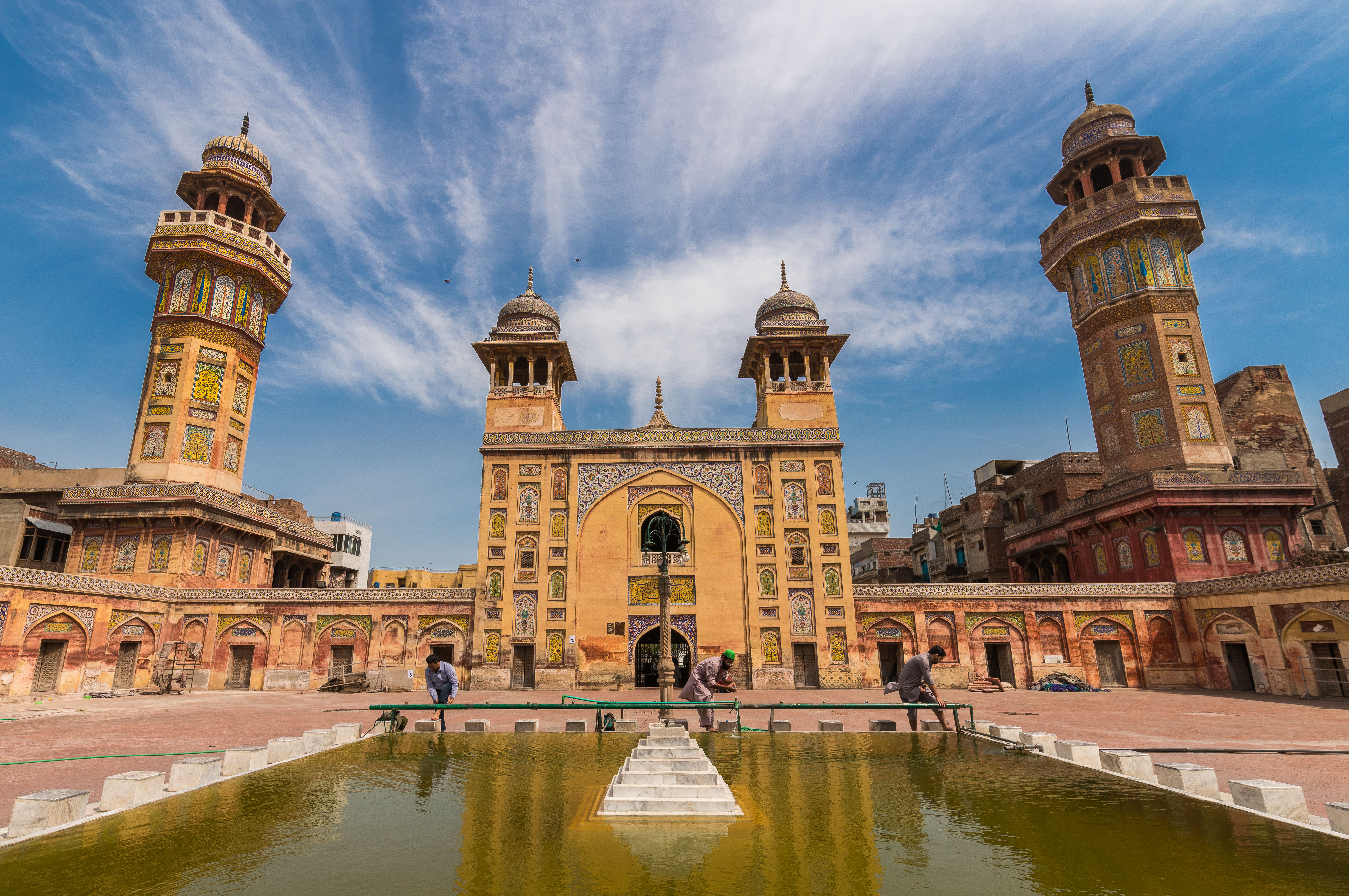 Moiz Ismaili · Wikimedia Commons · CC BY-SA 4.0
Sommige boekingslinks zijn affiliatelinks. Als je via deze links boekt, kunnen we een kleine commissie ontvangen zonder extra kosten voor jou. Dit beïnvloedt nooit onze aanbevelingen.
The Wazir Khan Mosque is a 17th-century Mughal mosque in Lahore's Walled City, renowned for its intricate faience tile work called kashi-kari and elaborate frescoes covering interior surfaces. It is on the UNESCO World Heritage Tentative List.
Niet missen
- Intricate kashi-kari tile work in Persian-style colors like cobalt blue, cerulean, white, green, orange, yellow, and purple on the exterior.
- Elaborate buon frescoes on interior walls, combining Mughal and local Punjabi decorative traditions.
- A 31-foot-tall dome over the main prayer hall with frescoes depicting trees, wine pitchers, and fruit platters, alluding to Paradise.
- The courtyard contains a 35-foot-square pool for ritual washing and a subterranean crypt with the tomb of the 14th-century Sufi saint Syed Muhammad Ishaq Gazruni.
- Four 107-foot-tall minarets at the corners of the courtyard.
- The entrance portal features a muqarna, an architectural element also found at the Alhambra in Spain.
Tickets & tours
Manieren om Wazir Khan Mosque te bezoeken
Je kunt Wazir Khan Mosque op eigen gelegenheid bezoeken. Een gids is de moeite waard voor de geschiedenis en details die je makkelijk voorbijloopt, en een tour kan het combineren met nabijgelegen bezienswaardigheden.
Bereikbaarheid
Goed om te weten
- Located along the Shahi Guzargah (Royal Road) in the Walled City, about 260 meters west of Delhi Gate.
- The mosque faces Wazir Khan Chowk and contains the shrine of Saint Sakhi Saif Souf.
- The mosque is part of a complex that originally included a row of shops for calligraphers and bookbinders, and the nearby Shahi Hammam baths.
- The octagonal chamber at the entrance is the first example of the Central Asian charsu bazaar concept in South Asia.
Een stukje geschiedenis
Commissioned in 1634 by Hakim Ilam-ud-din Ansari, known as Wazir Khan, the governor of Punjab under Emperor Shah Jahan, the mosque was built to enclose the tomb of the Sufi saint Miran Badshah. Construction took about seven years, and it replaced the Maryam Zamani Mosque as the main mosque for Friday prayers. Artisans from Chiniot, known for wood carving and stonework, were employed, though the chief architect remains unknown.
Veelgestelde vragen
Who built the Wazir Khan Mosque?
It was commissioned by Wazir Khan, the governor of Punjab under Mughal Emperor Shah Jahan.
What makes the mosque's decoration special?
It is noted for its extensive kashi-kari tile work and frescoes that blend Mughal and Punjabi styles, unmatched in scale among Lahore's Shah Jahan-era monuments.
Is there a tomb inside the mosque?
Yes, the courtyard contains a subterranean crypt with the tomb of the 14th-century Sufi saint Miran Badshah.
What is the Calligrapher's Bazaar?
It is a four-axis bazaar (charsu) centered on the octagonal chamber at the entrance, originally reserved for calligraphers and bookbinders.
How was the mosque restored?
Extensive restoration began in 2009 under the Aga Khan Trust for Culture and the Government of Punjab, with support from Germany, Norway, and the United States.
Meer attracties in Lahore