Religious site
Dohány Street Synagogue
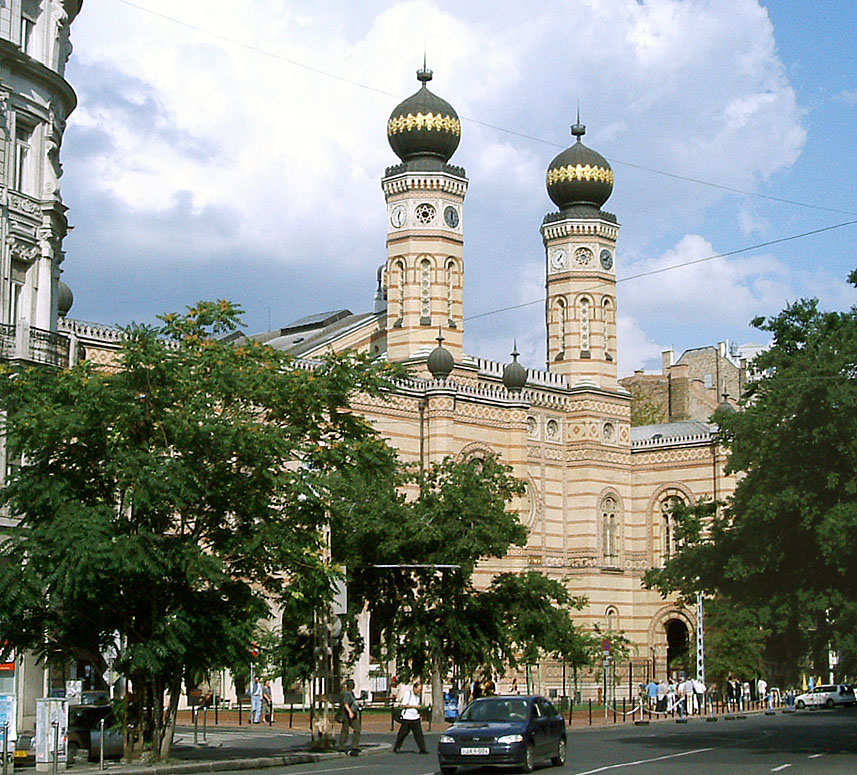 The original uploader was OsvátA at Hungarian Wikipedia. · Wikimedia Commons · CC BY-SA 3.0
Sommige boekingslinks zijn affiliate-links. Als je via deze links boekt, kunnen wij een kleine commissie verdienen zonder extra kosten voor jou. We laten dit nooit bepalen welke plekken we aanbevelen.
De Dohánystraat-synagoge is de grootste synagoge van Europa en een belangrijke Joodse erfgoedsite in Boedapest. Gebouwd in Moorse Revival-stijl, heeft het interieur sierlijke bogen, een grote koepel en een imposant orgel. Het complex omvat het Hongaars Joods Museum en het Holocaustmonument in de binnenplaats, met de opvallende Levensboom-sculptuur. Bezoekers krijgen inzicht in de Joodse geschiedenis en de tragedie van de Holocaust via tentoonstellingen en de plechtige sfeer van de synagoge.
Niet te missen
- Bewonder de Moorse Revival-architectuur en het grandioze interieur van de synagoge
- Bezoek het Hongaars Joods Museum voor artefacten en historische tentoonstellingen
- Reflecteer bij het Holocaustmonument met de Levensboom-sculptuur
Tickets & rondleidingen
Manieren om Dohány Street Synagogue te bezoeken
Je kunt Dohány Street Synagogue op eigen gelegenheid bezoeken. Een gids is de moeite waard voor de geschiedenis en details waar je makkelijk aan voorbijloopt. Een tour kan het combineren met nabijgelegen bezienswaardigheden.
 Goedkoopste optieWalking Tour Budapest incl. the Shoes on the Danube Bank4.9★ · 393 reizigers~2 uurGratis annulerenVanaf$4 per persoonData bekijken →
 Meest geboektBudapest Danube Cruise and Dinner Options, Live Music and Dance4.7★ · 7.542 reizigers~2 uurGratis annulerenVanaf$57 per persoonData bekijken →
 Privé & flexibelBudapest Jewish Heritage: Synagogues, Shoes, Secrets4.8★ · 59 reizigers~3 uurGratis annulerenVanaf$52 per persoonData bekijken →
Goed om te weten
- The synagogue stands on Dohány Street in Budapest's Jewish quarter, within the central UNESCO World Heritage area.
- The complex includes a courtyard cemetery created during the 1944–1945 ghetto.
- A pipe organ is an unusual feature for a synagogue.
Een stukje geschiedenis
Built between 1854 and 1859 by the Jewish community of Pest, the synagogue was designed by Viennese architect Ludwig Förster in Moorish Revival and Romantic Historicist styles, with decoration based on Islamic models from North Africa and medieval Spain. It was consecrated on 6 September 1859. During World War II, it was used as a base for German Radio and a stable for animals, suffering severe damage from air raids. Restoration began in 1991 and was completed in 1998.
Veelgestelde vragen
Why is there a cemetery next to the synagogue?
It is not customary to have a cemetery next to a synagogue, but this one was created out of necessity during the winter of 1944–1945 when over 2,000 people who died in the ghetto were buried in the courtyard.
What is the significance of the weeping willow memorial?
The memorial, called the Holocaust Tree of Life, is a weeping willow sculpture by Imre Varga with leaves bearing the names and tattoo numbers of victims, located in the Raoul Wallenberg Holocaust Memorial Park.
Can visitors see the original keys of the synagogue?
Yes, the keys and a silver trowel used to place the keystone in the Torah ark are kept at the adjacent Jewish Museum.
Who designed the synagogue and what style is it?
Viennese architect Ludwig Förster designed it in Moorish Revival and Romantic Historicist styles, with influences from Islamic architecture in North Africa and medieval Spain.
Meer bezienswaardigheden in Budapest