Religious site
Little Hagia Sophia
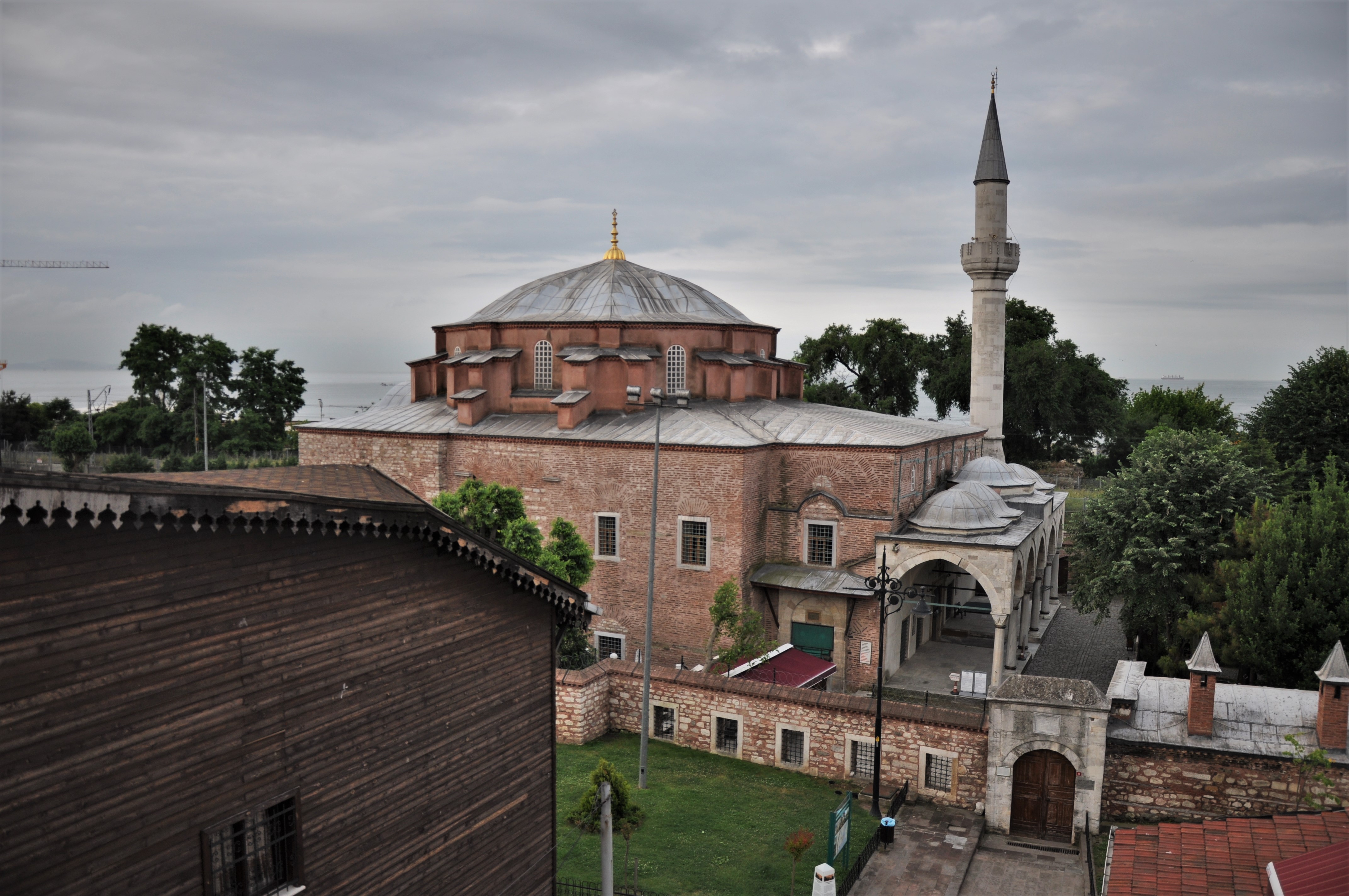 fusion-of-horizons · Wikimedia Commons · CC BY 2.0
일부 예약 링크는 제휴 링크입니다. 이 링크를 통해 예약하시면 추가 비용 없이 저희가 소액의 수수료를 받을 수 있습니다. 이는 저희가 추천하는 장소에 절대 영향을 주지 않습니다.
작은 아야소피아는 원래 성 세르기우스와 바쿠스 교회로, 6세기에 아야소피아보다 몇 년 먼저 건축되었습니다. 중앙 돔과 팔각형 평면은 이후 비잔틴 건축에 영향을 미쳤습니다. 16세기에 모스크로 전환되었으며, 원래의 대리석 기둥, 주두, 모자이크 조각이 남아 있습니다. 8개의 기둥 위에 돔이 얹힌 평화로운 내부는 초기 비잔틴 건축을 엿볼 수 있는 공간입니다.
놓치지 마세요
- 6세기 원래의 대리석 기둥과 조각된 주두
- 팔각형 지지 구조 위의 중앙 돔
- 남아 있는 모자이크 조각과 신랑을 둘러싼 비문 띠
티켓 & 투어
Little Hagia Sophia 즐기는 방법
Little Hagia Sophia은 혼자서도 방문할 수 있어요. 가이드는 놓치기 쉬운 역사와 세부 정보를 알려주고, 투어는 주변 명소와 함께 둘러보기에 좋아요.
 최저가 입장Istanbul: Hagia Sophia & Blue Mosque Guided & Small-Group Tour4.3★ · 여행자 52명~3시간무료 취소부터$19 1인당날짜 확인 →
 종일 코스 추천Istanbul Highlights! Blue Mosque, Hagia Sophia, Topkapı and More4.9★ · 여행자 660명8~9시간무료 취소부터$175 1인당날짜 확인 →
 프라이빗 & 자유Istanbul Guided Tour: Hagia Sophia, Basilica Cistern and More!5★ · 여행자 64명5~7시간무료 취소부터$105 1인당날짜 확인 →
Getting there
방문 전 알아두기
- Little Hagia Sophia is an active mosque that reopened for worship after restoration in 2006.
- The claim that it was a trial version of Hagia Sophia has largely been rejected by architectural historians.
- Original mosaics and variegated marble wall decoration do not survive, but the dome, columns, carving, and inscription remain central features.
- The building is in Kumkapı in the Fatih district, near the former Great Palace area and south of the Hippodrome.
역사 이야기
The church stood near Justinian's residence, the Palace of Hormisdas, and shared an atrium and entrance complex with the neighboring Church of Saints Peter and Paul. A later legend claimed that Saints Sergius and Bacchus saved Justinian from execution and that he built the church in gratitude after becoming emperor. This is a later legend; the building itself was one of the first major projects of Justinian's reign. A monastery soon developed beside it. In 536 and 537, the former palace became a refuge for Monophysite Christians protected by Empress Theodora. Pope Vigilius sought refuge in the church from imperial soldiers in 551, provoking unrest, and the monastery later became associated with Iconoclasm. The church remained intact after the Ottoman conquest of 1453. Between 1506 and 1513, Hüseyin Ağa, an official of Bayezid II's court, converted it into a mosque and added a portico and religious school. Later Ottoman work included a fountain and minaret. Earthquakes in 1648 and 1763 required repair, and the present minaret replaced an earlier one. Railway construction accelerated structural problems, while the building also housed refugees during the Balkan Wars. International heritage organizations placed it on endangered-site watch lists. A lengthy restoration ended in 2006, after which the mosque reopened for worship and public access.
자주 묻는 질문
Was Little Hagia Sophia built as a mosque?
No. It was the Byzantine Church of Saints Sergius and Bacchus and became a mosque between 1506 and 1513.
Did it serve as a model for Hagia Sophia?
Architectural historians have largely discredited that idea. The buildings are contemporary but differ substantially in architectural detail.
Who commissioned the church?
It was built in the reign of Justinian I, with scholarly dates ranging from the mid-520s to between 532 and 536.
What survives from the Byzantine interior?
The central plan, dome, two-storey colonnade, marble columns, carved capitals, and Greek dedicatory inscription remain, while original mosaics are gone.
Why did the building need restoration?
Centuries of earthquakes and humidity, railway construction, and the building's use as refugee housing during the Balkan Wars caused damage and threatened its structural integrity.
이스탄불의 다른 명소