Religious site
Little Hagia Sophia
 fusion-of-horizons · Wikimedia Commons · CC BY 2.0
Some booking links are affiliate links. If you book through them, we may earn a small commission at no extra cost to you. We never let this influence which places we recommend.
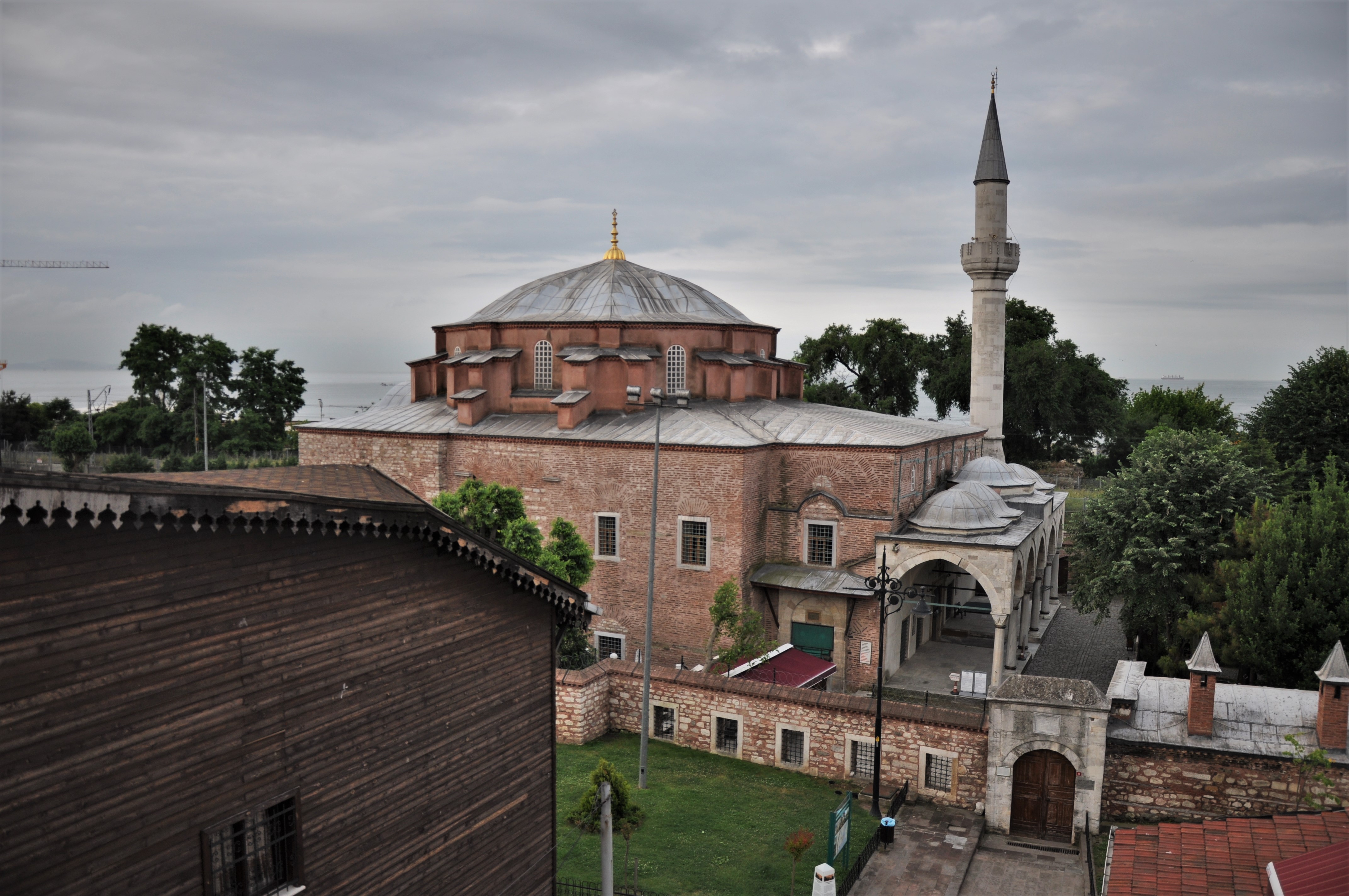
Little Hagia Sophia is an active mosque in Istanbul's Fatih district, close to the Marmara Sea and south of the former Hippodrome. It began as the sixth-century Greek Orthodox Church of Saints Sergius and Bacchus, commissioned during the reign of Justinian I. The exact construction date is debated, with scholarly proposals ranging from the mid-520s to 532 to 536. Despite its Turkish nickname, the building was probably not a small-scale model for Hagia Sophia, though the two were contemporary and share some spatial effects. Its importance comes from its own architecture. An octagon is fitted within an irregular quadrilateral and covered by a sixteen-part umbrella dome, alternating flat and concave sections. Eight polygonal piers support the dome. Exedrae open the central space diagonally, while columns screen a surrounding two-level ambulatory and create strong changes of light and shadow. Inside, green verd antique and red Synnadic marble columns support carved capitals, many still carrying monograms of Justinian and Empress Theodora. A Greek inscription of twelve hexameter lines honors the imperial couple and Saint Sergius. The original mosaics and marble wall covering no longer survive, and Ottoman conversion altered windows, entrances, floor level, and surfaces. Even so, the dome, colonnades, carved stone, and unusually centralized plan preserve one of Istanbul's most significant early Byzantine interiors.
Don't miss
- The sixteen-part umbrella dome over an octagonal central plan
- A two-storey colonnade with green and red marble columns
- Carved capitals bearing monograms of Justinian and Theodora
- The twelve-line Greek inscription dedicated to Justinian, Theodora, and Saint Sergius
- Diagonal exedrae and alternating light that anticipate effects also seen in Hagia Sophia
- The Ottoman courtyard, ablution fountain, portico, minaret, and small cemetery
Tickets & tours
Ways to visit Little Hagia Sophia
You can visit Little Hagia Sophia on your own. A guide is worth it for the history and detail that is easy to walk past, and a tour can combine it with nearby sights.
 Cheapest way inIstanbul: Hagia Sophia & Blue Mosque Guided & Small-Group Tour4.3★ · 52 travelers~3 hoursFree cancellationFrom$19 per personSee dates →
 Best full dayIstanbul Highlights! Blue Mosque, Hagia Sophia, Topkapı and More4.9★ · 660 travelers8-9 hoursFree cancellationFrom$175 per personSee dates →
 Private & flexibleIstanbul Guided Tour: Hagia Sophia, Basilica Cistern and More!5★ · 64 travelers5-7 hoursFree cancellationFrom$105 per personSee dates →
Getting there
Know before you go
- Little Hagia Sophia is an active mosque that reopened for worship after restoration in 2006.
- The claim that it was a trial version of Hagia Sophia has largely been rejected by architectural historians.
- Original mosaics and variegated marble wall decoration do not survive, but the dome, columns, carving, and inscription remain central features.
- The building is in Kumkapı in the Fatih district, near the former Great Palace area and south of the Hippodrome.
A bit of history
The church stood near Justinian's residence, the Palace of Hormisdas, and shared an atrium and entrance complex with the neighboring Church of Saints Peter and Paul. A later legend claimed that Saints Sergius and Bacchus saved Justinian from execution and that he built the church in gratitude after becoming emperor. This is a later legend; the building itself was one of the first major projects of Justinian's reign. A monastery soon developed beside it. In 536 and 537, the former palace became a refuge for Monophysite Christians protected by Empress Theodora. Pope Vigilius sought refuge in the church from imperial soldiers in 551, provoking unrest, and the monastery later became associated with Iconoclasm. The church remained intact after the Ottoman conquest of 1453. Between 1506 and 1513, Hüseyin Ağa, an official of Bayezid II's court, converted it into a mosque and added a portico and religious school. Later Ottoman work included a fountain and minaret. Earthquakes in 1648 and 1763 required repair, and the present minaret replaced an earlier one. Railway construction accelerated structural problems, while the building also housed refugees during the Balkan Wars. International heritage organizations placed it on endangered-site watch lists. A lengthy restoration ended in 2006, after which the mosque reopened for worship and public access.
Common questions
Was Little Hagia Sophia built as a mosque?
No. It was the Byzantine Church of Saints Sergius and Bacchus and became a mosque between 1506 and 1513.
Did it serve as a model for Hagia Sophia?
Architectural historians have largely discredited that idea. The buildings are contemporary but differ substantially in architectural detail.
Who commissioned the church?
It was built in the reign of Justinian I, with scholarly dates ranging from the mid-520s to between 532 and 536.
What survives from the Byzantine interior?
The central plan, dome, two-storey colonnade, marble columns, carved capitals, and Greek dedicatory inscription remain, while original mosaics are gone.
Why did the building need restoration?
Centuries of earthquakes and humidity, railway construction, and the building's use as refugee housing during the Balkan Wars caused damage and threatened its structural integrity.
More attractions in Istanbul