Religious site
Jogyesa
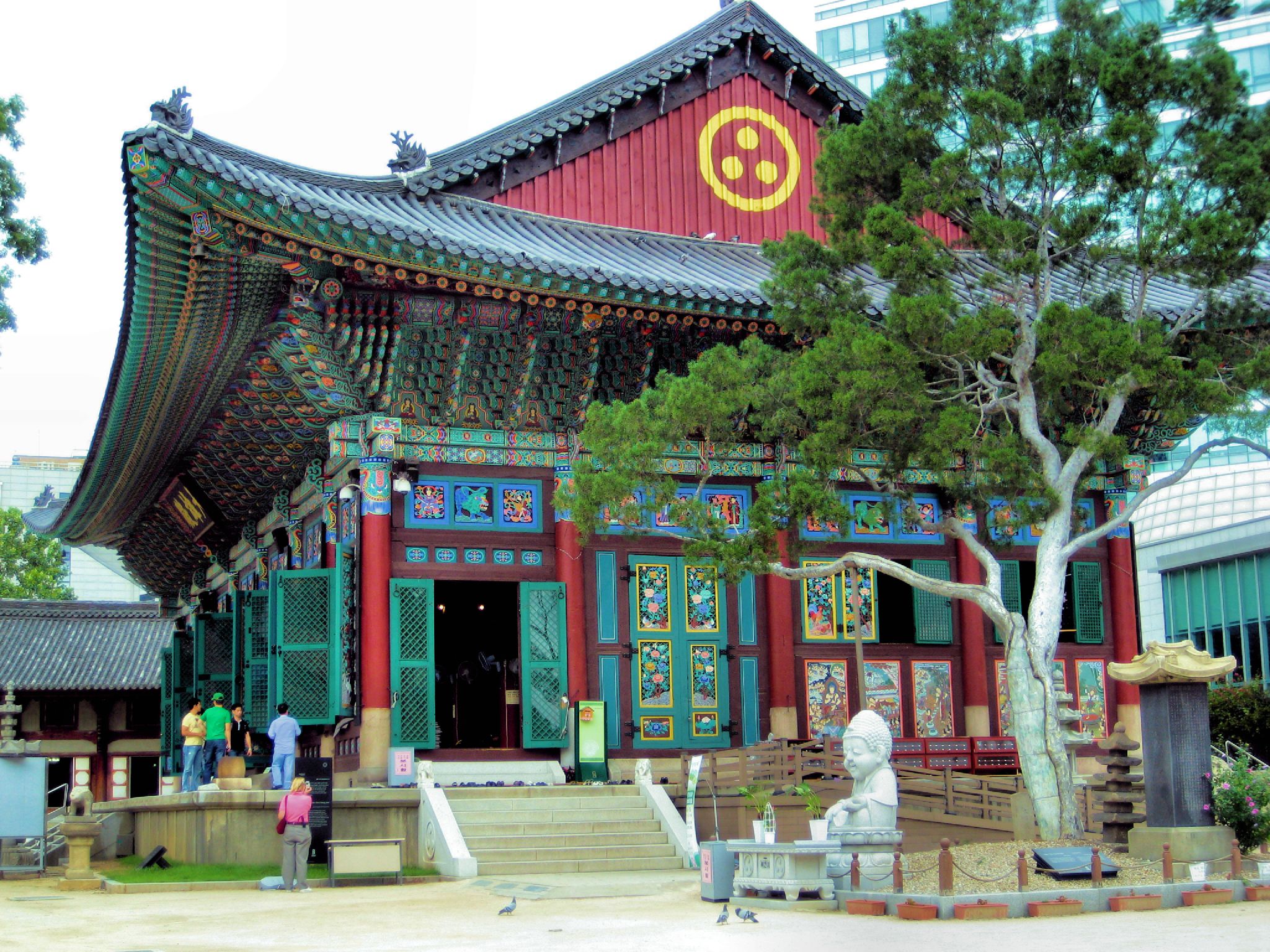 Francisco Anzola · Wikimedia Commons · CC BY 2.0
일부 예약 링크는 제휴 링크입니다. 이 링크를 통해 예약하시면 추가 비용 없이 저희가 소액의 수수료를 받을 수 있습니다. 이는 저희가 추천하는 장소에 절대 영향을 주지 않습니다.
조계사는 한국 최대 불교 종파인 조계종의 총본산입니다. 1910년에 창건되었으며, 한국 불교의 정신적 중심지 역할을 합니다. 경내에는 500년 된 백송과 100년 된 회화나무가 있습니다. 대웅전 안에는 세 개의 큰 금불상이 있습니다. 부처님 오신 날에는 수천 개의 화려한 연등이 사찰을 장식합니다. 도심 속에서 고요한 휴식을 제공하는 곳입니다.
놓치지 마세요
- 500년 이상 된 천연기념물인 백송을 감상하세요.
- 대웅전에서 세 개의 금불상을 관람하세요.
- 5월 연등축제 기간에 방문하여 연등으로 뒤덮인 사찰을 경험하세요.
티켓 & 투어
Jogyesa 즐기는 방법
Jogyesa은 혼자서도 방문할 수 있어요. 가이드는 놓치기 쉬운 역사와 세부 정보를 알려주고, 투어는 주변 명소와 함께 둘러보기에 좋아요.
 최저가 입장Gyeongbokgung Palace Hanbok Rental Experience in Seoul4.1★ · 여행자 92명~2시간무료 취소부터$7 1인당날짜 확인 →
 종일 코스 추천Best DMZ Tour Korea from Seoul (Suspension Bridge & JSA Museum)4.9★ · 여행자 47,799명7~9시간무료 취소부터$50 1인당날짜 확인 →
 프라이빗 & 자유Seoul Private Local Tour: Gyeongbokgung, Seochon & Market Tour5★ · 여행자 10명5~6시간무료 취소부터$68 1인당날짜 확인 →
방문 전 알아두기
- The temple is located in Gyeonji-dong, Jongno District, in downtown Seoul, near Insa-dong and Gyeongbokgung Palace.
- Jogyesa participates in the Templestay program, where you can experience the life of Buddhist monks, eat Buddhist food, and learn about Korean Buddhism.
- The Buddha's Birthday festival (Yeondeunghoe) features lanterns hung from May 6 to 22, from 6 p.m. to midnight, with a Lotus Lantern Parade along Jongno Street.
역사 이야기
The temple was first established in 1395 at the dawn of the Joseon period. During Japanese colonial rule, it became a fortress of resistance against efforts to suppress Korean Buddhism. The modern temple was founded in 1910 as Gakhwangsa, renamed Taegosa in 1938, and then Jogyesa in 1954 when it became the main temple of the Jogye Order.
자주 묻는 질문
What is the significance of the white pine tree in the courtyard?
The white pine tree is about 10 meters high and is designated Natural Monument No. 9. It was brought by Chinese missionaries during the Joseon period and gave the nearby area 'Susong-dong' its name (song means 'pine tree').
Can I stay overnight at Jogyesa?
Yes, the temple participates in the Templestay program, where visitors can sign up to experience the life of Buddhist monks, eat Buddhist food, and learn the history of the temple and Korean Buddhism.
What is the Iljumun gate?
The Iljumun, or 'one pillar gate', is the entry to the temple that represents the division separating the mortal world from the world of Buddha.
Seoul의 다른 명소