Park & nature
National Garden, Athens
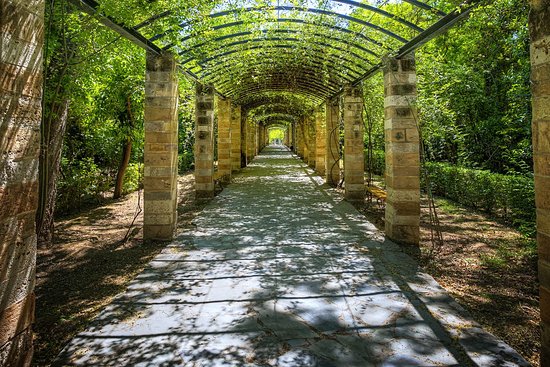
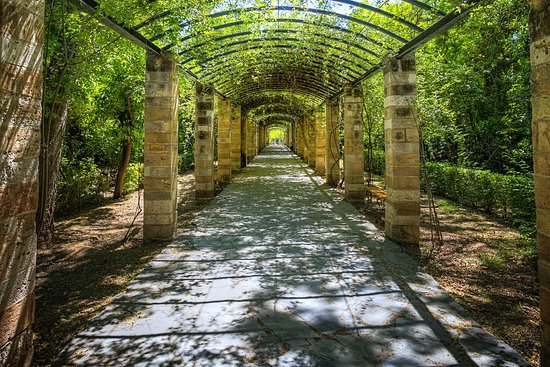 Photo via TripAdvisor (oleg19660320)
Some booking links are affiliate links. If you book through them, we may earn a small commission at no extra cost to you. We never let this influence which places we recommend.
The National Garden is a 15.5-hectare public park in central Athens, located behind the Greek Parliament building and extending south to the Zappeion area, opposite the Panathenaic Stadium used for the 1896 Olympic Games. The garden contains ancient ruins, column drums, Corinthian capitals, mosaics, and busts of Ioannis Kapodistrias, Jean-Gabriel Eynard, and poets Dionysios Solomos and Aristotelis Valaoritis.
Don't miss
- Ancient Roman ruins, including a villa with a mosaic, columns of various orders, and a large marble inscription about Caesar Aelius ordered by Laius Aettius.
- A duck pond, Botanical Museum, and a Children's Library and playground.
- Busts of Ioannis Kapodistrias, Jean-Gabriel Eynard, Dionysios Solomos, and Aristotelis Valaoritis.
- The 12 palms planted by Queen Amalia near the main entrance on Leoforos Amalias.
- The Zappeion Hall, a neoclassical building used as the Olympic village and fencing venue for the 1896 Summer Olympics.
Tickets & tours
Ways to visit National Garden, Athens
You can explore National Garden, Athens at your own pace. A tour is worth it mainly for transport, or for pairing it with nearby sights in one day.
 Cheapest way inAthens Shore Excursion: Athens and Piraeus Hop-On Hop-Off Bus Tour4.1★ · 629 travelers1-2 hoursFree cancellationFrom$20 per personSee dates →
 Most bookedAcropolis and Parthenon Guided Walking Tour4.8★ · 6,019 travelers~2 hoursFree cancellationFrom$40 per personSee dates →
 Private & flexibleAthens Full Day Private Tour5★ · 1,008 travelers~8 hoursFree cancellationFrom$180 per personSee dates →
Getting there
Know before you go
- Enter via the main gate on Leoforos Amalias, or through gates on Vasilissis Sophias Avenue, Herodou Attikou Street, or the Zappeion park area.
- Look for the duck pond and the Botanical Museum inside the garden.
A bit of history
Commissioned by Queen Amalia in 1838 and completed by 1840, the garden was designed by German agronomist Friedrich Schmidt, who imported over 500 plant species and animals like peacocks, ducks, and turtles. Originally a private royal refuge, it opened to the public in the afternoons and was renamed the National Garden in the 1920s. In 1920, King Alexander died of sepsis after being bitten by a pet monkey while walking here, an event that Winston Churchill later linked to the deaths of a quarter of a million people due to its political fallout.
Common questions
What is the history of the National Garden?
It was originally the Royal Garden, commissioned by Queen Amalia in 1838 and completed by 1840. It was opened to the public in the afternoons and renamed the National Garden in the 1920s.
What can I see inside the garden?
You can see ancient Roman ruins, a Roman villa with a mosaic, columns, a duck pond, a Botanical Museum, a Children's Library and playground, and busts of historical figures.
How did King Alexander die in the garden?
In 1920, King Alexander was bitten by a pet monkey while walking in the garden and died of sepsis three weeks later, an event that had major political consequences.
More attractions in Athens