Museum
Museo del Prado
 Emilio J. Rodríguez Posada · Wikimedia Commons · CC BY-SA 2.0
Algunos enlaces de reserva son enlaces de afiliados. Si reservas a través de ellos, podríamos ganar una pequeña comisión sin coste adicional para ti. Nunca dejamos que esto influya en los lugares que recomendamos.
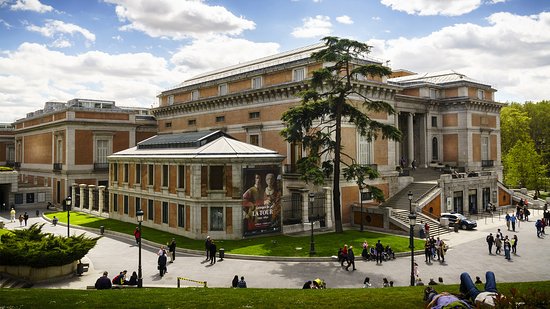
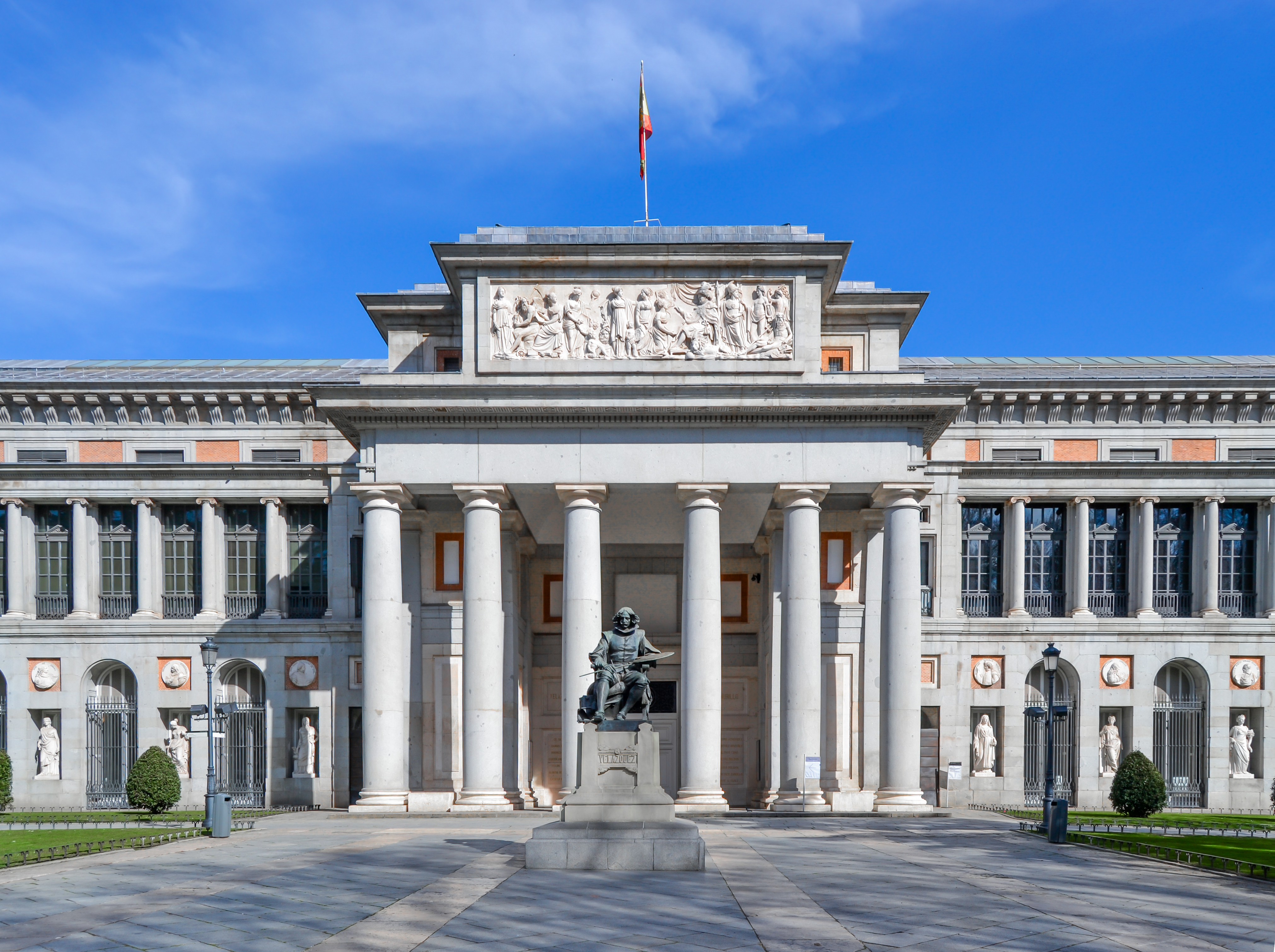
El Museo del Prado es el museo de arte más importante de España y uno de los más visitados del mundo, ubicado a lo largo del Paseo del Prado en el centro de Madrid. Su vasta colección abarca desde el siglo XII hasta principios del XX, con un énfasis particular en los maestros españoles. Los visitantes pueden admirar obras icónicas como 'Las Meninas' de Velázquez, 'El tres de mayo de 1808' de Goya y 'La Anunciación' de El Greco. La distribución del museo es cronológica, lo que facilita seguir la evolución del arte. El edificio en sí es una obra maestra neoclásica, con grandes galerías e iluminación natural. Una visita ofrece una inmersión profunda en la historia y cultura españolas a través del arte, con aspectos destacados como las colecciones de El Bosco, Tiziano y Rubens. El Prado también alberga exposiciones temporales y cuenta con un agradable café y una tienda de regalos.
No te lo pierdas
- 'Las Meninas' de Velázquez, una obra maestra de la pintura barroca
- 'El tres de mayo de 1808' de Goya, que representa los horrores de la guerra
- 'La Anunciación' de El Greco, un impresionante ejemplo del arte manierista
- 'El jardín de las delicias' de El Bosco, un tríptico lleno de imágenes surrealistas
- La colección de las 'Pinturas negras' de Francisco de Goya
Entradas y visitas guiadas
Formas de visitar Museo del Prado
Puedes visitar Museo del Prado por tu cuenta. Una guía aporta contexto sobre lo que ves y por qué es relevante; un tour puede incluir transporte o combinar lugares cercanos en un solo día.
 Más baratoMadrid : Gran Via, Cibeles, Paseo del Prado and Retiro5★ · 18 viajeros~3 horasCancelación gratuitaDesde$5 por personaVer fechas →
 Más reservadoMadrid: Royal Palace Guided Tour with Skip the Line Ticket4.7★ · 2632 viajeros~2 horasCancelación gratuitaDesde$41 por personaVer fechas →
 Privado y flexibleSkip the Line Prado Museum Madrid Exclusive Guided Tour5★ · 31 viajeros~3 horasCancelación gratuitaDesde$154 por personaVer fechas →
Getting there
Antes de ir
- As of 2012, about 1,300 works were displayed in the main buildings, while most of the collection was on loan or in storage.
- The Spanish royal collection forms the museum's core and explains its exceptional depth in court painters and European masters.
- The Prado also holds drawings, prints, sculpture, decorative art, medals, and historical documents.
- The Prado, Thyssen-Bornemisza, and Reina Sofía make up Madrid's Golden Triangle of Art.
Un poco de historia
Juan de Villanueva designed the Prado building in 1785 for Charles III as a Natural History Cabinet within a plan to give Madrid a monumental urban space. Work stopped after the king's reign and during the Peninsular War, when Napoleonic troops used the unfinished building as cavalry headquarters and a gunpowder store. Ferdinand VII, encouraged by Queen María Isabel de Braganza, chose it for a Royal Museum of Paintings and Sculptures. The museum opened in November 1819. Its first catalogue listed 311 Spanish paintings, although the institution already held 1,510 works gathered from royal residences. Successive Habsburg and Bourbon monarchs enlarged the royal collection that became the Prado's core. After Isabella II was deposed in 1868, the museum was nationalized and took the Prado name. The Museo de la Trinidad collection joined it in 1872, and the Museo de Arte Moderno holdings followed in 1971. Bequests, donations, and purchases added major works, including Goya's Black Paintings. During the Spanish Civil War, staff removed hundreds of paintings and drawings and the Dauphin's Treasure for safety, moving them through Valencia and Girona to Geneva before their return. Expansions in 1918 and later projects increased gallery space, while Rafael Moneo's 2007 extension connected the main building with a reconstructed neighboring complex.
Preguntas frecuentes
What is the Prado best known for?
It has the strongest single collection of Spanish art and major holdings of Goya, Velázquez, El Greco, Bosch, Rubens, Titian, and other European masters.
Was the Prado building designed as an art museum?
No. Juan de Villanueva designed it in 1785 as a Natural History Cabinet. Ferdinand VII later chose it for the royal art museum.
When did the museum open?
The Royal Museum of Paintings and Sculptures first opened to the public in November 1819.
Where did the collection come from?
Its core came from Spanish royal residences, then grew through merged museums, bequests, donations, purchases, and other acquisitions.
How was the art protected during the Spanish Civil War?
Museum staff evacuated hundreds of paintings and drawings and the Dauphin's Treasure through Valencia and Girona to Geneva before returning them.
Más atracciones en Madrid