Museum
Museo del Prado
 Emilio J. Rodríguez Posada · Wikimedia Commons · CC BY-SA 2.0
Some booking links are affiliate links. If you book through them, we may earn a small commission at no extra cost to you. We never let this influence which places we recommend.
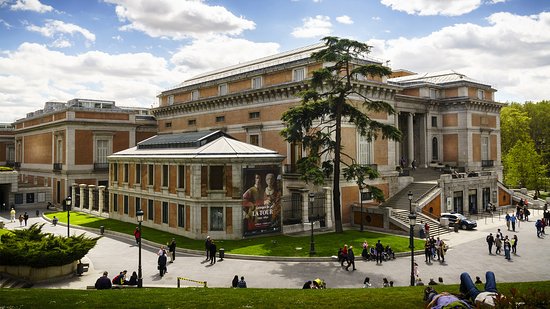
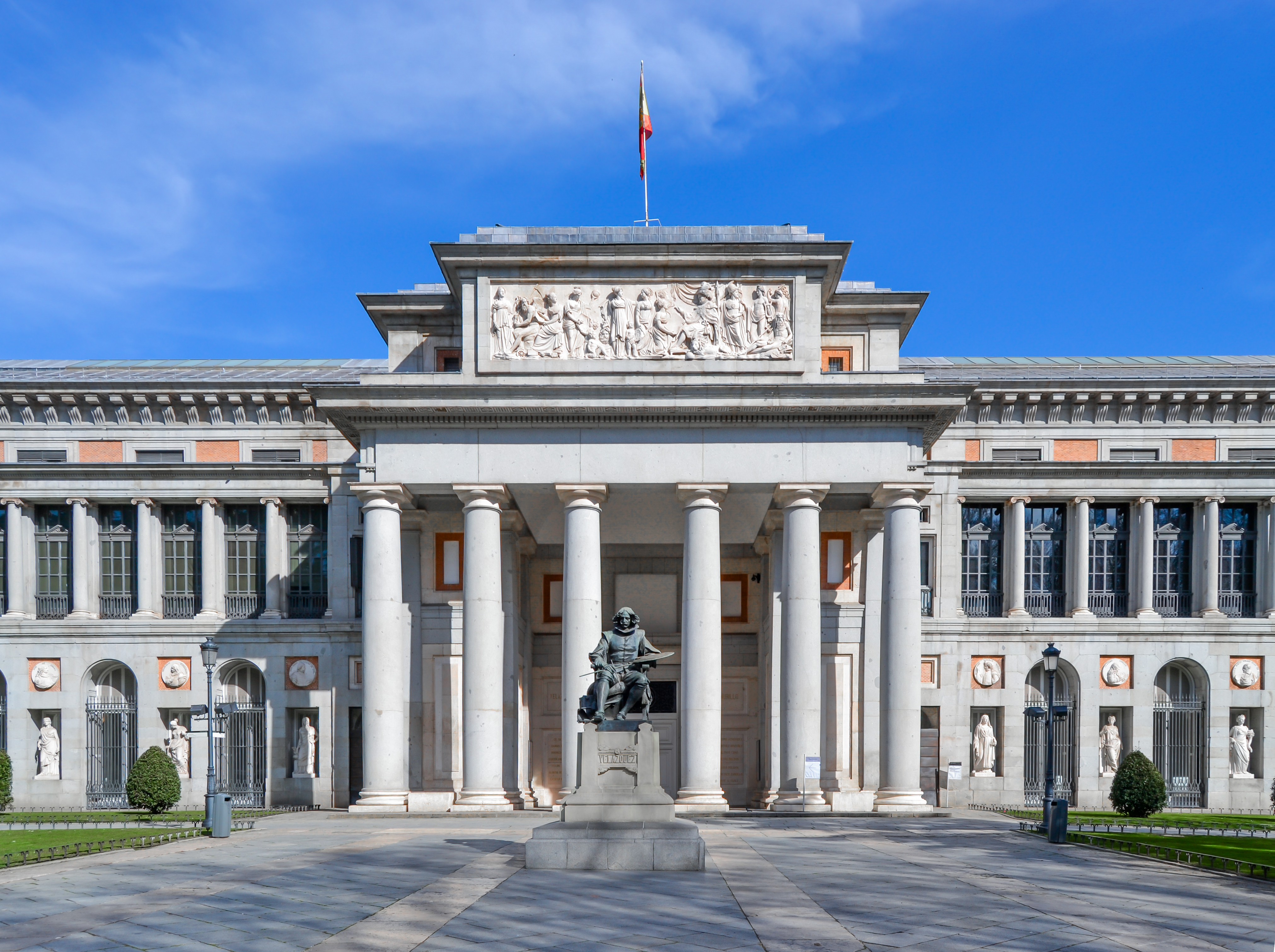
The Museo Nacional del Prado is Spain's principal national art museum, located in central Madrid on the Paseo del Prado. Its collections cover European art from the twelfth to the early twentieth century and grow from the former Spanish royal collection. The museum is especially strong in Spanish painting, with Francisco Goya represented more extensively than any other artist. Major holdings also include work by Diego Velázquez, El Greco, Hieronymus Bosch, Peter Paul Rubens, Titian, and many Italian masters. Velázquez helped bring important Italian paintings into the royal collection while serving the Spanish court. Famous works include Velázquez's Las Meninas, Bosch's The Garden of Earthly Delights, Rogier van der Weyden's Descent from the Cross, Titian's Equestrian Portrait of Charles V, Rubens's Three Graces, El Greco's Nobleman with his Hand on his Chest, and Goya's Family of Charles IV and Black Paintings. The collection extends well beyond paintings, with thousands of drawings and prints, around a thousand sculptures, decorative arts, medals, and historical documents. The Prado forms Madrid's Golden Triangle of Art with the Thyssen-Bornemisza Museum and Museo Reina Sofía. Its setting on the Paseo del Prado is part of a combined UNESCO World Heritage landscape recognized in 2021. As of 2012, about 1,300 works were displayed in the main buildings, while thousands more were on loan or in storage.
Don't miss
- Las Meninas by Diego Velázquez
- The Garden of Earthly Delights by Hieronymus Bosch
- Goya's extensive representation, including the Black Paintings and The Family of Charles IV
- The Descent from the Cross by Rogier van der Weyden
- Italian masters collected by the Spanish Crown, including Titian, Raphael, Tintoretto, and Mantegna
- The Villanueva building and its place within the UNESCO-listed Paseo del Prado landscape
Tickets & tours
Ways to visit Museo del Prado
You can visit Museo del Prado on your own. A guide mainly adds context, what you are looking at and why it matters, and a tour can add transport or combine nearby sights into one day.
 Cheapest way inMadrid : Gran Via, Cibeles, Paseo del Prado and Retiro5★ · 18 travelers~3 hoursFree cancellationFrom$5 per personSee dates →
 Most bookedMadrid: Royal Palace Guided Tour with Skip the Line Ticket4.7★ · 2,632 travelers~2 hoursFree cancellationFrom$41 per personSee dates →
 Private & flexibleSkip the Line Prado Museum Madrid Exclusive Guided Tour5★ · 31 travelers~3 hoursFree cancellationFrom$154 per personSee dates →
Getting there
Know before you go
- As of 2012, about 1,300 works were displayed in the main buildings, while most of the collection was on loan or in storage.
- The Spanish royal collection forms the museum's core and explains its exceptional depth in court painters and European masters.
- The Prado also holds drawings, prints, sculpture, decorative art, medals, and historical documents.
- The Prado, Thyssen-Bornemisza, and Reina Sofía make up Madrid's Golden Triangle of Art.
A bit of history
Juan de Villanueva designed the Prado building in 1785 for Charles III as a Natural History Cabinet within a plan to give Madrid a monumental urban space. Work stopped after the king's reign and during the Peninsular War, when Napoleonic troops used the unfinished building as cavalry headquarters and a gunpowder store. Ferdinand VII, encouraged by Queen María Isabel de Braganza, chose it for a Royal Museum of Paintings and Sculptures. The museum opened in November 1819. Its first catalogue listed 311 Spanish paintings, although the institution already held 1,510 works gathered from royal residences. Successive Habsburg and Bourbon monarchs enlarged the royal collection that became the Prado's core. After Isabella II was deposed in 1868, the museum was nationalized and took the Prado name. The Museo de la Trinidad collection joined it in 1872, and the Museo de Arte Moderno holdings followed in 1971. Bequests, donations, and purchases added major works, including Goya's Black Paintings. During the Spanish Civil War, staff removed hundreds of paintings and drawings and the Dauphin's Treasure for safety, moving them through Valencia and Girona to Geneva before their return. Expansions in 1918 and later projects increased gallery space, while Rafael Moneo's 2007 extension connected the main building with a reconstructed neighboring complex.
Common questions
What is the Prado best known for?
It has the strongest single collection of Spanish art and major holdings of Goya, Velázquez, El Greco, Bosch, Rubens, Titian, and other European masters.
Was the Prado building designed as an art museum?
No. Juan de Villanueva designed it in 1785 as a Natural History Cabinet. Ferdinand VII later chose it for the royal art museum.
When did the museum open?
The Royal Museum of Paintings and Sculptures first opened to the public in November 1819.
Where did the collection come from?
Its core came from Spanish royal residences, then grew through merged museums, bequests, donations, purchases, and other acquisitions.
How was the art protected during the Spanish Civil War?
Museum staff evacuated hundreds of paintings and drawings and the Dauphin's Treasure through Valencia and Girona to Geneva before returning them.
More attractions in Madrid