Religious site
Lisbon Cathedral
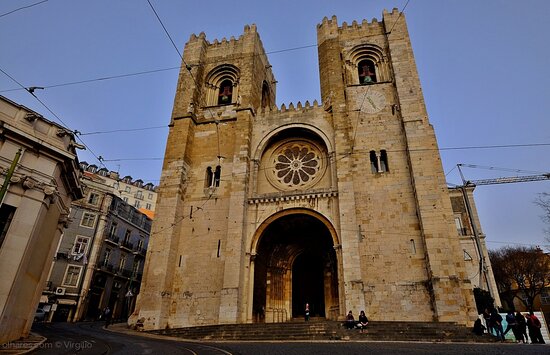 Photo via TripAdvisor (Management)
Algunos enlaces de reserva son enlaces de afiliados. Si reservas a través de ellos, podríamos ganar una pequeña comisión sin coste adicional para ti. Nunca dejamos que esto influya en los lugares que recomendamos.
La Catedral de Lisboa (Sé de Lisboa) es la iglesia más antigua e histórica de la ciudad, una robusta estructura románica que ha sobrevivido a terremotos y asedios. Los visitantes entran a través de un gran rosetón y exploran el ambiente interior, luego bajan a los claustros góticos donde las excavaciones arqueológicas revelan capas romanas, moriscas y medievales. El tesoro alberga vasos sagrados, vestimentas y el relicario de San Vicente, patrón de Lisboa.
No te lo pierdas
- Explora los claustros góticos y observa las ruinas romanas y moriscas excavadas debajo.
- Mira la colección de artefactos religiosos del tesoro, incluido el relicario de San Vicente.
- Admira la fachada románica con aspecto de fortaleza y el hermoso rosetón.
Entradas y visitas guiadas
Formas de visitar Lisbon Cathedral
Puedes visitar Lisbon Cathedral por tu cuenta. Una guía vale la pena por la historia y los detalles que pasan desapercibidos; un tour puede combinarlo con lugares cercanos.
 Más baratoLisbon Walking Tour - The Perfect Introduction to the City4.9★ · 672 viajeros~3 horasCancelación gratuitaDesde$1 por personaVer fechas →
 Más reservadoLisbon City Center Tour - The Unmissable Lisbon5★ · 24.788 viajeros~3 horasCancelación gratuitaDesde$2 por personaVer fechas →
 Privado y flexibleLisbon Jewish Heritage and History 4H Private Tour Van5★ · 321 viajeros~4 horasCancelación gratuitaDesde$180 por personaVer fechas →
Getting there
Antes de ir
- Alfama's hills and cobblestones make sturdy footwear useful on the approach.
- The crenellated façade and twin towers preserve the cathedral's fortress-like Romanesque character.
- Cloister excavations reveal a Roman road, a kitchen, drains, Visigothic traces, and walls from the earlier mosque.
Un poco de historia
The cathedral was built on the site of Lisbon's main mosque after the city was reconquered in 1147 by Portuguese soldiers and North European crusaders. An English crusader, Gilbert of Hastings, became bishop. The relics of St Vincent of Saragossa, Lisbon's patron saint, were brought here. In 1498, Queen Eleanor of Viseu founded a brotherhood in the cloister that evolved into the Santa Casa da Misericórdia. During the 1383–85 interregnum, an angry crowd threw Bishop Dom Martinho Annes from the northern tower. The 1755 earthquake destroyed the Gothic main chapel and royal pantheon. Excavations in the cloister since 1990 have revealed a Roman road, shops, a kitchen, sewage system, Visigoth buildings, and remains of the mosque.
Preguntas frecuentes
What is the oldest part of the cathedral?
The Romanesque west façade, main portal, north lateral portal, and nave date from the first building period (1147 to early 13th century).
Why does the cathedral look like a fortress?
The crenellations and two towers flanking the entrance are relics from the Reconquista period, when the cathedral may have been used as a base during a siege.
What happened to the original Gothic main chapel?
It was destroyed in the 1755 earthquake and later rebuilt in Neoclassical and Rococo styles.
Can I see remains of the mosque that once stood here?
Yes, excavations in the cloister have uncovered red walls from the mosque, and the Portuguese Minister of Culture determined in 2020 that these Muslim remains should be preserved.
What are the famous Saint Vincent Panels?
Painted by Nuno Gonçalves, they were once in the St Vincent chapel of the ambulatory but are now in the Museu Nacional de Arte Antiga in Lisbon.
Más atracciones en Lisbon