Religious site
Lisbon Cathedral
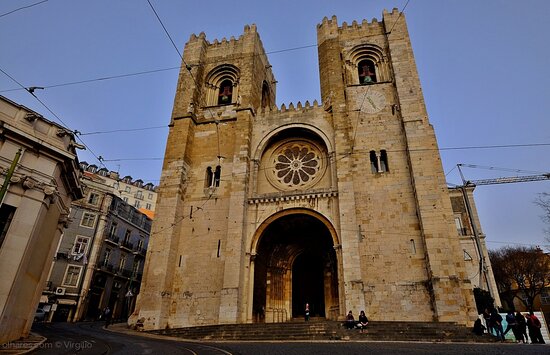 Photo via TripAdvisor (Management)
Some booking links are affiliate links. If you book through them, we may earn a small commission at no extra cost to you. We never let this influence which places we recommend.
Lisbon Cathedral, also known as the Sé, is the oldest church in the city, built in 1147. Its fortress-like façade with two towers and crenellations reflects the Reconquista period. The cathedral mixes Romanesque, Gothic, Baroque, and Neoclassical styles due to many earthquakes and restorations.
Don't miss
- The Romanesque west façade with a rose window (rebuilt from fragments in the 20th century) and main portal with sculptured capitals.
- The Gothic ambulatory with ribbed vaulting and clerestory windows, which survived the 1755 earthquake.
- Three outstanding mid-14th-century Gothic tombs: Lopo Fernandes Pacheco with his sword and a dog, his wife Maria de Vilalobos reading a Book of Hours, and an unidentified royal princess.
- The Baroque sacristy built in the 17th century.
- A magnificent crib by sculptor Machado de Castro in the Gothic chapel of Bartolomeu Joanes.
- The excavated Roman road and mosque remains visible in the cloister courtyard.
Tickets & tours
Ways to visit Lisbon Cathedral
You can visit Lisbon Cathedral on your own. A guide is worth it for the history and detail that is easy to walk past, and a tour can combine it with nearby sights.
 Cheapest way inLisbon Walking Tour - The Perfect Introduction to the City4.9★ · 672 travelers~3 hoursFree cancellationFrom$1 per personSee dates →
 Most bookedLisbon City Center Tour - The Unmissable Lisbon5★ · 24,788 travelers~3 hoursFree cancellationFrom$2 per personSee dates →
 Private & flexibleLisbon Jewish Heritage and History 4H Private Tour Van5★ · 321 travelers~4 hoursFree cancellationFrom$180 per personSee dates →
Know before you go
- Alfama's hills and cobblestones make sturdy footwear useful on the approach.
- The crenellated façade and twin towers preserve the cathedral's fortress-like Romanesque character.
- Cloister excavations reveal a Roman road, a kitchen, drains, Visigothic traces, and walls from the earlier mosque.
A bit of history
The cathedral was built on the site of Lisbon's main mosque after the city was reconquered in 1147 by Portuguese soldiers and North European crusaders. An English crusader, Gilbert of Hastings, became bishop. The relics of St Vincent of Saragossa, Lisbon's patron saint, were brought here. In 1498, Queen Eleanor of Viseu founded a brotherhood in the cloister that evolved into the Santa Casa da Misericórdia. During the 1383–85 interregnum, an angry crowd threw Bishop Dom Martinho Annes from the northern tower. The 1755 earthquake destroyed the Gothic main chapel and royal pantheon. Excavations in the cloister since 1990 have revealed a Roman road, shops, a kitchen, sewage system, Visigoth buildings, and remains of the mosque.
Common questions
What is the oldest part of the cathedral?
The Romanesque west façade, main portal, north lateral portal, and nave date from the first building period (1147 to early 13th century).
Why does the cathedral look like a fortress?
The crenellations and two towers flanking the entrance are relics from the Reconquista period, when the cathedral may have been used as a base during a siege.
What happened to the original Gothic main chapel?
It was destroyed in the 1755 earthquake and later rebuilt in Neoclassical and Rococo styles.
Can I see remains of the mosque that once stood here?
Yes, excavations in the cloister have uncovered red walls from the mosque, and the Portuguese Minister of Culture determined in 2020 that these Muslim remains should be preserved.
What are the famous Saint Vincent Panels?
Painted by Nuno Gonçalves, they were once in the St Vincent chapel of the ambulatory but are now in the Museu Nacional de Arte Antiga in Lisbon.
More attractions in Lisbon