Museum
National September 11 Memorial & Museum
 Paul Sableman · Wikimedia Commons · CC BY 2.0
Some booking links are affiliate links. If you book through them, we may earn a small commission at no extra cost to you. We never let this influence which places we recommend.
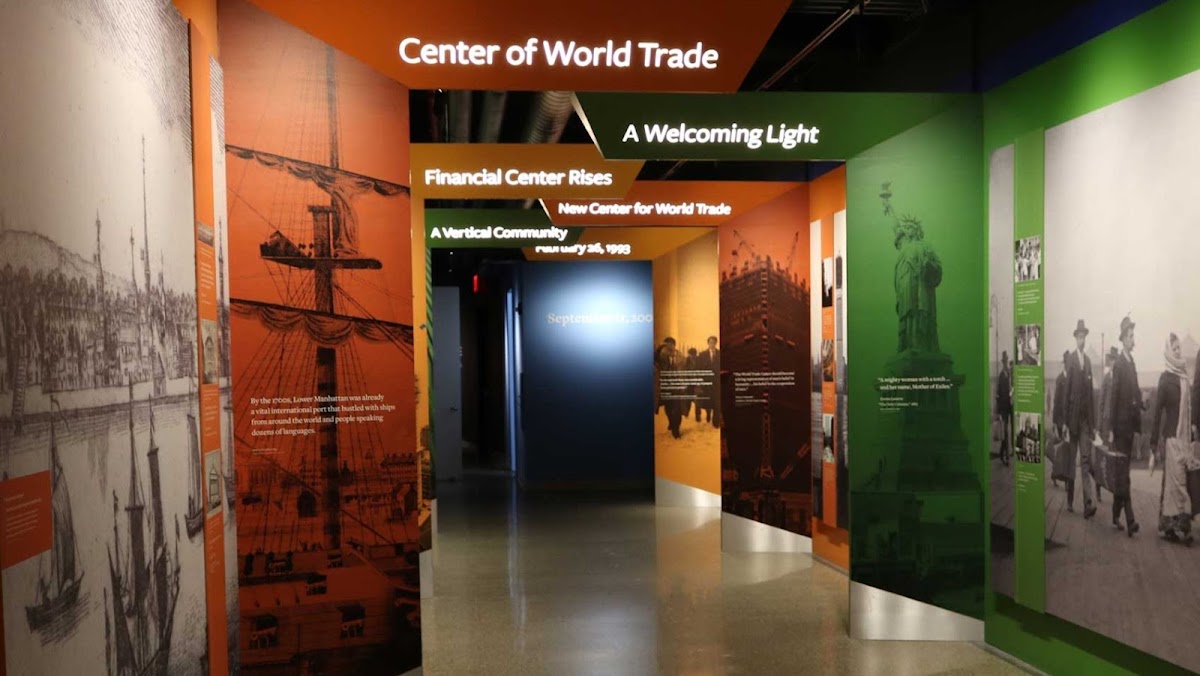
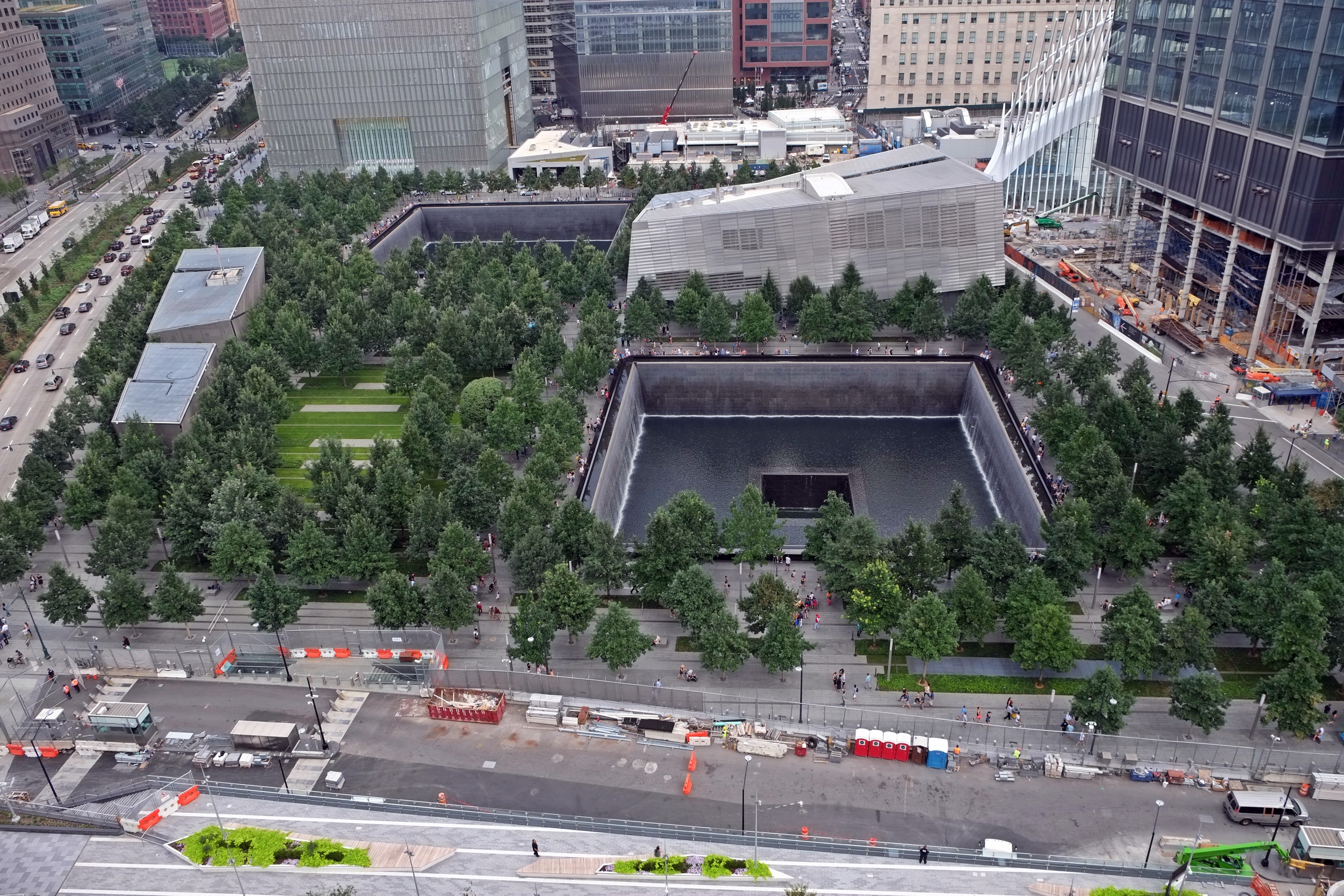
The National September 11 Memorial & Museum occupies the World Trade Center site in Lower Manhattan. It commemorates the 2,977 people killed in the attacks of 11 September 2001 and the six people killed in the World Trade Center bombing of 26 February 1993; plans for the memorial also included remembrance of those involved in rescue and recovery operations. The outdoor memorial, called Reflecting Absence, was designed by architect Michael Arad with landscape architect Peter Walker. Two recessed square pools mark the footprints of the destroyed Twin Towers. Waterfalls descend into the voids, and the victims' names are cut into bronze parapets around the pools. A plaza planted with more than 400 swamp white oaks surrounds them. The museum lies below the plaza and incorporates artifacts connected to the attacks and their aftermath. Among the site's most important surviving elements are the Survivors' Staircase, salvaged structural tridents from the towers, and the Survivor Tree, a Callery pear found damaged in the rubble, rehabilitated, and replanted. The memorial opened in September 2011, on the tenth anniversary of the attacks, while the museum opened to the public in May 2014. This is a site of remembrance first, with its design using the original tower footprints, water, trees, names, and surviving objects to connect a vast historical event to individual lives.
Don't miss
- The two Reflecting Absence pools set within the exact footprints of the Twin Towers
- Bronze parapets bearing 2,983 names from the 2001 attacks and the 1993 bombing
- The Survivor Tree, a Callery pear recovered from the debris and later replanted
- The Survivors' Staircase, the first major artifact moved into the underground museum
- Salvaged steel tridents from the original World Trade Center
- The swamp white oak plaza designed as groves, clearings, and a quiet setting around the pools
Tickets & tours
Ways to visit National September 11 Memorial & Museum
You can visit on your own (Paid museum entry). A tour adds transport and a guide, or combines nearby sights into one day.
 Cheapest way in9/11 Memorial & Ground Zero Tour with Optional Museum Admission4.8★ · 63 travelers~2 hoursFree cancellationFrom$24 per personSee dates →
 Best full dayNew York in One Day Guided Sightseeing Tour4.8★ · 13,628 travelers~6 hoursFree cancellationFrom$99 per personSee dates →
 Private & flexibleNew York Private 9/11 Memorial Tour with Optional Museum Ticket4.9★ · 282 travelers2-4 hoursFree cancellationFrom$199 per personSee dates →
Know before you go
- The memorial is a place of remembrance for victims of both the 2001 attacks and the 1993 World Trade Center bombing.
- The outdoor plaza and pools sit at street level, while the museum is below the plaza.
- Names on the parapets are arranged by meaningful adjacencies rather than simple alphabetical order.
- The museum preserves large structural artifacts as well as personal and historical material connected to the attacks.
A bit of history
Plans for a permanent memorial began soon after the destruction of the World Trade Center. In 2003, the Lower Manhattan Development Corporation launched an international design competition that drew 5,201 submissions from 63 countries. A jury chose Reflecting Absence by Michael Arad and Peter Walker in January 2004. Their proposal placed two pools in the tower footprints and organized the surrounding landscape as a field of swamp white oaks. The victims' names were arranged through meaningful adjacencies, grouping people by where they were, their work or organizational connections, and requests from relatives. Heavy construction began in 2006. The Survivors' Staircase was lowered to bedrock in 2008, becoming the first major artifact moved into the museum. Construction also incorporated thousands of tons of steel, the pools' structural frames and granite linings, and two salvaged tridents from the towers. Trees were planted from 2010 onward, including the Survivor Tree. The memorial was dedicated on 11 September 2011 and opened to the public the next day. The underground museum's construction halted temporarily in December 2011 during an infrastructure-cost dispute, resumed in September 2012, and opened to the public on 21 May 2014. The institution is operated by a nonprofit organization formed to fund, program, and manage the memorial and museum.
Common questions
What do the two memorial pools represent?
They occupy the footprints of the destroyed North and South Towers and form the central element of the Reflecting Absence design.
Whose names appear around the pools?
The parapets carry the names of 2,977 victims of the September 2001 attacks and six victims of the 1993 World Trade Center bombing.
Why are some names placed together?
The arrangement uses meaningful adjacencies based on location, workplace or organizational ties, and requests submitted by victims' relatives.
What is the Survivor Tree?
It is a Callery pear found damaged at the site after the attacks. It was nursed back to health and later returned to the memorial plaza.
When did the memorial and museum open?
The memorial opened to the public on 12 September 2011. The museum opened on 21 May 2014.
More attractions in New York City