Museum · Connaught Place/Janpath
Jantar Mantar
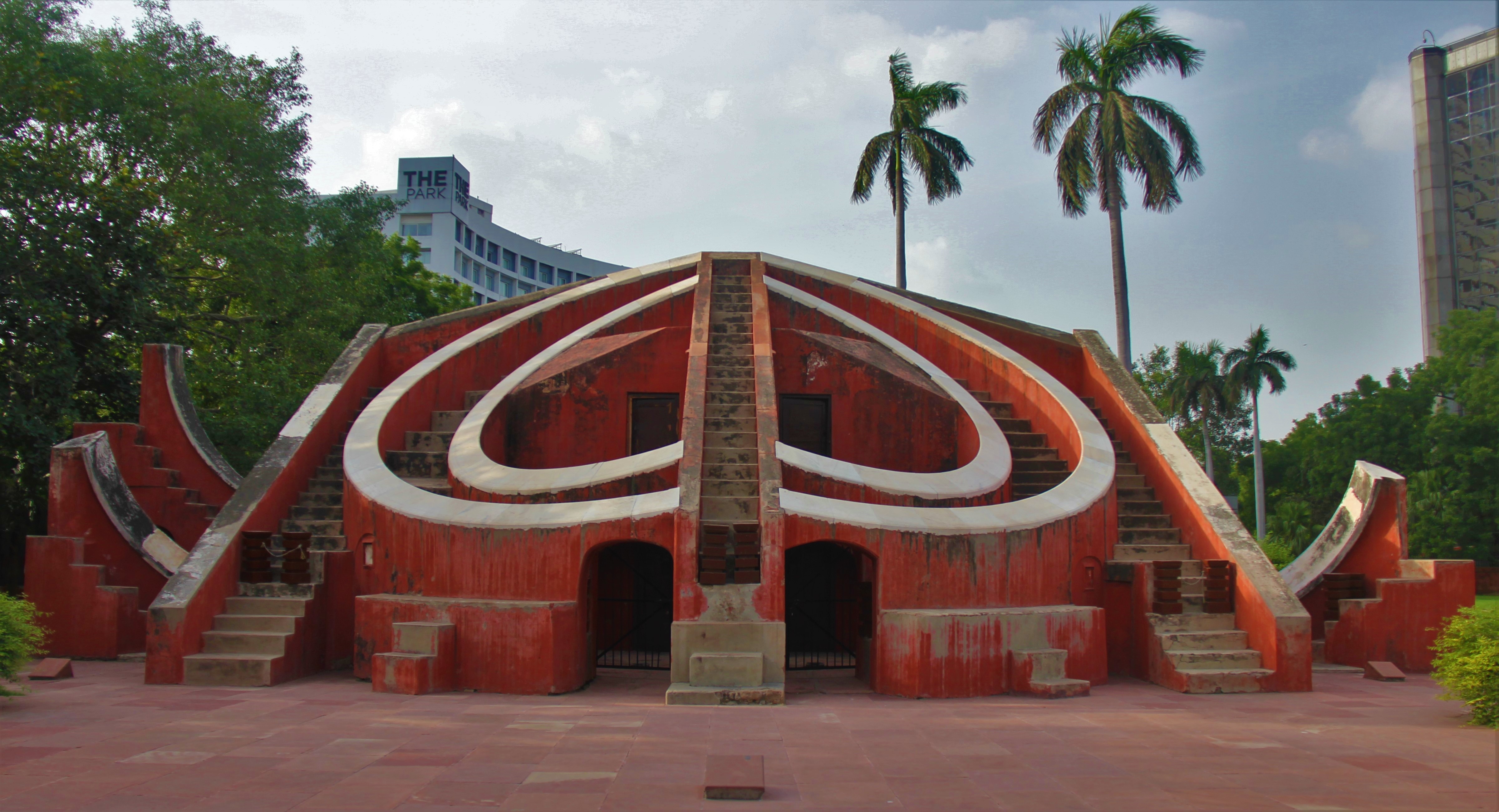 AKS.9955 · Wikimedia Commons · CC BY-SA 4.0
Some booking links are affiliate links. If you book through them, we may earn a small commission at no extra cost to you. We never let this influence which places we recommend.
Jantar Mantar in New Delhi is a remarkable collection of architectural astronomical instruments, built in 1724 by Maharaja Jai Singh II of Jaipur. Located near Connaught Place, this UNESCO World Heritage site (part of a group of five observatories) consists of 13 main instruments, each designed for specific celestial measurements. The most striking is the Samrat Yantra, a giant sundial that stands 27 meters tall and can tell time to an accuracy of two seconds. Other instruments track the sun's declination, measure altitudes, and predict eclipses. The site is a testament to pre-telescopic astronomy, blending science with Mughal and Rajput architecture. Visitors can walk among the geometric structures, read informational plaques, and imagine how astronomers used these tools centuries ago. It's a peaceful oasis amidst Delhi's chaos, offering a unique glimpse into India's scientific heritage.
Don't miss
- See the massive Samrat Yantra sundial, accurate to 2 seconds
- Observe the Jai Prakash Yantra, a hemispherical instrument for mapping the sky
- Learn how each instrument measures time, altitude, or planetary positions
- Photograph the striking geometric forms against the urban backdrop
- Visit the small on-site museum for historical context
Tickets & tours
Ways to visit Jantar Mantar
You can visit on your own (paid entry; nominal fee for indians, higher for foreign nationals. tickets can be purchased at the gate or online via the archaeological survey of india website). A tour adds transport and a guide, or combines nearby sights into one day.
 Cheapest way inJaipur Full-Day Private Tour By Car, Guide & Skip-the-Line Entry4.9★ · 389 travelers~8 hoursFree cancellationFrom$4 per personSee dates →
 Most bookedJaipur Guided City Tour: City Palace, Jantar, Hawa & Jal Mahal4.9★ · 238 travelers~5 hoursFree cancellationFrom$26 per personSee dates →
 Private & flexibleFull Day Tour of Jaipur with Guide5★ · 20 travelers7–8 hoursFree cancellationFrom$48 per personSee dates →
Good for
How travelers rate it
Know before you go
- Bring sunglasses and a hat; the instruments are in an open area with little shade.
- Download an audio guide app or hire a local guide to fully understand the instruments.
- No food or drink inside the monument. Water is available at the entrance.
- Bags may be subject to security checks. Leave large bags at your hotel.
A bit of history
Maharaja Jai Singh II, a keen astronomer, built five observatories across India in the early 18th century to update astronomical tables. The Delhi observatory was the first, constructed in 1724. It fell into disrepair but was restored in the 20th century and is now protected by the Archaeological Survey of India.
Common questions
What is the best time to visit for photography?
Early morning or late afternoon for soft light and fewer people. The golden hour enhances the stone textures.
Are guided tours available?
Yes, official guides are available at the entrance for a fee. Alternatively, audio guides can be rented.
Is the site wheelchair accessible?
Partially. The main pathways are flat, but some instruments have steps. Contact the site for specific assistance.
Can I touch the instruments?
No, touching is prohibited to preserve the structures. Signs are posted.
How much time should I allocate?
About 1-2 hours. If you're an astronomy enthusiast, allow up to 3 hours.
Is there a dress code?
No strict dress code, but modest attire is recommended as it is a historical site. Sun protection is advised.
More attractions in New Delhi