Market
Khan el-Khalili
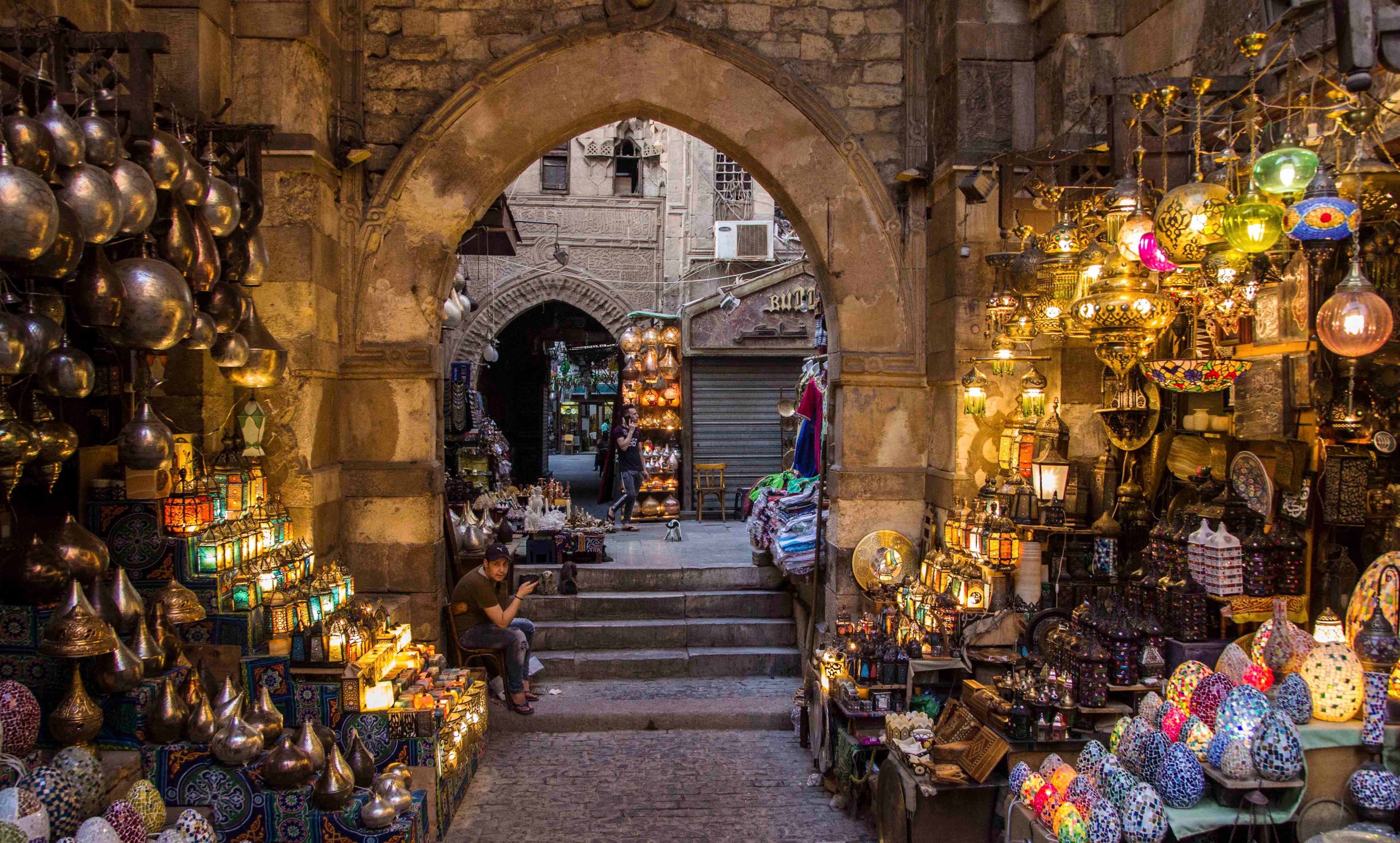 Heba otefy · Wikimedia Commons · CC BY-SA 4.0
Some booking links are affiliate links. If you book through them, we may earn a small commission at no extra cost to you. We never let this influence which places we recommend.
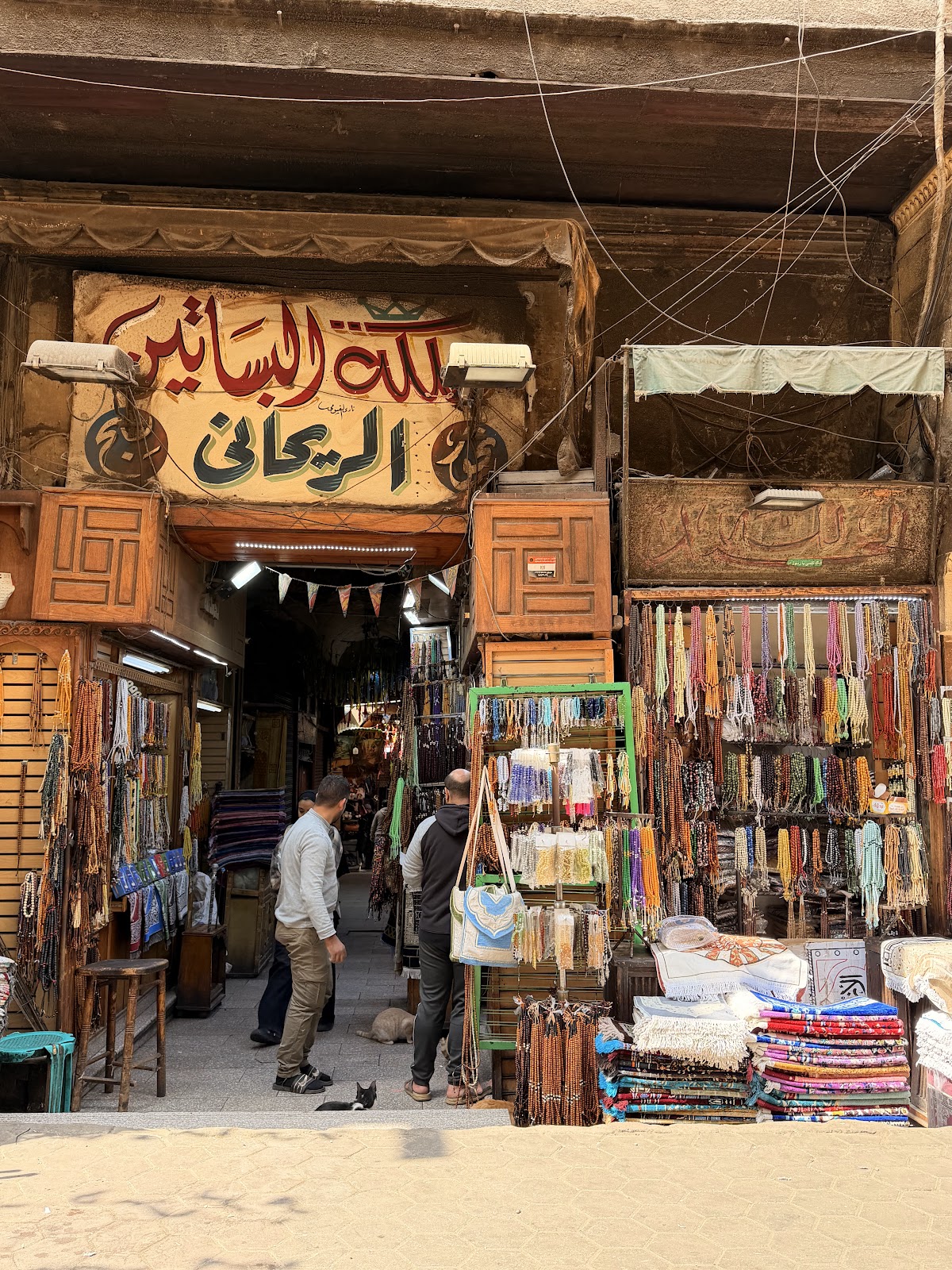
Khan el-Khalili is a historic bazaar district in central Cairo, established as a trade centre during the Mamluk period. Its tight street pattern preserves monumental stone gates, khan structures, religious buildings, and the layered fabric of Cairo's old commercial quarter.
Don't miss
- The stone gates of Suq al-Nabulsi, including Bab al-Badistan and Bab al-Ghuri, from Sultan al-Ghuri's early 16th-century redevelopment
- The Wikala al-Qutn, rebuilt in al-Ghuri's period and later associated with Turkish merchants
- The nearby Mosque and shrine of al-Hussein on the bazaar's eastern edge
- The bazaar's role as the setting for Naguib Mahfouz's Midaq Alley
Tickets & tours
Ways to visit Khan el-Khalili
You can wander Khan el-Khalili on your own. A guide is worth it for knowing what to look for and what to order, and a tour can combine it with nearby sights.
 Cheapest way inThe Best of Cairo,Pyramids of Giza,Islamic Cairo &Khan El Khalili4.9★ · 98 travelers7-9 hoursFree cancellationFrom$4 per personSee dates →
 Most booked4-hours private Tour Islamic Mosque,Coptic Cairo &Khan el-Khalili4.8★ · 922 travelers~4 hoursFree cancellationFrom$14 per personSee dates →
 Private & flexible3 Hours Private Tour to Khan EL Khalili Bazar5★ · 63 travelers~3 hoursFree cancellationFrom$30 per personSee dates →
Getting there
Know before you go
- The bazaar extends beyond formal boundaries and merges into surrounding historic streets, including al-Muski Street.
- Look for the monumental gates and khan structures left by the Mamluk and Ottoman periods.
- The district appears in Naguib Mahfouz's Midaq Alley and other literary works.
A bit of history
The site was originally part of the Fatimid eastern palace and the burial ground of Fatimid caliphs. In the late 14th century, Sultan Barquq's Master of the Stables, Jaharkas al-Khalili, demolished the Fatimid mausoleum to build a large khan, which gave the district its name. The area was later redeveloped by Sultan al-Ghuri in the early 16th century, who demolished the original khan and rebuilt it, also adding a souq with monumental stone gates. During the Ottoman period, the district became a center for Turkish merchants.
Common questions
What is Khan el-Khalili known for?
It is Cairo's historic Mamluk-era bazaar district, shaped by khans, commercial streets, religious buildings, and stone gates.
What historic structures can I see there?
The district includes the gates of Suq al-Nabulsi, the Wikala al-Qutn, and the Mosque and shrine of al-Hussein.
Why is the district called Khan el-Khalili?
It takes its name from Jaharkas al-Khalili, who built a large khan on the site in the late 14th century.
What was on the site before the bazaar?
It was part of the Fatimid eastern palace and the burial ground of Fatimid caliphs before the first khan was built.
More attractions in Cairo